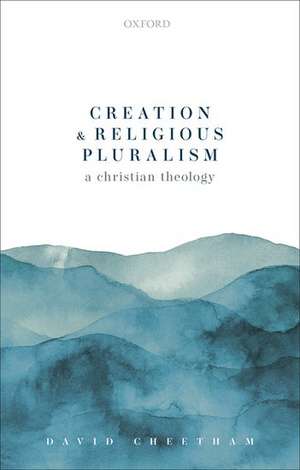
Creation and Religious Pluralism
Autor David Cheethamen Limba Engleză Hardback – 20 aug 2020
În contextul cercetării academice contemporane și al programelor de studii avansate în teologie și filosofia religiei, relevanța lucrării Creation and Religious Pluralism derivă din modul în care recalibrează dezbaterea despre pluralism prin prisma doctrinei creației. Observăm că, în timp ce majoritatea tratatelor se concentrează pe validitatea soteriologică a altor religii, David Cheetham propune o schimbare de paradigmă: utilizarea conceptului de 'creatio ex nihilo' ca numitor comun pentru tradițiile abrahamice. Suntem de părere că această abordare oferă o topografie conceptuală nouă, facilitând un dialog care nu mai este blocat în dihotomia exclusivism-pluralism.
Din punct de vedere al structurii narative, autorul navighează de la fundamente teoretice spre aplicații practice, explorând noțiuni de antropologie și fenomenologie pentru a ajunge la ceea ce el numește 'politică creațională'. Această tranziție este esențială pentru înțelegerea modului în care ritualurile și sacramentele pot funcționa în sfera publică diversificată. Comparabil cu The Cosmos and the Creator – Introduction To The Theology Of Creation de David Fergusson în rigurozitate, volumul de față se distinge prin concentrarea specifică asupra modului în care doctrina creației poate interveni activ în discursul despre pluralismul religios, dincolo de simpla cosmologie.
În contextul operei sale anterioare, dacă în John Hick autorul analiza marea propunere a religiilor ca răspunsuri valide la aceeași realitate ultimă, în acest volum David Cheetham rafinează discuția, ancorând-o într-o doctrină creștină specifică, dar deschisă spre ceilalți. Tonul este unul precis, academic, reușind o conciliere rară între abordările analitice și cele fenomenologice, fapt ce transformă lectura într-un exercițiu intelectual dens, dar extrem de bine structurat.
Preț: 525.31 lei
Preț vechi: 762.33 lei
-31%
Carte disponibilă
Livrare economică 11-17 iunie
Specificații
ISBN-10: 0198856660
Pagini: 228
Dimensiuni: 147 x 222 x 18 mm
Greutate: 0.44 kg
Editura: OUP OXFORD
Colecția OUP Oxford
Locul publicării:Oxford, United Kingdom
De ce să citești această carte
Această lucrare este esențială pentru studenții și cercetătorii care doresc să depășească tiparele clasice ale teologiei religiilor. Cititorul câștigă o perspectivă proaspătă asupra modului în care dogma creației poate fundamenta un dialog interreligios practic. Este o recomandare solidă pentru cei interesați de intersecția dintre fenomenologie, politică și religie, oferind instrumente conceptuale pentru a naviga diversitatea religioasă fără a sacrifica identitatea doctrinară.
Despre autor
David Cheetham este lector principal în cadrul Departamentului de Teologie și Religie la Universitatea din Birmingham, Regatul Unit. Specializarea sa academică se situează la intersecția dintre filosofia religiei și studiile interreligioase, fiind un cercetător recunoscut pentru analizele sale asupra pluralismului. Printre contribuțiile sale notabile se numără lucrări despre John Hick și studii asupra teologiei interculturale. Expertiza sa în medierea dintre tradițiile teologice occidentale și realitățile globale ale diversității religioase conferă volumului de față o autoritate academică incontestabilă.
Descriere
Recenzii
It is a welcome, eirenic rapprochement between analytic and phenomenological approaches to theology and the philosophy of religion dealing with questions of the plurality of religions.