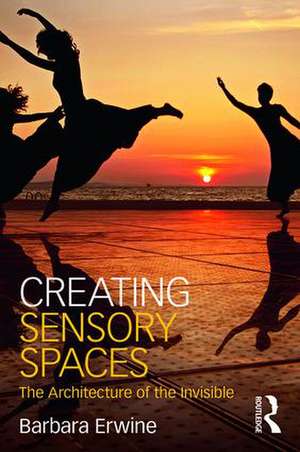
Creating Sensory Spaces: The Architecture of the Invisible
Autor Barbara Erwineen Limba Engleză Paperback – 19 dec 2016
Preț: 342.30 lei
Preț vechi: 397.61 lei
-14%
Puncte Express: 513
Carte indisponibilă temporar
Doresc să fiu notificat când acest titlu va fi disponibil:
Se trimite...
Specificații
ISBN-13: 9781138918771
ISBN-10: 1138918776
Pagini: 288
Ilustrații: 86 Halftones, color; 86 Illustrations, color
Dimensiuni: 123 x 186 x 20 mm
Greutate: 0.36 kg
Ediția:1
Editura: Taylor & Francis
Colecția Routledge
Locul publicării:Oxford, United Kingdom
ISBN-10: 1138918776
Pagini: 288
Ilustrații: 86 Halftones, color; 86 Illustrations, color
Dimensiuni: 123 x 186 x 20 mm
Greutate: 0.36 kg
Ediția:1
Editura: Taylor & Francis
Colecția Routledge
Locul publicării:Oxford, United Kingdom
Public țintă
UndergraduateCuprins
Acknowledgments. Image Credits. Introduction. 1. The World is Flat 2. Celebration of the Senses 3. Light Space 4. Somatic Space 5. Thermal Space 6. Acoustic Space 7. Olfactory Space 8. Multisensory Design 9. Time and Movement: Rituals of Change 10. A Sense of Place Bibliography. Index
Notă biografică
Creating Sensory Spaces celebrates spaces enlivened with sensual richness and provides you with the knowledge and tools necessary to create them. Drawing on numerous built case studies in ten countries and illustrated with over 85 full color images, the book presents a new framework for the design of sensory spaces including light, color, temperature, smell, sound, and touch. Bridging across disciplines of architecture, engineering, phenomenology and perceptual psychology, this book informs the design of buildings and neighborhoods that reclaim the role of the body and all the senses in creating memorable experiences of place and belonging.
Recenzii
Praise recieved for the 1st edition:
"Modern thought has dehumanized architecture by considering buildings as either efficient machines or as beautiful objects. Barbara Erwine’s book points to a different architectural future. It may be sub-titled The Architecture of the Invisible, but this new architecture will be visibly and dramatically different."
Dr. Boon Ong, Head of Department of Architecture & Interior Architecture, Curtin University; Editor of Beyond Environmental Comfort
"By hearing, smelling, tasting, and touching architecture, Barbara Erwine’s Creating Sensory Spaces brings dynamic life to the field of environmental controls. The book makes the important and necessary case that great architecture is both sustainable and experiential."
Keith A. Simon, AIA, CPHC, LEED AP, Senior Architect, Building Exterior Solutions, Inc., Adjunct Faculty, University of Texas at Austin School of Architecture
"With luscious language, Barbara Erwine urges readers to enrich our cities and buildings with all possible forms of natural sensory experience. Not only does the book provide specifics to help new designers get started on this path, but it also offers provocative examples to challenge experienced designers to try something new."
Lisa Heschong, FIES; Author of Thermal Delight in Architecture
"Modern thought has dehumanized architecture by considering buildings as either efficient machines or as beautiful objects. Barbara Erwine’s book points to a different architectural future. It may be sub-titled The Architecture of the Invisible, but this new architecture will be visibly and dramatically different."
Dr. Boon Ong, Head of Department of Architecture & Interior Architecture, Curtin University; Editor of Beyond Environmental Comfort
"By hearing, smelling, tasting, and touching architecture, Barbara Erwine’s Creating Sensory Spaces brings dynamic life to the field of environmental controls. The book makes the important and necessary case that great architecture is both sustainable and experiential."
Keith A. Simon, AIA, CPHC, LEED AP, Senior Architect, Building Exterior Solutions, Inc., Adjunct Faculty, University of Texas at Austin School of Architecture
"With luscious language, Barbara Erwine urges readers to enrich our cities and buildings with all possible forms of natural sensory experience. Not only does the book provide specifics to help new designers get started on this path, but it also offers provocative examples to challenge experienced designers to try something new."
Lisa Heschong, FIES; Author of Thermal Delight in Architecture