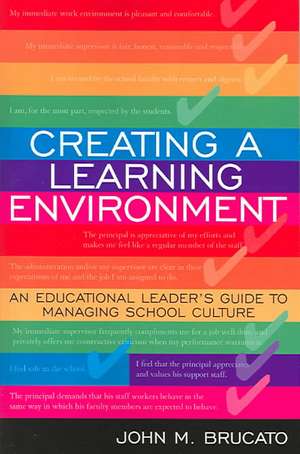
Creating a Learning Environment: An Educational Leader's Guide to Managing School Culture
Autor John M. Brucatoen Limba Engleză Paperback – 28 ian 2005
Preț: 312.23 lei
Preț vechi: 387.65 lei
-19%
Puncte Express: 468
Carte tipărită la comandă
Livrare economică 30 noiembrie-14 decembrie
Livrare prin curier în România Termenul estimat este afișat lângă disponibilitate.
Transport gratuit de la 400.00 lei Plată online sau ramburs, în funcție de opțiunile comenzii.
Retur gratuit în 14 zile Comandă securizată și suport în română.
Specificații
ISBN-13: 9781578861903
ISBN-10: 157886190X
Pagini: 146
Dimensiuni: 148 x 226 x 10 mm
Greutate: 0.25 kg
Ediția:New.
Editura: Bloomsbury Publishing
Colecția R&L Education
Locul publicării:New York, United States
ISBN-10: 157886190X
Pagini: 146
Dimensiuni: 148 x 226 x 10 mm
Greutate: 0.25 kg
Ediția:New.
Editura: Bloomsbury Publishing
Colecția R&L Education
Locul publicării:New York, United States
Cuprins
Part 1 Foreword by Phillip F. Flaherty
Part 2 Preface
Part 3 Acknowledgments
Part 4 Introduction
Part 5 Part I: The Problem
Chapter 6 1. Assessing School Culture: Putting the Horse before the Cart
Part 7 Part II: Beginnings
Chapter 8 2. The Six Key Questions to Assessing School Culture
Chapter 9 3. Why We Need to Read, Write, and Reflect: The Journal
Chapter 10 4. Climate-Focused Leaders: The Profile
Chapter 11 5. The Guiding Principles of Success
Chapter 12 6. Building an Administrative Team: The Foundation of a Well-Run School
Chapter 13 7. Climate Control: All Educators on Board
Part 14 Part III: New Beginnings
Chapter 15 8. Swinging the Balance
Chapter 16 9. Clarity of Expectations
Chapter 17 10. The Faculty Manual
Chapter 18 11. Growth and Excellence Are Not Optional
Chapter 19 12. Teacher Appreciation
Chapter 20 13. The Student Body: The Driving Force of School Reform
Chapter 21 14. How to Develop a Support Staff that Becomes the Glue that Holds Your School Together
Part 22 Appendix I: How to Develop a School Culture that Reduces Discipline Problems and Enhances Safety
Part 23 Appendix II: How to Deal More Effectively with Difficult Parents
Part 24 Appendix III: How to Deal with Difficult Teachers
Part 25 Appendix IV: How to Achieve Success with the Next Level of Student Discipline
Part 26 Appendix V: Developing an Administrator-Friendly Student/Parent Handbook
Part 27 Appendix VI: Seven Reasons Why School Administrators Cannot Turn Their Backs on Issues of Nonschool Conduct
Part 28 Appendix VII: You Make the Call
Part 29 References
Part 30 About the Author
Part 2 Preface
Part 3 Acknowledgments
Part 4 Introduction
Part 5 Part I: The Problem
Chapter 6 1. Assessing School Culture: Putting the Horse before the Cart
Part 7 Part II: Beginnings
Chapter 8 2. The Six Key Questions to Assessing School Culture
Chapter 9 3. Why We Need to Read, Write, and Reflect: The Journal
Chapter 10 4. Climate-Focused Leaders: The Profile
Chapter 11 5. The Guiding Principles of Success
Chapter 12 6. Building an Administrative Team: The Foundation of a Well-Run School
Chapter 13 7. Climate Control: All Educators on Board
Part 14 Part III: New Beginnings
Chapter 15 8. Swinging the Balance
Chapter 16 9. Clarity of Expectations
Chapter 17 10. The Faculty Manual
Chapter 18 11. Growth and Excellence Are Not Optional
Chapter 19 12. Teacher Appreciation
Chapter 20 13. The Student Body: The Driving Force of School Reform
Chapter 21 14. How to Develop a Support Staff that Becomes the Glue that Holds Your School Together
Part 22 Appendix I: How to Develop a School Culture that Reduces Discipline Problems and Enhances Safety
Part 23 Appendix II: How to Deal More Effectively with Difficult Parents
Part 24 Appendix III: How to Deal with Difficult Teachers
Part 25 Appendix IV: How to Achieve Success with the Next Level of Student Discipline
Part 26 Appendix V: Developing an Administrator-Friendly Student/Parent Handbook
Part 27 Appendix VI: Seven Reasons Why School Administrators Cannot Turn Their Backs on Issues of Nonschool Conduct
Part 28 Appendix VII: You Make the Call
Part 29 References
Part 30 About the Author
Recenzii
I have already recommended Creating a Learning Environment to three superintendents for use in principal mentoring programs. It would elicit rich conversation about everything from classroom instruction to teacher support and home-school communications.
He says leaders must define their purpose relating to the culture of the schoolhouse, determine if they are a good match for the institution, and be committed to collaborating with fellow school leaders who have roots in similar cultures.
He says leaders must define their purpose relating to the culture of the schoolhouse, determine if they are a good match for the institution, and be committed to collaborating with fellow school leaders who have roots in similar cultures.