
Cook Anime: Eat Like Your Favorite Character—From Bento to Yakisoba: A Cookbook: Cook Anime
Autor Diana Aulten Limba Engleză Hardback – 15 oct 2020
Japanese animation has beautiful designs, fleshed-out characters, and engaging storylines—and it’s also overflowing with so many scrumptiously rendered meals. Do you ever watch your favorite anime series and start craving the takoyaki or the warmth of delicious ramen or the fluffy sweetness of mochi? Now, you can make your cravings a reality with Cook Anime!
Join an otaku on her tour through anime food and find out what your favorite characters are savoring and sharing and then learn to make it at home! Including:
-Miso Chashu Ramen from Naruto
-Rice Porridge from Princess Mononoke
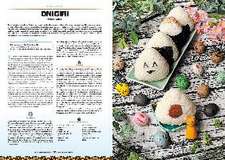
-Onigiri from Fruits Basket
-Taiyaki from My Hero Academia
-Hanami Dango from Clannad
-Rice from Haikyuu!!
-And many more!
Along with each recipe, you will discover facts behind the food, such as history, culture, tips, and more. A perfect gift for anime fans, foodies, and otaku alike, Cook Anime is the all-inclusive guide to making the meals of this Japanese art form.
Preț: 104.58 lei
Preț vechi: 125.53 lei
-17%
Carte disponibilă
Livrare economică 06-18 noiembrie
Livrare express 16-22 octombrie pentru 58.57 lei
Specificații
ISBN-10: 1982143916
Pagini: 160
Ilustrații: 75 4-c food images thru-out; illustrated chap. openers; colored enpapers
Dimensiuni: 187 x 232 x 15 mm
Greutate: 0.59 kg
Editura: S&S/Simon Element
Colecția S&S/Simon Element
Seria Cook Anime
V-ar putea interesa
-
 The Pioneer Woman Cooks-Dinner's Ready!Ree DrummondPreț: 239.92 lei
 -
 Just EatJessie James DeckerPreț: 218.49 lei
 -
 The Ranch TableElizabeth PoettPreț: 276.31 lei
 -
 Familia: 125 Foolproof Mexican Recipes to Feed Your PeopleMarcela Valladolid-24%Preț: 176.45 lei230.75 lei
 -
 -21%Preț: 182.26 lei230.80 lei
 -
 Bad Manners: Hungry as HellBad MannersPreț: 170.77 lei
 -
 Make It JapaneseRie McClenny-22%Preț: 154.83 lei197.30 lei
 -
 Kung FoodJon KungPreț: 243.73 lei
 -
 Cooking Con ClaudiaClaudia RegaladoPreț: 229.54 lei
 -
 -28%Preț: 142.62 lei198.53 lei
 -
 Magnolias Classic Southern CuisineDon DrakePreț: 240.37 lei
 -
 Polish'dMichal KorkoszPreț: 230.10 lei
 -
 Let's Eat Paris!: The Essential Guide to the World's Most Famous Food CityFrançois-Régis Gaudry-23%Preț: 216.98 lei283.21 lei
 -
 Williams Sonoma At Home FavoritesWeldon Owen-12%Preț: 207.54 lei235.93 lei
 -
 Curry Guy One PotDan Toombs-27%Preț: 157.22 lei216.44 lei
 -
 Maman & MeRoya Shariat-26%Preț: 172.59 lei232.30 lei
 -
 CDMXRosa Cienfuegos-20%Preț: 167.06 lei209.00 lei
 -
 Peináo: A Greek Feast for AllHelena Moursellas-21%Preț: 163.71 lei206.89 lei
 -
 Taco 101 Deck of CardsDeborah KaloperPreț: 77.91 lei
 -
 Trap Kitchen: Wah Gwaan: Jamaican CookbookMalachi JenkinsPreț: 169.72 lei
 -
 RintaroSylvan Mishima Brackett-21%Preț: 191.67 lei243.68 lei
 -
 Everyday DeliciousRocco Dispirito-21%Preț: 166.66 lei212.19 lei
 -
 Kanaan - das KochbuchOz Ben DavidPreț: 227.91 lei
 -
 YerevanMarianna DeinyanPreț: 198.53 lei
 -
 Dahoam: Bayerische WohlfühlkücheAlexander HuberPreț: 255.26 lei
 -
 Der Geschmack JapansLaure KiéPreț: 279.70 lei
 -
 Das Anime-KochbuchDiana AultPreț: 251.67 lei
 -
 Der Sioux-Chef. Indigen kochenSean ShermanPreț: 294.11 lei
 -
 Ciudad de MéxicoEdson Díaz-FuentesPreț: 310.80 lei
Extras
IN ANIME!
The care that the creators and animators put into this facet of the art form is so impressive, and one of the aspects that sets Japanese animation apart from other animated media.
The food in anime can act as a window onto Japanese culture and history, and can bring even more meaning to the scene it’s featured in. I was so intrigued by this that I wanted to explore it—and this book was developed from my perspective as an outsider looking in.
Even though I love the concept of food created specifically for a work of fiction (meaning that the food is unique to that work), the criterion that I set for this cookbook is that the food must have a real-world equivalent in order to explore my theme of learning more about Japan through the food found in anime.
The entries in this book came about in a couple of ways: seeing a dish in an anime, being intrigued, and then tracking it down in the real world, or the reverse—knowing of or happening upon a real-world food during research and then finding it in anime. Both methods were fun, as I enjoy matching things together (I spent too much time on this, perhaps; it was like a game). Delving into the cultural and historical aspects of the food and seeing how it’s woven into the background or narrative of an anime is just so interesting to me.
To create the recipes for each entry, I researched different versions of the food to find the root of the recipe, referenced the anime (as well as the manga in some cases), and came up with a version that seemed accessible. Certain ingredients were a bit tricky to find, so that also shaped some of the recipes and, in some instances, guided the decision about whether to include the food in the book.
It’s my hope that those who pick up this book, foodies and otaku alike (and the lovely people who are both), will enjoy the recipes and the stories behind them!
JAPANESE PANTRY
The following ingredients are helpful to have on hand when cooking with Cook Anime. All can be found in Japanese grocery stores or online.
Aburaage: Deep-fried tofu pouches, usually found in the refrigerated or freezer section.
Adzuki beans: The main ingredient in anko, a sweet red bean paste used in Japanese desserts.
Aonori: An edible green seaweed that is dried and powdered.
Beni-shoga: Ginger pickled in plum vinegar, which gives it a red hue.
Chuka soba noodles: Japanese for “thin Chinese noodles,” this is the Japanese version of the wheat noodles used in ramen.
Doubanjiang: A chili paste made from fermented broad beans, also known as toban djan.
Enoki mushrooms: Called enokitake in Japanese, these long, thin white mushrooms are popular in soups, salads, and many other East Asian dishes.
Green tea: Japanese variations include karigane, kuchika, and sencha.
Joshinko: A non- glutinous rice flour made from milled short-grain rice.
Kabocha: A Japanese variety of winter squash with bumpy green skin (sometimes with stripes) on the outside and yellow- orange flesh on the inside.
Kakinotane: A preferred type of rice crackers.
Katakuriko: A fine potato starch used as a thickener.
Katsuobushi: Dried, fermented, and smoked fish flakes, also known as bonito.
Kewpie mayonnaise: Made with egg yolks instead of whole eggs, this mayo has a deeper yellow color and an umami flavor.
Kombu: An edible kelp, usually dried.
La-yu: A Japanese sesame oil made with hot chili peppers.
Matcha: Green tea leaves finely ground into a powder.
Mirin: A sweet Japanese rice wine similar to sake but with more sugar and lower alcohol content.
Miso paste: Available in white (shiso), red (aka), or black (douchi), this paste is made from fermented soybeans.
Mizuna: Japanese mustard greens. Celery leaves are an acceptable substitute.
Nagaimo: A root vegetable, often cooked like a potato.
Narutomaki: A type of kamaboko, this is a cured fish cake, used mainly as decoration.
Nori: An edible seaweed usually purchased dried; can also be found roasted.
Oroshi: Finely grated daikon.
Rice vinegar: Also known as rice wine vinegar and made from fermented rice. Seasoned rice vinegar has salt and sugar added and is used when making sushi rice. Apple cider vinegar is an acceptable substitute.
Satsumaimo: Japanese sweet potato.
Shichimi togarashi: A spicy dried chili pepper seasoning.
Shio kombu: Thin sheets of salted and sweet kombu.
Shirataki noodles: Made from konjac yam, these gelatinous noodles are super flavor-absorbent.
Shiratamako: A type of glutinous rice flour, also called sweet rice flour.
Shiso: An herb that’s a member of the mint family, also known as perilla.
Umeboshi: Salted pickled plums.
Usukuchi: A light-colored soy sauce that is actually saltier in taste than the darker version, used only for cooking.
Wakame: An edible seaweed served in soups and salads, and often purchased dried.
Yamaimo: A Japanese golden yam, similar to a sweet potato.
THE GREAT PASSAGE
SHIOZAKE Salted Salmon Fillet
SERVES 2
Majime Mitsuya loves words and their myriad meanings but has difficulty expressing himself.
A chance encounter lands him the job of his dreams: working on a new Japanese dictionary called Daitokai with a determined and tight-knit group. Majime puts all his passion and dedication into the endeavor over the years, finding love and courage along the way—sailing the vast ocean of words on the ship he’s helping to build in order to bring people closer together through understanding. When the work stretches on and he needs a moment of rest and revitalization, he goes home to a warm meal of rice, miso soup, and shiozake prepared by someone he loves.
2 6-ounce salmon fillets, or 1 salmon steak
cut in two, deboned, skin left on
1 tablespoon sake rice wine
2 teaspoons fine sea salt, or more to taste
1. Rinse the fillets under cold water and pat dry with paper towels. Coat the fillets in the sake and let sit for 5 minutes. Lightly pat the fillets with a paper towel again, then rub 1 teaspoon salt over each fillet. If you’d like a more intense salt flavor, add another half teaspoon of salt each, or to your taste. Generously wrap each fillet in paper towels and place them in a closed plastic or glass container. Place the container in the refrigerator overnight or for up to 2 days; the longer the time, the saltier the fish will be.
2. Preheat your oven to 400°F and line a baking sheet or oven-safe dish with lightly scrunched-up and re-flattened aluminum foil (scrunching the foil will help the salmon not stick to it). Unwrap the fillets and gently pat off any extra moisture with a fresh paper towel. Lay the fillets, skin side up, on the foil and bake on the middle rack for 20 minutes, or until the flesh is flaky and the skin is crispy.
FOOD FACTS Shiozake (sometimes referred to as shiojake) is a traditional breakfast item in Japan, often served alongside Miso Soup (page 56), Rice (page 52), Tamagoyaki (page 61), and pickle and vegetable side dishes. It’s refreshing with a lemon wedge or a little mound of daikon oroshi (finely grated daikon radish). The salmon can also be flaked apart and used as an Onigiri filling (page 62), or as a topping for rice dishes such as a donburi or Chazuke (page 33).
Another common and less time-consuming way that salmon is prepared in Japan is to coat the salmon in sake and let it sit for
5 minutes (as in this recipe), and then, after patting the fish dry with a paper towel, lightly salt the fillets and let them sit for only 5 minutes. Pat off the resulting moisture with another paper towel. Place the fish on an oiled rack over a tray of water and broil, skin side up, for 10 minutes, then flip and cook for another 5 minutes. Because this way is quicker, the salt doesn’t permeate the fish as much.
ANIME FACTS “Daitokai” translates to “the great
passage.” “Passage” could mean a segment of writing, a reference to traveling, a place to travel through, or even the sliding by of time. All of these are applicable to the story. The Great Passage anime is an adaptation of the book Fune wo amu by Shion Miura, published in 2011. The title translates to “knitting the boat,” which is very apt. The award-winning book was first adapted into
a live-action film (which also won many awards) and eventually the anime series The Great Passage. Miura is also the author of Kaze ga Tsuyoku Fuiteiru, which was adapted into a live-action film and the inspiring anime series Run with the Wind.
THIS FOOD ALSO APPEARS IN . . .
• Weathering with You
• Someone’s Gaze
• Log Horizon
• How I Miss You
• Tokyo Ghoul: Root A
• Witchy PreCure!
• Wakakozake
• Hanasaku Iroha: Blossoms for Tomorrow
• AKB0048
• Natsume’s Book of Friends
• Monthly Girls’ Nozaki-Kun
• Kuromukuro
• Keijo!!!!!!!!
• Space Brothers
• Age 12
• The Helpful Fox Senko-san
Recenzii
Descriere
Embark on a foodie’s journey through the world of anime and learn to recreate delicious dishes from your favourite anime series.
Japanese animation has beautiful designs, fleshed out characters, and engaging storylines—and it’s also overflowing with so many scrumptiously rendered meals! Do you ever watch your favorite anime series and start craving the crunch of crispy seafood or the warmth of delicious noodles and broth or the fluffiness of soft, airy cakes? Now, you can make your cravings a reality with Cook Anime!
Join an otaku on her tour through anime food and find out what your favorite characters are savoring and sharing—from bento to yakisoba—and then learn to make it at home! Along with each recipe, you will discover facts behind the food, such as history, culture, tips, and more. Perfect for foodies and anime-lovers alike, Cook Anime is the all-inclusive guide to making the meals of this Japanese artform.