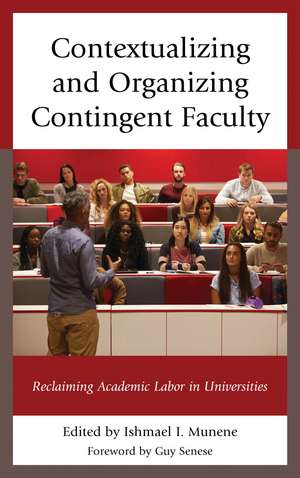
Contextualizing and Organizing Contingent Faculty: Reclaiming Academic Labor in Universities
Autor Ishmael I. Munene Contribuţii de Zuhra Abawi, Joe T. Berry, Choi Soyoung, Nihan Demirkasimoglu, Tiffany Kraft, Kristin Little, Ibrahim O. Ogachi, Sungok R. Park, Sean Rys, Daniel N. Sifuna, Joel Smith, Brian A. Stone, Sandra J. Stone, Nora Timmerman, Njoki Nathan Wane, Philippa Winkler, Helena Worthenen Limba Engleză Hardback – 15 feb 2018
Preț: 585.70 lei
Preț vechi: 883.67 lei
-34%
Puncte Express: 879
Preț estimativ în valută:
103.72€ • 121.14$ • 90.11£
103.72€ • 121.14$ • 90.11£
Carte tipărită la comandă
Livrare economică 21 februarie-07 martie
Preluare comenzi: 021 569.72.76
Specificații
ISBN-13: 9781498539548
ISBN-10: 1498539548
Pagini: 282
Ilustrații: 3 Graphs, 5 Tables
Dimensiuni: 159 x 237 x 26 mm
Greutate: 0.61 kg
Editura: Bloomsbury Publishing
Colecția Lexington Books
Locul publicării:New York, United States
ISBN-10: 1498539548
Pagini: 282
Ilustrații: 3 Graphs, 5 Tables
Dimensiuni: 159 x 237 x 26 mm
Greutate: 0.61 kg
Editura: Bloomsbury Publishing
Colecția Lexington Books
Locul publicării:New York, United States
Cuprins
List of Figures
List of Tables
Acknowledgments
Foreword: Contingency at the Crossroads
Guy Senese
Part One: University Transformation and Faculty Agency
Chapter One: Introduction: The Casualization of Academic Labor & Faculty Agency
Ishmael I. Munene
Chapter Two: Prometheus Redefined: Theorizing & Contextualizing Contingent Faculty in Universities
Ishmael I. Munene
Chapter Three: The Metro Strategy: A workforce-appropriate, geography-based approach to organizing contingent faculty
Joe Berry and Helena Worthen
Part Two: Reclaiming the Faculty Narrative in the United States
Chapter Four: Vulnerable, But Not Silent: Unpacking Discourses of Fear Surrounding NTT Faculty
Nora Timmerman
Chapter Five: Notes from the Field: Mobilizing Non-Tenure Track Faculty at the University of Arizona
Sean Rys, Joel Smith, and Kristin Little
Chapter Six: Reclaiming Academic Labor in a Democratic State: Mediating the Neoliberal University Assault on the Professoriate
Tiffany Kraft
Chapter Seven: The Theft of Adjunct Faculty Labor Time: Theorizing Exchange Value and Resistance from a Marxist Perspective
Philippa Winkler
Chapter Eight: Democracy, Shared Governance, and Academic Freedom for All Faculty
Brian A. Stone and Sandra J. Stone
Part Three: Global Cases of Faculty Narrative and Agency
Chapter Nine: Non-Tenured Academics and the Dilemma of the Academic Profession in Kenyan Universities
Daniel N. Sifuna and Ibrahim O. Oanda
Chapter Ten: Tenure and Non-Tenure Track Systems in Turkish Academia: Current Status and Future Prospects
Nihan Demirkasimoglu
Chapter Eleven: The Beginnings of Resistance among Part-time Instructors in South Korea
Sungok R. Park and Choi Soyung
Chapter Twelve: Disposable Academics: Neoliberalism, Anti-Intellectualism and the Rise of Contingent Faculty in Canadian Universities
Njoki Nathani Wane and Zuhra Abawi
Chapter Thirteen: Afterthought: Unchaining Prometheus and Decaualizing Academic Labor
Ishmael I. Munene
References
About the Contributors
List of Tables
Acknowledgments
Foreword: Contingency at the Crossroads
Guy Senese
Part One: University Transformation and Faculty Agency
Chapter One: Introduction: The Casualization of Academic Labor & Faculty Agency
Ishmael I. Munene
Chapter Two: Prometheus Redefined: Theorizing & Contextualizing Contingent Faculty in Universities
Ishmael I. Munene
Chapter Three: The Metro Strategy: A workforce-appropriate, geography-based approach to organizing contingent faculty
Joe Berry and Helena Worthen
Part Two: Reclaiming the Faculty Narrative in the United States
Chapter Four: Vulnerable, But Not Silent: Unpacking Discourses of Fear Surrounding NTT Faculty
Nora Timmerman
Chapter Five: Notes from the Field: Mobilizing Non-Tenure Track Faculty at the University of Arizona
Sean Rys, Joel Smith, and Kristin Little
Chapter Six: Reclaiming Academic Labor in a Democratic State: Mediating the Neoliberal University Assault on the Professoriate
Tiffany Kraft
Chapter Seven: The Theft of Adjunct Faculty Labor Time: Theorizing Exchange Value and Resistance from a Marxist Perspective
Philippa Winkler
Chapter Eight: Democracy, Shared Governance, and Academic Freedom for All Faculty
Brian A. Stone and Sandra J. Stone
Part Three: Global Cases of Faculty Narrative and Agency
Chapter Nine: Non-Tenured Academics and the Dilemma of the Academic Profession in Kenyan Universities
Daniel N. Sifuna and Ibrahim O. Oanda
Chapter Ten: Tenure and Non-Tenure Track Systems in Turkish Academia: Current Status and Future Prospects
Nihan Demirkasimoglu
Chapter Eleven: The Beginnings of Resistance among Part-time Instructors in South Korea
Sungok R. Park and Choi Soyung
Chapter Twelve: Disposable Academics: Neoliberalism, Anti-Intellectualism and the Rise of Contingent Faculty in Canadian Universities
Njoki Nathani Wane and Zuhra Abawi
Chapter Thirteen: Afterthought: Unchaining Prometheus and Decaualizing Academic Labor
Ishmael I. Munene
References
About the Contributors
Recenzii
Contextualizing and Organizing Contingent Faculty: Reclaiming Academic Labor in Universities offers significant insights into the ways academic labor has been reshaped through the market place, the reconfiguration of faculty power, and the reliance on contingent labor. This critical text provides a remarkable array of historical, economic, and political analyses centered on one institution while also developing parallels on how these issues play out in global contexts. The volume moves beyond an analysis of the ways in which contingent labor is used/abused to move to provide strategies for envisioning how pressure can be put on institutions to promote transformational change.
After reading this book, anyone involved in the academic enterprise will have a better grasp
of the teaching and scholarship plight, especially the contingent faculty, caused by both local
and global neoliberal restructuring conditions. The book is well-worth reading and has the
capacity to interest a global audience.
This book provides an in-depth analysis of the situation facing adjunct faculty in our society today. It represents a menacing and terrifying account of devastating patterned processes happening to otherwise highly valued and valuable faculty members who have demonstrated long-term dedication and commitment to their institutions of higher learning.
After reading this book, anyone involved in the academic enterprise will have a better grasp
of the teaching and scholarship plight, especially the contingent faculty, caused by both local
and global neoliberal restructuring conditions. The book is well-worth reading and has the
capacity to interest a global audience.
This book provides an in-depth analysis of the situation facing adjunct faculty in our society today. It represents a menacing and terrifying account of devastating patterned processes happening to otherwise highly valued and valuable faculty members who have demonstrated long-term dedication and commitment to their institutions of higher learning.