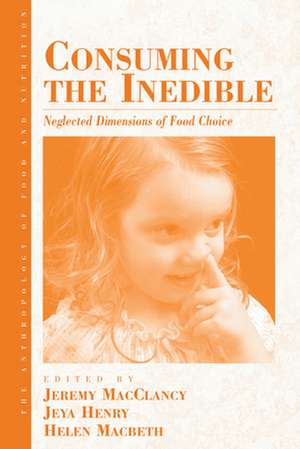
Consuming the Inedible
Editat de Jeremy M. Macclancy, Jeya Henry, Helen Macbethen Limba Engleză Paperback – sep 2009
This book is both timely and significant because nutritionists and health care professionals are seldom aware of anthropological information on these food practices, and vice versa. Ranging across a diversity of disciplines Consuming the Inedible surveys scientific and local views about the consequences--biological, mineral, social or spiritual--of these food practices, and probes to what extent we can generalize about them.
Jeremy M. MacClancy is Professor of Anthropology, C. Jeya Henry is Professor of Nutrition and Helen M. Macbeth is an Honorary Research Fellow in Anthropology, all at Oxford Brookes University."
Preț: 261.80 lei
Puncte Express: 393
Carte tipărită la comandă
Livrare economică 20 noiembrie-04 decembrie
Livrare prin curier în România Termenul estimat este afișat lângă disponibilitate.
Transport gratuit de la 400.00 lei Plată online sau ramburs, în funcție de opțiunile comenzii.
Retur gratuit în 14 zile Comandă securizată și suport în română.
Specificații
ISBN-13: 9781845456849
ISBN-10: 184545684X
Pagini: 258
Dimensiuni: 152 x 229 x 15 mm
Greutate: 0.35 kg
Editura: BERGHAHN BOOKS
Locul publicării:United Kingdom
ISBN-10: 184545684X
Pagini: 258
Dimensiuni: 152 x 229 x 15 mm
Greutate: 0.35 kg
Editura: BERGHAHN BOOKS
Locul publicării:United Kingdom
V-ar putea interesa
-
 Eating Your Auntie Is WrongStephen ArnottPreț: 91.91 lei
 -
 London LoreSteve Roud-17%Preț: 92.23 lei110.81 lei
 -
 The English YearSteve Roud-18%Preț: 100.46 lei122.14 lei
 -
 Unwrapping ChristmasDaniel Miller-28%Preț: 351.68 lei491.11 lei
 -
 The Book of TeaKakuzo Okakura-37%Preț: 18.36 lei29.03 lei
 -
 Eat Not This Flesh, 2nd Edition: Food Avoidances from Prehistory to the PresentFrederick J. SimoonsPreț: 238.24 lei
 -
 Preț: 167.03 lei
 -
 GesturesRoger E AxtellPreț: 107.44 lei
 -
 Disenchanted Night - The Industrialization of Light in the Nineteenth CenturyWolfgang SchivelbuschPreț: 216.99 lei
 -
 Food Preferences and TasteHelen Macbeth-23%Preț: 754.58 lei979.97 lei
 -
 Cha Dao: The Way of Tea, Tea as a Way of LifeSolala Towler-20%Preț: 132.46 lei165.40 lei
 -
 Living in the USAAlison R. Lanier-15%Preț: 98.30 lei115.60 lei
 -
 History and Myth in Romanian ConsciousnessLucian BoiaPreț: 424.43 lei
Notă biografică
Jeremy M. MacClancy is Professor of Social Anthropology at the Anthropology Department, Oxford Brookes University. He is the author of Consuming Culture, and prize-winning investigator of Basque cuisine. Jeya Henry is Professor of Human Nutrition at the School of Life Sciences, Oxford Brookes University, and Visting Professor at the Chinese University of Hong Kong. He was a board member of the UK Food Standards agency between 2000- 2003 and has published extensively on energy regulation and obesity. Helen Macbeth is Chair of ICAF (UK) and Honorary Research Fellow at the Anthropology Department, Oxford Brookes University.
Cuprins
List of Figures
List of Tables
Preface
List of Contributors
Introduction: Considering the Inedible, Consuming the Ineffable
Jeremy MacClancy, Helen Macbeth and Jeya Henry
Chapter 1. Evidence for the Consumption of the Inedible: Who, What, When, Where and Why?
Sera L.Young
Chapter 2. Consuming the Inedible: Pica Behaviour
Carmen Strungaru
Chapter 3. The Concepts of Food and Non-food: Perspectives from Spain
Isabel González Turmo
Chapter 4. Food Definitions and Boundaries: Eating Constraints and Human Identities
Ellen Messer
Chapter 5. A Vile Habit? The Potential Biological Consequences of Geophagia, with Special Attention to Iron
Sera L. Young
Chapter 6. The Discovery of Human Zinc Deficiency: A Reflective Journey Back in Time
Ananda S. Prasad
Chapter 7. Geophagia and Human Nutrition
Peter Hooda and Jeya Henry
Chapter 8. Consumption of Materials with Low Nutritional Value and Bioactive Properties: Non-human Primates vs Humans
Sabrina Krief
Chapter 9. Lime as the Key Element: A "Non-food" in Food for Subsistence
Ricardo Ávila, Martín Tena and Peter Hubbard
Chapter 10. Salt as a "Non-food": To What Extent Do Gustatory Perceptions Determine Non-food vs Food Choices?
Claude Marcel Hladik
Chapter 11. Non-food Food During Famine: The Athens Famine Survivor Project
Antonia-Leda Matalas and Louis E. Grivetti
Chapter 12. Eating Garbage: Socially Marginal Food Provisioning Practices
Rachel Black
Chapter 13. Eating Cat in the North of Spain in the Early Twentieth Century
F. Xavier Medina
Chapter 14. Insects: Forgotten and Rediscovered as Food. Entomophagy among the Eipo, Highlands of West New Guinea, and in Other Traditional Societies
Wulf Schiefenhövel and Paul Blum
Chapter 15. Eating Snot: Socially Unacceptable but Common. Why?
María Jesús Portalatín
Chapter 16. Cannibalism: No Myth, but Why So Rare?
Helen Macbeth, Wulf Schiefenhövel and Paul Collinson
Chapter 17. From Edible to Inedible: Social Construction, Family Socialisation and Upbringing
Luis Cantarero
Chapter 18. The Use of Waste Products in the Fermentation of Alcoholic Beverages
Rodolfo Fernández and Daria Deraga
Afterword: Earthy Realism: Geophagia in Literature and Art
Jeremy MacClancy
Index
List of Tables
Preface
List of Contributors
Introduction: Considering the Inedible, Consuming the Ineffable
Jeremy MacClancy, Helen Macbeth and Jeya Henry
Chapter 1. Evidence for the Consumption of the Inedible: Who, What, When, Where and Why?
Sera L.Young
Chapter 2. Consuming the Inedible: Pica Behaviour
Carmen Strungaru
Chapter 3. The Concepts of Food and Non-food: Perspectives from Spain
Isabel González Turmo
Chapter 4. Food Definitions and Boundaries: Eating Constraints and Human Identities
Ellen Messer
Chapter 5. A Vile Habit? The Potential Biological Consequences of Geophagia, with Special Attention to Iron
Sera L. Young
Chapter 6. The Discovery of Human Zinc Deficiency: A Reflective Journey Back in Time
Ananda S. Prasad
Chapter 7. Geophagia and Human Nutrition
Peter Hooda and Jeya Henry
Chapter 8. Consumption of Materials with Low Nutritional Value and Bioactive Properties: Non-human Primates vs Humans
Sabrina Krief
Chapter 9. Lime as the Key Element: A "Non-food" in Food for Subsistence
Ricardo Ávila, Martín Tena and Peter Hubbard
Chapter 10. Salt as a "Non-food": To What Extent Do Gustatory Perceptions Determine Non-food vs Food Choices?
Claude Marcel Hladik
Chapter 11. Non-food Food During Famine: The Athens Famine Survivor Project
Antonia-Leda Matalas and Louis E. Grivetti
Chapter 12. Eating Garbage: Socially Marginal Food Provisioning Practices
Rachel Black
Chapter 13. Eating Cat in the North of Spain in the Early Twentieth Century
F. Xavier Medina
Chapter 14. Insects: Forgotten and Rediscovered as Food. Entomophagy among the Eipo, Highlands of West New Guinea, and in Other Traditional Societies
Wulf Schiefenhövel and Paul Blum
Chapter 15. Eating Snot: Socially Unacceptable but Common. Why?
María Jesús Portalatín
Chapter 16. Cannibalism: No Myth, but Why So Rare?
Helen Macbeth, Wulf Schiefenhövel and Paul Collinson
Chapter 17. From Edible to Inedible: Social Construction, Family Socialisation and Upbringing
Luis Cantarero
Chapter 18. The Use of Waste Products in the Fermentation of Alcoholic Beverages
Rodolfo Fernández and Daria Deraga
Afterword: Earthy Realism: Geophagia in Literature and Art
Jeremy MacClancy
Index