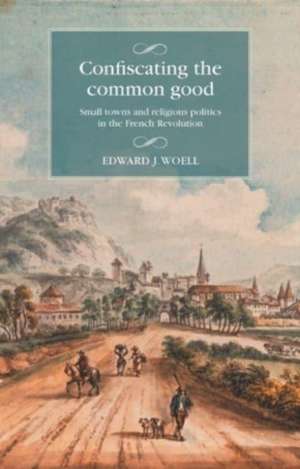
Confiscating the common good: Studies in Modern French and Francophone History
Autor Edward Woellen Limba Engleză Hardback – aug 2022







Preț: 729.09 lei
Preț vechi: 900.11 lei
-19%
Puncte Express: 1094
Carte tipărită la comandă
Livrare economică 19 decembrie 26 - 02 ianuarie 27
Livrare prin curier în România Termenul estimat este afișat lângă disponibilitate.
Transport gratuit pentru acest produs Plată online sau ramburs, în funcție de opțiunile comenzii.
Retur gratuit în 14 zile Comandă securizată și suport în română.
Specificații
ISBN-13: 9781526159137
ISBN-10: 1526159139
Pagini: 304
Ilustrații: 8 black & white illustrations
Dimensiuni: 145 x 222 x 21 mm
Greutate: 0.5 kg
Editura: MANCHESTER UNIVERSITY PRESS
Colecția Studies in Modern French and Francophone History
Seria Studies in Modern French and Francophone History
ISBN-10: 1526159139
Pagini: 304
Ilustrații: 8 black & white illustrations
Dimensiuni: 145 x 222 x 21 mm
Greutate: 0.5 kg
Editura: MANCHESTER UNIVERSITY PRESS
Colecția Studies in Modern French and Francophone History
Seria Studies in Modern French and Francophone History
Notă biografică
Edward J. Woell is Professor of History at Western Illinois University
Descriere
Challenging the subject's current interpretation, this microhistorical study traces the social and civic dynamics of the French Revolution's religious politics within five small towns. -- .