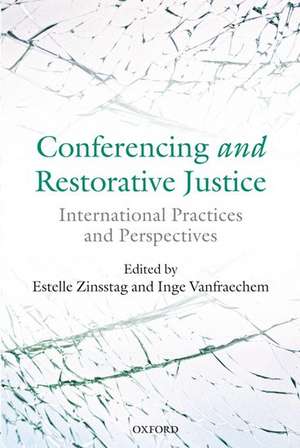
Conferencing and Restorative Justice: International Practices and Perspectives
Editat de Estelle Zinsstag, Inge Vanfraechemen Limba Engleză Hardback – 22 noi 2012
După parcurgerea acestui volum, cititorul va fi capabil să evalueze critic eficiența programelor de conferencing și să proiecteze strategii de implementare a justiției restaurative adaptate la diverse cadre legislative. Descoperim aici o analiză riguroasă a modului în care dialogul facilitat între infractor, victimă și comunitate poate repara daunele sociale mai eficient decât sistemele punitive tradiționale. Subliniem faptul că lucrarea nu se limitează la teorie; ea disecă mecanismele prin care practicile născute în anii '90 în Noua Zeelandă și Australia au fost adaptate global pentru a reduce rata criminalității.
Reținem distincția fundamentală pe care editorii o fac între modelul de conferencing și medierea victimă-infractor, oferind argumente solide pentru alegerea unei metode în funcție de contextul cultural și tipologia infracțiunii. Complementar volumului Restorative Justice for Juveniles, care se concentrează strict pe sfera minorilor, Conferencing and Restorative Justice extinde analiza asupra tuturor categoriilor de vârstă și explorează zone complexe, precum aplicabilitatea în cazurile de agresiune sexuală. Această tematică sensibilă reprezintă o punte de legătură cu alte lucrări fundamentale ale coordonatoarei Estelle Zinsstag, precum Sexual Violence and Restorative Justice sau Restorative Responses to Sexual Violence. Față de cercetările sale anterioare centrate pe trauma victimei, volumul de față adoptă o perspectivă sistemică, integrând experiențele din America Latină și Europa pentru a oferi o imagine de ansamblu asupra viitorului politicilor publice în domeniul penal.
Preț: 500.82 lei
Preț vechi: 695.38 lei
-28%
Carte tipărită la comandă
Livrare economică 12-23 iunie
Specificații
ISBN-10: 0199655030
Pagini: 266
Ilustrații: 10 illustrations
Dimensiuni: 162 x 236 x 23 mm
Greutate: 0.56 kg
Editura: OUP OXFORD
Colecția OUP Oxford
Locul publicării:Oxford, United Kingdom
V-ar putea interesa
-
 InjusticeClive Stafford SmithPreț: 129.43 lei
 -
 Blackstone's Prison Law Handbook 2014-2015Margaret Obi-35%Preț: 511.10 lei784.23 lei
 -
 -31%Preț: 500.35 lei720.67 lei
 -
 May God Have Mercy: A True Story of Crime and PunishmentJohn C. TuckerPreț: 114.10 lei
 -
 Restorative Justice: Ideas, Values, DebatesGerry Johnstone-15%Preț: 440.59 lei518.35 lei
 -
 Discipline and PunishMichel FoucaultPreț: 98.15 lei
 -
 Worse Than SlaveryDavid M. OshinskyPreț: 100.39 lei
 -
 Punishment and PrisonsJoe SimPreț: 447.50 lei
 -
 Preț: 126.38 lei
 -
 Choosing MercyAntoinette BoscoPreț: 108.81 lei
 -
 Handbook of ProbationLoraine Gelsthorpe-8%Preț: 513.23 lei557.86 lei
 -
 Cesare BeccariaHostettlerPreț: 236.20 lei
 -
 A Good Man InsidePhillips WillPreț: 89.39 lei
De ce să citești această carte
Această carte este esențială pentru profesioniștii din sistemul judiciar, mediatori și experți în politici publice care doresc să implementeze metode dovedite de reducere a recidivei. Cititorul câștigă o înțelegere profundă a tehnicilor de mediere la nivel internațional și instrumente concrete pentru gestionarea conflictelor penale prin dialog. Este resursa definitivă pentru a trece de la justiția retributivă la una care vindecă activ comunitatea.
Despre autor
Estelle Zinsstag este o figură centrală în cercetarea justiției restaurative, fiind recunoscută pentru expertiza sa în aplicarea acestor principii în cazuri de violență sexuală. Alături de Inge Vanfraechem, a coordonat numeroase proiecte internaționale care explorează metodele de cercetare și implementare a justiției reparatorii. Lucrările sale, printre care se numără și Handbook on Methods in Restorative Justice Research, sunt fundamentale pentru mediul academic și juridic european, promovând o abordare interdisciplinară și inovatoare asupra modului în care societatea răspunde criminalității.