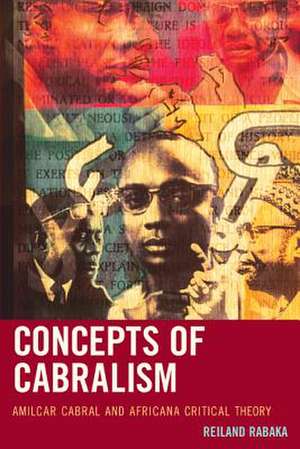
Concepts of Cabralism: Amilcar Cabral and Africana Critical Theory: Critical Africana Studies
Autor Reiland Rabakaen Limba Engleză Paperback – 25 aug 2015
Din seria Critical Africana Studies
- nou
 Preț: 558.31 lei
 - 36%
 Preț: 565.15 lei
 - 30%
 Preț: 326.92 lei
 - 30%
 Preț: 326.35 lei
 - 35%
 Preț: 542.52 lei
 - 30%
 Preț: 327.62 lei
 - 28%
 Preț: 272.95 lei
 - 25%
 Preț: 350.95 lei
 - 34%
 Preț: 403.55 lei
 - 28%
 Preț: 258.21 lei
 - 34%
 Preț: 554.96 lei
 - 37%
 Preț: 759.17 lei
 - 34%
 Preț: 523.61 lei
 - 28%
 Preț: 246.89 lei
 - 24%
 Preț: 305.18 lei
 - 24%
 Preț: 211.14 lei
 - 24%
 Preț: 304.60 lei
 - 30%
 Preț: 327.92 lei
 - 36%
 Preț: 504.41 lei
 - 36%
 Preț: 501.95 lei
 - 30%
 Preț: 208.96 lei
 - 37%
 Preț: 499.33 lei
 - 28%
 Preț: 245.42 lei
Preț: 353.77 lei
Preț vechi: 470.93 lei
-25%
Puncte Express: 531
Carte tipărită la comandă
Livrare economică 05-19 iunie
Specificații
ISBN-13: 9780739199268
ISBN-10: 0739199269
Pagini: 386
Dimensiuni: 150 x 228 x 26 mm
Greutate: 0.58 kg
Editura: Bloomsbury Publishing
Colecția Lexington Books
Seria Critical Africana Studies
Locul publicării:New York, United States
ISBN-10: 0739199269
Pagini: 386
Dimensiuni: 150 x 228 x 26 mm
Greutate: 0.58 kg
Editura: Bloomsbury Publishing
Colecția Lexington Books
Seria Critical Africana Studies
Locul publicării:New York, United States
V-ar putea interesa
-
 Our Kind of PeopleLawrence Otis GrahamPreț: 107.06 lei
 -
 Trouble in Mind: Black Southerners in the Age of Jim CrowLeon F. LitwackPreț: 142.44 lei
 -
 -15%Preț: 539.96 lei635.24 lei
 -
 Preț: 199.96 lei
 -
 Preț: 140.24 lei
 -
 Jefferson's PillowRoger W. WilkinsPreț: 137.72 lei
 -
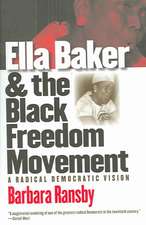 Ella Baker and the Black Freedom MovementBarbara RansbyPreț: 284.86 lei
 -
 Death of InnocenceMamie Till-MobleyPreț: 106.72 lei
 -
 Black Gay ManRobert F Reid-PharrPreț: 239.53 lei
 -
 Herndons: An Atlanta FamilyCarole MerrittPreț: 278.18 lei
 -
 The Civil Rights Movement in American MemoryRenee C. RomanoPreț: 271.75 lei
 -
 Conversations with Richard WrightRichard Nathaniel WrightPreț: 230.26 lei
 -
 Conversations with Amiri BarakaImamu Amiri BarakaPreț: 232.09 lei
Cuprins
Introduction: Contours of Cabralism
Part I: Return to the Source: The Philosophical Foundations of Cabral's Critical Theory
Chapter 1: The Negritude Movement: Cesaire, Senghor, and Critical Social Theory
Chapter 2: Fanonism: Fanon's Dialectic of Radical Disalienation and Revolutionary Decolonization
Part II: The Weapon of Theory: Cabral's Critical Theory and Revolutionary Praxis
Chapter 3: Cabral's Critical Theory of Colonialism, Neocolonialism, and Imperialism
Chapter 4: Cabral's Critical Theory of Marxism, Nationalism, and Humanism
Chapter 5: Cabral's Critical Theory of History, Culture, and National Liberation
Part III: The Africana Tradition of Critical Theory: Cabral and the Decolonization and Re-Africanization of Radical Politics, Critical Social Theory, and Revolutionary Praxis
Chapter 6: Africana Critical Theory in the Aftermath of Amilcar Cabral and Cabralism's Contributions
Part I: Return to the Source: The Philosophical Foundations of Cabral's Critical Theory
Chapter 1: The Negritude Movement: Cesaire, Senghor, and Critical Social Theory
Chapter 2: Fanonism: Fanon's Dialectic of Radical Disalienation and Revolutionary Decolonization
Part II: The Weapon of Theory: Cabral's Critical Theory and Revolutionary Praxis
Chapter 3: Cabral's Critical Theory of Colonialism, Neocolonialism, and Imperialism
Chapter 4: Cabral's Critical Theory of Marxism, Nationalism, and Humanism
Chapter 5: Cabral's Critical Theory of History, Culture, and National Liberation
Part III: The Africana Tradition of Critical Theory: Cabral and the Decolonization and Re-Africanization of Radical Politics, Critical Social Theory, and Revolutionary Praxis
Chapter 6: Africana Critical Theory in the Aftermath of Amilcar Cabral and Cabralism's Contributions
Recenzii
Rabaka contributes to radical black politics and Africana critical social theory and exceeds expectations on both counts. Six chapters guide readers through a corpus that 'draws from a diverse array of often eclectic and enigmatic sources and, therefore, offers no closed system or absolute truths.'. . . .Rabaka's critical introduction outlines Cabral's biography and the genealogy of his thought. Chapter 1 begins with a provocative claim: 'in many respects Frantz Fanon and Amilcar Cabral represent the pillars and pinnacle of the Africana tradition of critical theory in the second half of the 20th century.' The author situates the dialectic task before black thinkers as 'challenging both whites' demonization and Blacks' romanticism' of Africa. Chapter 2 carefully outlines Fanon's challenge to negritude. Fanon's method for apprehending the totalizing effects of European colonialism becomes cartographic in Rabaka's reading of Cabral's engagement with colonialism, neocolonialism, imperialism, Marxism, and history. The book ends by articulating Cabral's usefulness for Rabaka's larger vision of Africana critical theory. An original contribution to Africana philosophy and studies, critical theory, and currently reemerging anticolonial paradigms throughout the academy. A must-have. Summing Up: Essential. Upper-division undergraduates and above.
Reiland Rabaka has brought together a comprehensive review of Amilcar Cabral and his intellectual legacy that will be indispensable for researchers and students alike. Contextualising Cabral's ideas and praxis within the framework of those of Frantz Fanon, and Marxist and Africana critical theory, makes this an extraordinary tour de force.
Concepts of Cabralism fills a lacuna in the 21st century black studies archive. It is a book that demands that Amilcar Cabral no longer be a footnote in the scholarship on and about the black radical tradition. Reiland Rabaka clearly and cogently provides a valuable matrix to understand Cabral in relation to other great Africana thinkers. Concepts of Cabralism illustrates that Cabral's ideas are not dead, but of extreme contemporary import.
After its detailed examination of the intellectual contexts provided by the Negritude Movement and Frantz Fanon, Concepts of Cabralism dives into a masterful reading of works by the important, but currently overlooked, figure of Amilcar Cabral. It is a must read for scholars of Cabral, the larger Black Radical Tradition, and the even larger field of contemporary Africana thought. A timely contribution to all of these fields.
Reiland Rabaka has brought together a comprehensive review of Amilcar Cabral and his intellectual legacy that will be indispensable for researchers and students alike. Contextualising Cabral's ideas and praxis within the framework of those of Frantz Fanon, and Marxist and Africana critical theory, makes this an extraordinary tour de force.
Concepts of Cabralism fills a lacuna in the 21st century black studies archive. It is a book that demands that Amilcar Cabral no longer be a footnote in the scholarship on and about the black radical tradition. Reiland Rabaka clearly and cogently provides a valuable matrix to understand Cabral in relation to other great Africana thinkers. Concepts of Cabralism illustrates that Cabral's ideas are not dead, but of extreme contemporary import.
After its detailed examination of the intellectual contexts provided by the Negritude Movement and Frantz Fanon, Concepts of Cabralism dives into a masterful reading of works by the important, but currently overlooked, figure of Amilcar Cabral. It is a must read for scholars of Cabral, the larger Black Radical Tradition, and the even larger field of contemporary Africana thought. A timely contribution to all of these fields.