![Computer Networking [Global Edition] de James Kurose](https://i1.books-express.ro/be/9781292405469/computer-networking-global-edition.jpg)
Computer Networking [Global Edition]
Autor James Kurose, Keith Rossen Limba Engleză Paperback – 10 iun 2021
Cititorul va dobândi capacitatea de a proiecta și analiza arhitecturi complexe de rețea, înțelegând fluxul datelor de la interfața utilizatorului până la mediul fizic de transmisie. Considerăm că forța acestui volum, ajuns la a 8-a ediție, rezidă în metodologia sa „top-down”. Spre deosebire de manualele tradiționale, James Kurose și Keith Ross prioritizează stratul aplicație, permițând explorarea timpurie a protocoalelor HTTP, SMTP sau DNS înainte de a trece la mecanismele interne de transport și rutare. Această abordare diferă de cea din Data Communications and Networking with TCP/IP Protocol Suite ISE de Behrouz A. Forouzan prin faptul că este mai puțin abstractă și mult mai aplicabilă: în loc să construiască fundația de la zero (bottom-up), autorii expun imediat utilitatea rețelelor în viața reală. Notăm cu interes modul în care cuprinsul este structurat pentru a reflecta realitățile tehnologice curente. Progresia este logică: se începe cu o viziune de ansamblu asupra Internetului și a conceptelor de delay și pierderi de pachete (Capitolul 1), continuând apoi prin straturile de protocol. Ediția actuală este esențială pentru profesioniștii moderni, deoarece integrează capitole despre SDN (Software-Defined Networking) și impactul rețelelor mobile 4G/5G. Față de TCP/IP Illustrated, care se concentrează pe analiza detaliată a protocoalelor prin instrumente de diagnostic, [Computer Networking [Global Edition]](book) oferă un cadru conceptual mai vast, fiind ideal pentru studenții de la informatică sau inginerie electronică ce doresc o bază solidă fără a fi copleșiți de matematică excesivă.
Preț: 566.68 lei
Preț vechi: 708.35 lei
-20%
Carte disponibilă
Livrare economică 06-20 noiembrie
Livrare express 22-28 octombrie pentru 64.09 lei
Specificații
ISBN-10: 1292405465
Pagini: 800
Dimensiuni: 232 x 191 x 33 mm
Greutate: 1.33 kg
Ediția:8. Auflage
Editura: Pearson
Colecția Pearson Higher Education
V-ar putea interesa
-
 Computer Networks: A Systems ApproachLarry L. Peterson-41%Preț: 558.53 lei941.05 lei
 -
 -20%Preț: 304.38 lei380.49 lei
 -
 Introduction to Networks Companion Guide (Ccnav7)Cisco Networking Academy-19%Preț: 576.69 lei711.97 lei
 -
 Networking Essentials Companion Guide v3Cisco Networking Academy-20%Preț: 589.99 lei737.48 lei
 -
 Introduction to AlgorithmsThomas H. Cormen-16%Preț: 1048.83 lei1248.61 lei
 -
 TCP/IP IllustratedKevin Fall-20%Preț: 403.13 lei503.92 lei
 -
 AlgorithmsRobert Sedgewick-20%Preț: 521.68 lei652.09 lei
 -
 -24%Preț: 61.44 lei80.93 lei
 -
 Cracking the Coding InterviewGayle Laakmann Mcdowell-20%Preț: 342.69 lei428.36 lei
 -
 Networking For Dummies, 12th EditionDoug Lowe-20%Preț: 174.23 lei217.78 lei
 -
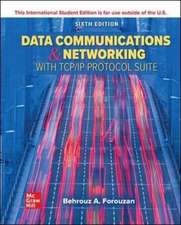 Data Communications and Networking with TCP/IP Protocol Suite ISEBehrouz A. Forouzan-39%Preț: 345.44 lei564.60 lei
 -
 Data and Computer CommunicationsWilliam Stallings-11%Preț: 638.48 lei717.39 lei
 -
 -11%Preț: 653.72 lei734.52 lei
 -
 Computer Networks, Global EditionAndrew Tanenbaum-20%Preț: 601.07 lei751.33 lei
 -
 Networking All-In-One for DummiesDoug Lowe-20%Preț: 258.11 lei322.63 lei
 -
 -20%Preț: 395.79 lei494.74 lei
 -
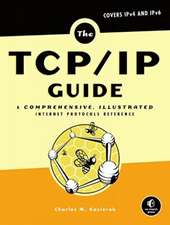 The TCP/IP GuideCharles M. Kozierok-28%Preț: 497.72 lei686.90 lei
 -
 Computer Networks in Packet Tracer for BeginnersDamian Strojek-20%Preț: 260.25 lei325.32 lei
 -
 -22%Preț: 647.95 lei835.60 lei
De ce să citești această carte
Recomandăm această carte oricărui viitor inginer de sistem sau dezvoltator care dorește să înțeleagă „mecanica” Internetului modern. Prin abordarea top-down, câștigi o perspectivă clară asupra modului în care aplicațiile comunică global. Este un ghid practic ce transformă teoria rețelelor într-un instrument de lucru, incluzând cele mai noi standarde 5G și SDN, fundamentale pentru infrastructura IT actuală.
Despre autor
James Kurose este profesor distins la University of Massachusetts Amherst, fiind recunoscut la nivel mondial pentru contribuțiile sale în cercetarea protocoalelor de rețea și a sistemelor multimedia. Keith Ross este decan de inginerie și informatică la NYU Shanghai, cu o expertiză vastă în rețele peer-to-peer și modelarea traficului. Împreună, cei doi autori au creat unul dintre cele mai influente texte academice din domeniul IT, adaptând constant materialul la evoluția rapidă a tehnologiilor de comunicare, de la primele protocoale până la arhitecturile moderne bazate pe software.
Cuprins
Chapter 1: Computer Networks and the Internet
1.2 The Network Edge
1.2.1 Access Networks
1.2.2 Physical Media
1.3 The Network Core
1.3.1 Packet Switching
1.3.2 Circuit Switching
1.3.3 A Network of Networks
1.4 Delay, Loss, and Throughput in Packet-Switched Networks
1.4.1 Overview of Delay in Packet-Switched Networks
1.4.2 Queuing Delay and Packet Loss
1.4.3 End-to-End Delay
1.4.4 Throughput in Computer Networks
1.5 Protocol Layers and Their Service Models
1.5.1 Layered Architecture
1.5.2 Encapsulation
1.6 Networks Under Attack
1.7 History of Computer Networking and the Internet
1.7.1 The Development of Packet Switching: 19611972
1.7.2 Proprietary Networks and Internetworking: 19721980
1.7.3 A Proliferation of Networks: 19801990
1.7.4 The Internet Explosion: The 1990s
1.7.5 The New Millennium
1.8 Summary
Homework Problems and Questions
Wireshark Lab
Chapter 2: Application Layer
2.1 Principles of Network Applications
2.1.1 Network Application Architectures
2.1.2 Processes Communicating
2.1.3 Transport Services Available to Applications
2.1.4 Transport Services Provided by the Internet
2.1.5 Application-Layer Protocols
2.1.6 Network Applications Covered in This Book
2.2 The Web and HTTP
2.2.1 Overview of HTTP
2.2.2 Non-Persistent and Persistent Connections
2.2.3 HTTP Message Format
2.2.4 User-Server Interaction: Cookies
2.2.5 Web Caching
2.2.6 HTTP/2
2.3 Electronic Mail in the Internet
2.3.1 SMTP
2.3.2 Mail Message Formats
2.3.3 Mail Access Protocols
2.4 DNSThe Internet's Directory Service
2.4.1 Services Provided by DNS
2.4.2 Overview of How DNS Works
2.4.3 DNS Records and Messages
2.5 Peer-to-Peer Applications
2.5.1 P2P File Distribution
2.6 Video Streaming and Content Distribution Networks
2.6.1 Internet Video
2.6.2 HTTP Streaming and DASH
2.6.3 Content Distribution Networks
2.6.4 Case Studies: Netflix and YouTube
2.7 Socket Programming: Creating Network Applications
2.7.1 Socket Programming with UDP
2.7.2 Socket Programming with TCP
2.8 Summary
Homework Problems and Questions
Socket Programming Assignments
Wireshark Labs: HTTP, DNS
Chapter 3: Transport Layer
3.1 Introduction and Transport-Layer Services
3.1.1 Relationship Between Transport and Network Layers
3.1.2 Overview of the Transport Layer in the Internet
3.2 Multiplexing and Demultiplexing
3.3 Connectionless Transport: UDP
3.3.1 UDP Segment Structure
3.3.2 UDP Checksum
3.4 Principles of Reliable Data Transfer
3.4.1 Building a Reliable Data Transfer Protocol
3.4.2 Pipelined Reliable Data Transfer Protocols
3.4.3 Go-Back-N (GBN)
3.4.4 Selective Repeat (SR)
3.5 Connection-Oriented Transport: TCP
3.5.1 The TCP Connection
3.5.2 TCP Segment Structure
3.5.3 Round-Trip Time Estimation and Timeout
3.5.4 Reliable Data Transfer
3.5.5 Flow Control
3.5.6 TCP Connection Management
3.6 Principles of Congestion Control
3.6.1 The Causes and the Costs of Congestion
3.6.2 Approaches to Congestion Control
3.7 TCP Congestion Control
3.7.1 Classic TCP congestion Control
3.7.2 Network-Assisted Explicit Congestion Notification and Delay-based Congestion Control
3.7.3 Fairness
3.8 Evolution of transport-layer functionality
3.9 Summary
Homework Problems and Questions
Programming Assignments
Wireshark Labs: Exploring TCP, UDP
Chapter 4: The Network Layer: Data Plane
4.1 Overview of Network Layer
4.1.1 Forwarding and Routing: The Network Data and Control Planes
4.1.2 Network Service Models
4.2 What's Inside a Router?
4.2.1 Input Port Processing and Destination-Based Forwarding
4.2.2 Switching
4.2.3 Output Port Processing
4.2.4 Where Does Queuing Occur?
4.2.5 Packet Scheduling
4.3 The Internet Protocol (IP): IPv4, Addressing, IPv6, and More
4.3.1 IPv4 Datagram Format
4.3.2 IPv4 Addressing
4.3.3 Network Address Translation (NAT)
4.3.4 IPv6
4.4 Generalized Forwarding and SDN
4.4.1 Match
4.4.2 Action
4.4.3 OpenFlow Examples of Match-plus-action in Action
4.5 Middleboxes
4.6 Summary
Homework Problems and Questions
Wireshark Lab: IP
Chapter 5: The Network Layer: Control Plane
5.1 Introduction
5.2 Routing Algorithms
5.2.1 The Link-State (LS) Routing Algorithm
5.2.2 The Distance-Vector (DV) Routing Algorithm
5.3 Intra-AS Routing in the Internet: OSPF
5.4 Routing Among the ISPs: BGP
5.4.1 The Role of BGP
5.4.2 Advertising BGP Route Information
5.4.3 Determining the Best Routes
5.4.4 IP-Anycast
5.4.5 Routing Policy
5.4.6 Putting the Pieces Together: Obtaining Internet Presence
5.5 The SDN Control Plane
5.5.1 The SDN Control Plane: SDN Controller and SDN Control Applications
5.5.2 OpenFlow Protocol
5.5.3 Data and Control Plane Interaction: An Example
5.5.4 SDN: Past and Future
5.6 ICMP: The Internet Control Message Protocol
5.7 Network Management, SNMP, and NETCONF/YANG
5.7.1 The Network Management Framework
5.7.2 The Simple Network Management Protocol (SNMP)
5.7.3 NETCONF and YANG
5.8 Summary
Homework Problems and Questions
Socket Programming Assignment
Programming Assignment
Wireshark Lab: ICMP
Chapter 6: The Link Layer and LANs
6.1 Introduction to the Link Layer
6.1.1 The Services Provided by the Link Layer
6.1.2 Where Is the Link Layer Implemented?
6.2 Error-Detection and -Correction Techniques
6.2.1 Parity Checks
6.2.2 Checksumming Methods
6.2.3 Cyclic Redundancy Check (CRC)
6.3 Multiple Access Links and Protocols
6.3.1 Channel Partitioning Protocols
6.3.2 Random Access Protocols
6.3.3 Taking-Turns Protocols
6.3.4 DOCSIS: The Link-Layer Protocol for Cable Internet Access
6.4 Switched Local Area Networks
6.4.1 Link-Layer Addressing and ARP
6.4.2 Ethernet
6.4.3 Link-Layer Switches
6.4.4 Virtual Local Area Networks (VLANs)
6.5 Link Virtualization: A Network as a Link Layer
6.5.1 Multiprotocol Label Switching (MPLS)
6.6 Data Center Networking
6.6.1 Data Center Architectures
6.6.2 Trends in Data Center Networking
6.7 Retrospective: A Day in the Life of a Web Page Request
6.7.1 Getting Started: DHCP, UDP, IP, and Ethernet
6.7.2 Still Getting Started: DNS and ARP
6.7.3 Still Getting Started: Intra-Domain Routing to the DNS Server
6.7.4 Web Client-Server Interaction: TCP and HTTP
6.8 Summary
Homework Problems and Questions
Wireshark Labs: Ethernet and Home Networking
Chapter 7: Wireless and Mobile Networks
7.1 Introduction
7.2 Wireless Links and Network Characteristics
7.2.1 CDMA
7.3 Wireless LANs
7.3.1 The 802.11 Architecture
7.3.2 The 802.11 MAC Protocol
7.3.3 The IEEE 802.11 Frame
7.3.4 Mobility in the Same IP Subnet
7.3.5 Advanced Features in 802.11
7.3.6 Bluetooth
7.4 Cellular Networks: 4G and 5G
7.4.1 4G LTE Cellular Networks: Architecture and Elements
7.4.2 LTE Protocol Stacks
7.5 Mobility Management: Principles
7.7 Wireless and Mobility: Impact on Higher-Layer Protocols
7.8 Summary
Homework Problems and Questions
Wireshark Lab: 802.11
Chapter 8: Security in Computer Networks
8.1 What Is Network Security?
8.2 Principles of Cryptography
8.2.1 Symmetric Key Cryptography
8.2.2 Public Key Encryption
8.3 Message Integrity and Digital Signatures
8.3.1 Cryptographic Hash Functions
8.3.2 Message Authentication Code
8.3.3 Digital Signatures
8.4 End-Point Authentication
8.4.1 Building an Authentication Protocol
8.5 Securing E-Mail
8.5.1 Secure E-Mail
8.5.2 PGP
8.6 Securing TCP Connections: SSL
8.6.1 The Big Picture
8.6.2 A More Complete Picture
8.7 Network-Layer Security: IPsec and Virtual Private Networks
8.7.1 IPsec and Virtual Private Networks (VPNs)
8.7.2 The AH and ESP Protocols
8.7.3 Security Associations
8.7.4 The IPsec Datagram
8.7.5 IKE: Key Management in IPsec
8.8 Securing Wireless LANs and 4G/5G Cellular Networks
8.8.1 Authentication and Key Agreement in 802.11 Wireless LANs
8.8.2 Authentication and Key Agreement in 4G/5G Cellular Networks
8.9 Operational Security: Firewalls and Intrusion Detection Systems
8.9.1 Firewalls
8.9.2 Intrusion Detection Systems
8.10 Summary
Homework Problems and Questions
Wireshark Lab: SSL
IPsec Lab
Descriere scurtă
Notă biografică
About our authors Jim Kurose is a Distinguished University Professor in the College of Information and Computer Sciences at the University of Massachusetts Amherst, where he has been on the faculty since receiving his PhD in computer science from Columbia University. He received a BA in physics from Wesleyan University. He has held a number of visiting scientist positions in the US and abroad, including IBM Research, INRIA and the Sorbonne University in France. He recently completed a 5-year term as Assistant Director at the US National Science Foundation, where he led the Directorate of Computer and Information Science and Engineering in its mission is to uphold the nation's leadership in scientific discovery and engineering innovation.
Jim is proud to have mentored and taught an amazing group of students, and to have received a number of awards for his research, teaching and service, including the IEEE Infocom Award, the ACM SIGCOMM Lifetime Achievement Award, the ACM Sigcomm Test of Time Award and the IEEE Computer Society Taylor Booth Education Medal. Dr. Kurose is a former Editor-in-Chief of IEEE Transactions on Communications and of IEEE/ACM Transactions on Networking. He has served as Technical Program Co-Chair for IEEE Infocom, ACM SIGCOMM, ACM Internet Measurement Conference and ACM SIGMETRICS. He is a Fellow of the IEEE and the ACM. His research interests include network protocols and architecture, network measurement, multimedia communication, and modeling and performance evaluation.
Keith Ross is the Dean of Engineering and Computer Science at NYU Shanghai and the Leonard J. Shustek Chair Professor in the Computer Science and Engineering Department at NYU. Previously he was at University of Pennsylvania (13 years), Eurecom Institute (5 years) and NYU-Poly (10 years). He received a B.S.E.E from Tufts University, a M.S.E.E. from Columbia University and a Ph.D. in Computer and Control Engineering from The University of Michigan. Keith Ross is also the co-founder and original CEO of Wimba, which develops online multimedia applications for e-learning and was acquired by Blackboard in 2010.
Professor Ross's research interests have been in modeling and measurement of computer networks, peer-to-peer systems, content distribution networks, social networks and privacy. He is currently working in deep reinforcement learning. He is an ACM Fellow, an IEEE Fellow, recipient of the Infocom 2009 Best Paper Award and recipient of 2011 and 2008 Best Paper Awards for Multimedia Communications (awarded by IEEE Communications Society). He has served on numerous journal editorial boards and conference program committees, including IEEE/ACM Transactions on Networking, ACM SIGCOMM, ACM CoNext and ACM Internet Measurement Conference. He also has served as an advisor to the Federal Trade Commission on P2P file sharing.