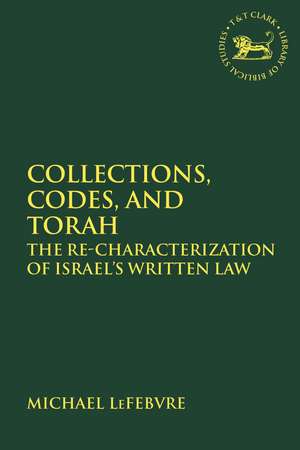
Collections, Codes, and Torah: The Re-characterization of Israel's Written Law: The Library of Hebrew Bible/Old Testament Studies
Autor Michael Lefebvreen Limba Engleză Paperback – 28 noi 2019
.
Din seria The Library of Hebrew Bible/Old Testament Studies
- 28%
 Preț: 523.27 lei
 - 34%
 Preț: 524.05 lei
 - nou
 Preț: 563.78 lei
 - 31%
 Preț: 572.25 lei
 - 32%
 Preț: 596.25 lei
 - 35%
 Preț: 717.27 lei
 - 36%
 Preț: 584.76 lei
 - 24%
 Preț: 1221.79 lei
 - 24%
 Preț: 1239.43 lei
 - 25%
 Preț: 1150.86 lei
 - 25%
 Preț: 1087.98 lei
 - 25%
 Preț: 1171.84 lei
 - 25%
 Preț: 1103.91 lei
 - 26%
 Preț: 851.19 lei
 - 33%
 Preț: 771.63 lei
 - 36%
 Preț: 775.17 lei
 - 24%
 Preț: 1050.50 lei
 - 25%
 Preț: 1103.05 lei
 - 33%
 Preț: 1152.79 lei
 - 24%
 Preț: 1222.30 lei
 - 26%
 Preț: 1160.43 lei
 - 22%
 Preț: 532.76 lei
 - 24%
 Preț: 1179.15 lei
 - 24%
 Preț: 1219.04 lei
 - 29%
 Preț: 1215.32 lei
 - 21%
 Preț: 505.33 lei
 - 25%
 Preț: 1215.95 lei
 - 25%
 Preț: 1232.49 lei
 - 24%
 Preț: 1245.08 lei
 - 25%
 Preț: 1211.71 lei
 - 25%
 Preț: 1213.13 lei
 - 25%
 Preț: 845.74 lei
 - 25%
 Preț: 1216.13 lei
 - 25%
 Preț: 961.42 lei
 - 20%
 Preț: 414.96 lei
 - 24%
 Preț: 964.78 lei
 - 26%
 Preț: 369.50 lei
 - 25%
 Preț: 1088.14 lei
 - 34%
 Preț: 914.32 lei
 - 24%
 Preț: 838.13 lei
 - 33%
 Preț: 1215.43 lei
 - 24%
 Preț: 263.50 lei
 - 24%
 Preț: 706.80 lei
 - 33%
 Preț: 1154.57 lei
 - 24%
 Preț: 772.59 lei
 - 25%
 Preț: 1215.87 lei
 - 33%
 Preț: 1024.39 lei
 - 25%
 Preț: 1153.87 lei
 - 25%
 Preț: 1217.20 lei
 - 33%
 Preț: 1152.36 lei
Preț: 259.36 lei
Preț vechi: 302.22 lei
-14%
Puncte Express: 389
Carte tipărită la comandă
Livrare economică 04-18 decembrie
Livrare prin curier în România Termenul estimat este afișat lângă disponibilitate.
Transport gratuit de la 400.00 lei Plată online sau ramburs, în funcție de opțiunile comenzii.
Retur gratuit în 14 zile Comandă securizată și suport în română.
Specificații
ISBN-13: 9780567692672
ISBN-10: 0567692671
Pagini: 320
Ilustrații: 4 bw illus
Dimensiuni: 154 x 240 x 20 mm
Greutate: 0.45 kg
Editura: Bloomsbury Publishing
Colecția T&T Clark
Seria The Library of Hebrew Bible/Old Testament Studies
Locul publicării:London, United Kingdom
ISBN-10: 0567692671
Pagini: 320
Ilustrații: 4 bw illus
Dimensiuni: 154 x 240 x 20 mm
Greutate: 0.45 kg
Editura: Bloomsbury Publishing
Colecția T&T Clark
Seria The Library of Hebrew Bible/Old Testament Studies
Locul publicării:London, United Kingdom
Cuprins
Lefebvre
Table of Contents
1. Introduction: Collections, Codes, and Torah....................................................................... 1
The Cuneiform Law-Writings .................................................................................................8
The Athenian Law-Writings ................................................................................................. 17
Methodology and Approach ................................................................................................. 21
2. Written-Law in Ancient Israel............................................................................................ 28
Current Scholarship on Hebrew Law-Writing ............................................................................ 29
Source-Law in the Pentateuchal Judiciary ............................................................................... 36
Proponents of the Legislative Model ...................................................................................... 43
Conclusions .................................................................................................................... 49
3. Written-Law in the Deuteronomic School ........................................................................ 51
Patrick on Deuteronomic Law-Writings ................................................................................... 53
Westbrook on Deuteronomic Law-Writings ............................................................................... 66
Deuteronomic Attitudes toward Law-Writings........................................................................... 79
Conclusions .................................................................................................................... 86
4. Written-Law in Persian-Era Yehud.................................................................................... 87
Law-Book Citations in Ezra-Nehemiah .................................................................................... 92
Law-Book Study in Ezra-Nehemiah........................................................................................119
Conclusions ...................................................................................................................126
5. Written-Law in Hellenistic-Era Judea (I): Ptolemaic Court-Reforms.............................. 133
The Juridical System of Ptolemy II - in Egypt..........................................................................140
The Juridical System of Ptolemy II - in Judea .........................................................................144
The Impact on Native-Law - in Egypt....................................................................................148
The Impact on Native-Law - in Judea ...................................................................................157
Conclusions ...................................................................................................................164
6. Written-Law in Hellenistic-Era Judea (II): The Civilized/Barbarian Polemic................. 166
The Civilized/Barbarian Polemic..........................................................................................167
Diaspora Torah Polemics (the Hellenistic Writers).....................................................................172
Judean Torah Polemics (1 and 2 Maccabees)............................................................................185
Conclusions ...................................................................................................................217
7. Written-Law in Greco-Roman Torah Sects: A Projection............................................... 219
Rabbinic Judaism: The Mishnah ...........................................................................................220
Qumran: Community Rule (1QS) ..........................................................................................225
"Nazarene" Judaism: Matthew's Jesus ..................................................................................228
Conclusions ...................................................................................................................233
8. Conclusion: The Re-characterization of Israel's Written-Law ....................................... 234
Main Project Conclusions...................................................................................................235
Projected Implications / Further Research...............................................................................239
Table of Contents
1. Introduction: Collections, Codes, and Torah....................................................................... 1
The Cuneiform Law-Writings .................................................................................................8
The Athenian Law-Writings ................................................................................................. 17
Methodology and Approach ................................................................................................. 21
2. Written-Law in Ancient Israel............................................................................................ 28
Current Scholarship on Hebrew Law-Writing ............................................................................ 29
Source-Law in the Pentateuchal Judiciary ............................................................................... 36
Proponents of the Legislative Model ...................................................................................... 43
Conclusions .................................................................................................................... 49
3. Written-Law in the Deuteronomic School ........................................................................ 51
Patrick on Deuteronomic Law-Writings ................................................................................... 53
Westbrook on Deuteronomic Law-Writings ............................................................................... 66
Deuteronomic Attitudes toward Law-Writings........................................................................... 79
Conclusions .................................................................................................................... 86
4. Written-Law in Persian-Era Yehud.................................................................................... 87
Law-Book Citations in Ezra-Nehemiah .................................................................................... 92
Law-Book Study in Ezra-Nehemiah........................................................................................119
Conclusions ...................................................................................................................126
5. Written-Law in Hellenistic-Era Judea (I): Ptolemaic Court-Reforms.............................. 133
The Juridical System of Ptolemy II - in Egypt..........................................................................140
The Juridical System of Ptolemy II - in Judea .........................................................................144
The Impact on Native-Law - in Egypt....................................................................................148
The Impact on Native-Law - in Judea ...................................................................................157
Conclusions ...................................................................................................................164
6. Written-Law in Hellenistic-Era Judea (II): The Civilized/Barbarian Polemic................. 166
The Civilized/Barbarian Polemic..........................................................................................167
Diaspora Torah Polemics (the Hellenistic Writers).....................................................................172
Judean Torah Polemics (1 and 2 Maccabees)............................................................................185
Conclusions ...................................................................................................................217
7. Written-Law in Greco-Roman Torah Sects: A Projection............................................... 219
Rabbinic Judaism: The Mishnah ...........................................................................................220
Qumran: Community Rule (1QS) ..........................................................................................225
"Nazarene" Judaism: Matthew's Jesus ..................................................................................228
Conclusions ...................................................................................................................233
8. Conclusion: The Re-characterization of Israel's Written-Law ....................................... 234
Main Project Conclusions...................................................................................................235
Projected Implications / Further Research...............................................................................239
Recenzii
"This is a thorough and creative treatment, and the arguments in chs. 4-6, in particular, will command attention from students of the growth of institutionalization in Jewish law" 32.5 (2008)