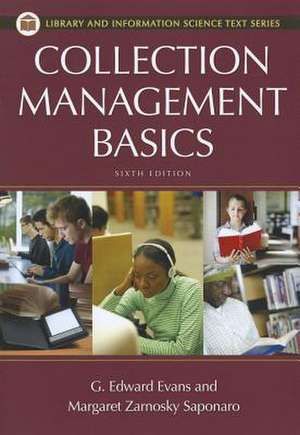
Collection Management Basics: Library and Information Science Text (Hardcover)
Autor G. Edward Evans, Margaret Zarnosky Saponaroen Limba Engleză Hardback – 30 apr 2012
The well-established gold standard in texts on collection development, "Collection Management Basics: Sixth Edition" provides a new edition to the last "Developing Library and Information Center Collections" book providing a completely fresh approach to the material.
This latest edition continues to cover all aspects of collection development and management, including subjects such as needs assessment, policies, selection process theory and practice, protection, legal issues, censorship, and intellectual freedom. The book represents a total restructuring of the previous work, and reflects changes brought on by new technology and the up-and-down economy. Students and practitioners alike will benefit greatly from this up-to-date and essential text.

Preț: 503.31 lei
Carte indisponibilă temporar
Specificații
ISBN-10: 1598848631
Pagini: 343
Ilustrații: 15
Dimensiuni: 180 x 257 x 28 mm
Greutate: 0.91 kg
Ediția:Revizuită
Editura: LIBRARIES UNLIMITED
Seria Library and Information Science Text (Hardcover)
Descriere
This latest edition continues to cover all aspects of collection development and management, including subjects such as needs assessment, policies, selection process theory and practice, protection, legal issues, censorship, and intellectual freedom. The book represents a total restructuring of the previous work, and reflects changes brought on by new technology and the up-and-down economy. Students and practitioners alike will benefit greatly from this up-to-date and essential text.
Cuprins
Preface
1-INTRODUCTION
What Is Collection Management?
Access to Information
Access and Value
Access Philosophy and Staff
Access and Literacy
Blended Collections
Access and Collaboration
New Approaches
Points to Keep in Mind
References
2-INTELLECTUAL FREEDOM AND ETHICS
Libraries, the First Amendment, and Intellectual Freedom
Ethics, Personal Beliefs, Biases, and Collection Management
Self-Censorship
Being Challenged
Access-Filtering
Bibliotherapy-Readers' Advisory Activities
Points to Keep in Mind
References
3-COLLECTION MANAGEMENT
Components of Collection Management
Collection Management and Library Types
Institutional Libraries
Public Libraries
School Libraries
Special Libraries
Standards and Guidelines
Emerging Trends in Collection Management
Floating Collections
Taking on Collection Management Responsibilities
Points to Keep in Mind
References
4-COLLECTION MANAGEMENT POLICIES
What Is a Collection Management Policy?
Creating a Policy
Stages of the Policy Development Process
What to Include
Details of a Basic Policy
Subject Areas Collected
Selection Responsibility
How to Select
Gifts and Deselection (Weeding)
Deselection/Discards
Collection Assessment/Evaluation
Complaints
Electronic Resources
Getting the Policy Approved
Points to Keep in Mind
References
5-ASSESSING USER NEEDS
Concepts and Terms
Why Spend the Time and Effort on Service Community Studies?
Practical Aspects
Common Types of Data Collected
Data Collecting and Analysis Techniques
Key Informants-Gatekeepers
Focus Groups and Community Forums
Social Indicators
Field Surveys
Examples by Type of Library
Academic Libraries
Public Libraries
School Library Media Centers
Special Libraries/Information Centers
Data Visualization
Points to Keep in Mind
References
6-SELECTING MATERIALS
Engaging in Selection Activities
Institutional Setting and User Interests
Resources to Consult
What Is in the Collection/What Is Lacking
Language
Quality
Reviews
Starting Points for Reviews
Other Quality Factors
Cost Issues
Variations in Selection by Library Type
Academic Libraries-Community Colleges
College Libraries
University Libraries
Public Libraries
School Library Media Centers
Special Libraries
Quality or Demand
Points to Keep in Mind
References
7-COLLECTION MANAGEMENT AND TECHNICAL SERVICES
Technical Services Functions
Cataloging and Metadata Services
Metadata
Acquisitions
Serials Control
Physical Processing
Bindery/Repair
Shipping and Receiving
Technical Services Workflow
Collection Management and Technical Services
Points to Keep in Mind
References
8-ACQUISITIONS
Acquiring Materials
Acquisition Methods
Firm Orders
Standing Orders
Approval Plans
Demand-Driven and Evidence-Based Acquisitions
Blanket Orders
Subscriptions
Leases
Gifts
Exchanges
Vendor Selection
What the Firm Stocks
Vendor Technological Capabilities
Speed of Delivery
Financial Considerations
Additional Vendors' Services
Customer Service Considerations
Vendor Evaluation
Retail Outlets
Out-of-Print and Antiquarian Dealers
Fiscal Management
Estimating Costs
Allocating the Budget
Financial Records
Encumbering
Stewardship
Audits
Points to Keep in Mind
References
9-ASSESSING COLLECTIONS AND THE LIBRARY
Collection Assessment Methodologies
Collection-Centered Methods
List Checking
Expert Opinion (Impressionistic Assessment)
Comparative Use Statistics
Using Standards as an Assessment Method
Use-Centered Methods
Circulation Studies
Customer Perceptions
Use of ILL Statistics
Bibliometric Studies
Deselection-Weeding
Public Libraries
School Library Media Centers
Special Libraries
Academic Libraries
Barriers to Deselection
Deselection Criteria
Storage
Points to Keep in Mind
References
10-COOPERATION, COLLABORATION, AND CONSORTIA ISSUES
Background
Sharing Collection Items
Shared Collection Building
Sharing Collection Storage
Reasons for Engaging in Joint Ventures
Collaboration on the Personal Level
Making Collaborative Projects Work
Group Decision Making
Points to Keep in Mind
References
11-PRINT AND MEDIA
Producers of Library Collection Resources
Types of Producers
Media Formats
Media Issues
Audio Formats
Video
Other Material Formats
Maps and Globes
Games, Toys, and Puzzles
Graphic Novels
Prints and Photographs
Format Selection Considerations
Points to Keep in Mind
References
12-SERIALS
What Is a Serial?
Government Information
Serial Producers
Selection Models
Identifying Serials
E-Serials
Do E-Serials Save Libraries Money?
Managing Serials
Canceling Serials and Other E-Resources
Usage Data
Serial Management Tools
Points to Keep in Mind
References
13-E-RESOURCES AND TECHNOLOGY ISSUES
Differences Between Traditional and E-Resources
Selection Issues
Content
Limitations
Cost
People Issues
Technical Issues
Assessment Options
Cancellation or Loss of Service
E-Formats
eBooks
eReaders
Google Books Project
Alternatives to Google Books
Online Music/Audio
Video
Web Resources
Institutional Repositories
Open Access
Data Sets
Points to Keep in Mind
References
14-PRESERVATION ISSUES
Libraries and Cultural Patrimony
Preserving the Investment in the Collection
Proper Handling
Environmental Control
Security
Disaster Preparedness
Digital Preservation
Conservation
Points to Keep in Mind
References
15-LEGAL ISSUES AND COLLECTION MANAGEMENT
Copyright Laws and Libraries
Fair Use and Copying
Digital Millennium Copyright Act (DMCA)
Enforcement
Digital Rights Management (DRM)
Gifts and the IRS
Americans with Disabilities Act and Collection Management
Privacy
Points to Keep in Mind
References
Index