Cantitate/Preț
Produs

CLIP Coaching P

Autor Charlene Lobo, Rachel Paul, Kenda Crozier
en Limba Engleză Paperback – iun 2021

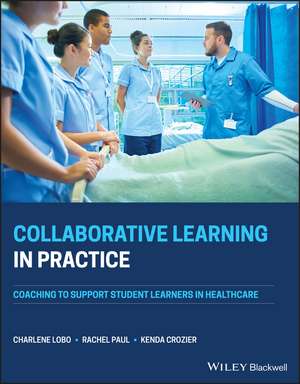
Prezentată într-un format paperback accesibil de 272 de pagini, CLIP Coaching P este structurată metodologic pentru a facilita tranziția de la mentoratul tradițional la un model de coaching colaborativ. Descoperim aici o organizare riguroasă, plecând de la evoluția învățării practice (Partea I) și ajungând la aplicarea filosofiei coaching-ului în mediul clinic. Un avantaj major al acestui volum este accesul la un website companion, care extinde experiența de lectură prin instrumente de autoevaluare și scenarii practice digitale, esențiale pentru educatorii din domeniul sănătății. Subliniem importanța cadrului teoretic fundamentat pe dovezile din raportul Willis, care validează modelul CLiP ca o abordare sistemică exemplară. Autorii Charlene Lobo, Rachel Paul și Kenda Crozier nu se limitează la teorie; aceștia analizează critic succesul și posibilele obstacole, oferind soluții concrete prin tehnici precum reverse mentoring. Clinicienii care folosesc Student Practice Supervision and Assessment de Jo Lidster ca referință vor găsi aici instrumentele necesare pentru a trece de la simpla supraveghere la o cultură a învățării pozitive, unde studentul preia inițiativa. Progresia conținutului este logică, de la contextul reglementărilor NMC până la aplicarea modelelor consacrate de coaching, precum GROW și OSCAR. Față de Facilitating Learning in Practice, care se concentrează pe noile standarde de competență, lucrarea de față pune accentul pe dinamica de grup și pe modul în care învățarea în „clustere” poate eficientiza timpul pedagogic în secțiile de spital aglomerate. Este o resursă care transformă mediul clinic dintr-un spațiu de execuție într-unul de dezvoltare profesională continuă.

Citește tot Restrânge

Preț: 24270 lei

Preț vechi: 25548 lei
-5%

Puncte Express: 364

Carte tipărită la comandă

Livrare economică 08-22 iulie
Livrare express 02-06 iunie pentru 12223 lei

Livrare prin curier în România Termenul estimat este afișat lângă disponibilitate.
Transport gratuit de la 40000 lei Plată online sau ramburs, în funcție de opțiunile comenzii.
Retur gratuit în 14 zile Comandă securizată și suport în română.

Specificații

ISBN-13: 9781119695363
ISBN-10: 1119695368
Pagini: 272
Dimensiuni: 140 x 216 x 14 mm
Greutate: 0.31 kg
Editura: Wiley
Locul publicării:Chichester, United Kingdom

De ce să citești această carte

Această carte este indispensabilă educatorilor medicali și mentorilor care doresc să implementeze modelul de învățare colaborativă CLiP. Cititorul câștigă o metodologie clară pentru a împuternici studenții să devină lideri ai propriei formări, utilizând tehnici de coaching validate. Este recomandată în special pentru cei care trebuie să alinieze practica clinică cu noile standarde NMC, oferind un echilibru între rigoarea academică și aplicabilitatea imediată prin studii de caz reale.


Despre autor

Echipa de autori este formată din practicieni și academicieni cu experiență vastă în educația medicală din Regatul Unit. Kenda Crozier, Charlene Lobo și Rachel Paul au contribuit semnificativ la dezvoltarea și implementarea modelului Collaborative Learning in Practice (CLiP), fiind recunoscuți pentru expertiza lor în pedagogia clinică și superviizarea studenților la asistență medicală. Activitatea lor se concentrează pe îmbunătățirea calității mediilor de învățare și pe adaptarea standardelor de reglementare în practica de zi cu zi, transformând mentoratul tradițional într-un proces de coaching dinamic și colaborativ.


Notă biografică

Charlene Lobo, BSc, MA RN, RHV, is a Consultant in Practice Education; formerly a Senior Lecturer at the University of East Anglia, where she served as the Academic Lead for Practice Learning and the Collaborative Learning in Practice (CLiP) project. Rachel Paul, BA, MA, is the Director of ConsultEast, a management and leadership consultancy that integrates coaching with learning, embedding both into practice and performance. She was previously Lecturer in Education Studies at the City College of Norwich, UK. Kenda Crozier, PhD, MSc, BSc, RM, RN, SFHEA, is Professor of Midwifery at the University of East Anglia, UK, where she has held several senior leadership roles including Faculty Associate Dean for PGR and Lead Midwife for Education.

Cuprins

Collaborator Biographies xiii Foreword xix Acknowledgements xxiii Abbreviations xxv About the Companion Website xxvii Introduction 1 Kenda Crozier, Charlene Lobo and Rachel Paul References 4 Glossary 5 Part I Evolution of CLiP(TM) 7 1 Changes in Practice Learning 9 Kenda Crozier and Charlene Lobo Regulation of Nurse and Midwifery Education 9 The Return of the Apprentice 13 Clinical Practice Education 13 Establishing a Quality Learning Environment 15 References 17 2 Models of Practice Learning 20 Kenda Crozier Practice Education 20 Practice Educator Roles 22 Faculty and Clinical Educators in Practice Settings 23 UK Mentorship Model 25 Hub and Spoke Models 28 The Student Perspective 29 Dedicated Education Units and Clinical Clusters 31 Real-Life Learning Wards 33 References 34 3 The CLiP(TM) Model 39 Charlene Lobo and Jonty Kenward Domains of CLiP 43 Organisation of Learning 43 Coaching Philosophy 46 Principles of CLiP 47 Collaboration 47 Real-Life Learning 50 Time to Teach and Time to Learn 53 Stepping up and Stepping Back 55 Feedback and Assessment 57 References 61 4 System-Wide Approaches to CLiP(TM) 64 4.1 The South West CLiP(TM) Community Cluster Project 65 Jane Bunce Background and Drivers 65 Why CLiP? 65 Project Overview 66 How Was CLiP Implemented in the Pilot Sites? 66 What Worked Well in the Pilot? 67 What Were the Main Challenges? 68 What Did We Decide we Would Do Differently Following the Pilot? 68 References 69 4.2 Lancashire Teaching Hospitals NHS Foundation Trust Implementation of the CLiP(TM) Model of Supervision 70 Jonty Kenward Background and Drivers 70 Key Aims 71 Implementation 71 What Worked Well on Implementation 73 What Were the Main Challenges? 73 Top Tips 74 References 74 4.3 James Paget University NHS Foundation Trust Implementing the CLiP(TM) Model in Maternity Care 75 Kenda Crozier, Jodie Yerrell and Kirsty Tweedie Introduction 75 How Was CLiP Implemented? 75 Timeline 79 Top Tips 79 References 80 5 Coaching Theory and Models 81 Rachel Paul Coaching Theory 82 The Psychodynamic Coaching Approach 84 Cognitive Behavioural Coaching 86 Thinking errors to be aware of as a coach, educator, or student 89 Solutions Focused Coaching 90 Person-Centred Coaching 92 Gestalt and Coaching 93 Narrative Coaching 94 Psychological Development in Adulthood and Coaching 94 Positive Psychology 95 Being resilient...bouncebackability 96 Transactional Analysis 96 Some Conclusions 98 Key coaching skills and templates to experiment with 99 References 101 6 Evaluation 103 6.1 Plymouth University 104 Graham Williamson, Adele Kane and Jane Bunce Background 104 Study 1: Collaborative Learning in Practice: A Systematic Review and Narrative Synthesis of the Research Evidence in Nurse Education 105 Study 2: 'Thinking like a Nurse'. Changing the Culture of Nursing Students' Clinical Learning: Implementing Collaborative Learning in Practice 107 Study 3: Investigating the Implementation of a Collaborative Learning in a Practice Model of Nurse Education in a Community Placement Cluster: A Qualitative Study 109 Study 4: Student Nurses, Increasing Placement Capacity and Patient Safety. A Retrospective Cohort Study 111 Summary and Key Messages 112 References 113 6.2 University of East Anglia 115 Antony Arthur, Rebekah Hill and Michael Woodward Is it Better Than What We Did Before? The Challenge of Evaluating New Models of Practice Learning 115 References 116 Part II Coaching Application 117 7 Introduction to Coaching in Practice 119 Rachel Paul and Charlene Lobo Language of Coaching 120 Thinking Errors 124 'Clean' Language 124 Re-Phrasing 128 The Learning Journey 129 Having Difficult Conversations 131 References 134 8 'A Coaching Day' 135 Rachel Paul, Charlene Lobo and Jonty Kenward Scenario 1: Beginning the Shift, Managing and Negotiating Student-Led Learning 137 Scenario 2: One-to-One Supervision - Using a Coaching Approach to Assess/Make Judgements About Student Competence/the Level of Supervision Needed 143 Scenario 3: Checking in Midway Conversation 146 Scenario 4: End of a Shift - Using Coaching Approaches to Giving Feedback 150 9 Acute Adult Care - Orthopaedic and Trauma Ward 154 Rachel Paul, Charlene Lobo and Helen Bell Scenario 1: A Positive Perspective of the 'Failing Student': Helping Students Understand Their Development Needs and Action Planning to Meet Them 156 Scenario 2: 'There is no such thing as a failing student' 161 Scenario 3: Solution-Focused Conversations and Supporting the Student's Emotional Intelligence to Help Turn a Negative Situation into Positive Learning 164 10 Community Nursing Case Study 169 Rachel Paul, Charlene Lobo and Theresa Walker Community Nursing - City Team A 170 Scenario 1: Unconfident Student, Overcoming Obstacles to Learning 171 How the Situation Was Resolved 176 Scenario 2: Team Discord, Facilitating Teamworking 177 Scenario 3: Using Coaching Approaches in a Crisis 181 What Made This Incident Important to Learn From? 185 Clear Acknowledgement of Their Own Life Experiences as a Basis for Learning 185 11 Maternity Case Study 187 Kenda Crozier, Rachel Paul and Charlene Lobo Scenario 1: Balancing Student-Led Learning and Client Care Needs 188 Timeline for the Student Journey 193 Scenario 2: Increasing Confidence 194 Scenario 3: Supporting Development and Action Planning 198 References 201 12 Mental Health 202 Rachel Paul, Charlene Lobo, Ronald Simpson and Helen Bell Scenario 1: Managing a Disgruntled Student 204 Scenario 2: Managing Resistance to Learning 207 Scenario 3: Developing Team Support in an Unfair World 210 Scenario 4: Who Cares for the Supervisors? 214 References 218 Conclusion 220 Kenda Crozier, David Huggins, Charlene Lobo and Rachel Paul The Importance of Sustainable Systems of Student Support 220 Increasing Student Numbers 221 Preparation for Coaching 223 Clinical Educator and Link Lecturer Support 224 New NMC Standards 224 Partly Applying the Model 225 Lessons Learned 226 Recommendations 227 References 228 Index 230

Descriere scurtă

Cited in the 2015 Willis review on nurse education as an exemplary system-wide approach for supporting learning in practice, Collaborative Learning in Practice (CLiP) is an innovative coaching model that empowers students to take the lead in their practice through creating positive learning cultures. Collaborative Learning in Practice provides a detailed description of the CLiP model and explains how coaching can be integrated into a range of learning conversations. Written by an experienced team of practitioners, this unique text describes the theoretical basis of the CLiPmodel, highlights potential pitfalls and successes, and offers practical guidance on implementation. A wealth of real-world case studies demonstrates how the CLiPmodel works in a range of professional and practice settings, considering healthcare education, research and leadership. This authoritative book: * Provides an overview of the innovative CLiP model of practice-based learning, linked to the NMC standards for student supervision and assessment * Offers numerous real-life examples of how to implement and evaluate CLIP in practice * Explores the use of reverse mentoring to update and share knowledge collaboratively * Discusses how coaching approaches such as GROW and OSCAR can enhance learning experiences * Includes access to online learning tools including self-assessment tests, additional practical scenarios and case studies, and links to further reading Developing practitioner knowledge and skill through an accessible, reader-friendly approach, Collaborative Learning in Practice is an essential resource for nursing and allied healthcare educators, nursing and healthcare students, and practice mentors, supervisors, and assessors in clinical environments.