
Climate Change, Human Rights, and Adaptive Mobility
Autor Lauren Sakae Nishimuraen Limba Engleză Hardback – 20 noi 2025
Într-un context global marcat de o instabilitate climatică accelerată, mobilitatea umană nu mai este doar o posibilitate teoretică, ci o realitate organizațională și juridică iminentă. Observăm că majoritatea cadrelor legale actuale se concentrează reactiv pe protecția migranților după ce deplasarea a avut loc. Climate Change, Human Rights, and Adaptive Mobility propune o schimbare radicală de paradigmă: transformarea adaptării dintr-o opțiune politică într-o obligație juridică executorie. Suntem de părere că rigoarea cu care Lauren Sakae Nishimura analizează regimul internațional al schimbărilor climatice oferă instrumentele necesare pentru a anticipa crizele umanitare înainte ca acestea să devină ireversibile.
Spre deosebire de abordările descriptive, această lucrare distilează obligațiile din Acordul de la Paris în standarde concrete de acțiune. Ca și Dimitra Manou în Climate Change, Migration and Human Rights, autoarea explorează intersecția dintre drepturile omului și mediu, însă Lauren Sakae Nishimura merge mai departe, punând accentul pe „mobilitatea adaptivă”. Aceasta nu este doar o analiză doctrinală; textul integrează realități din teren prin studii de caz în Bangladesh sau Sahel, oferind o perspectivă aplicată asupra modului în care interpretarea tratatelor influențează viața comunităților vulnerabile. Putem afirma că volumul clarifică responsabilitatea statelor dezvoltate, stabilind o legătură directă între contribuția istorică la emisiile de carbon și datoria legală de a sprijini adaptarea globală. Cititorul va înțelege cum mecanismele de drept internațional pot fi utilizate pentru a impune măsuri de prevenție, transformând mobilitatea dintr-o criză forțată într-un proces gestionat sub imperiul drepturilor fundamentale.
Preț: 620.93 lei
Preț vechi: 930.77 lei
-33%
Carte disponibilă
Livrare economică 15-26 mai
Specificații
ISBN-10: 0198930038
Pagini: 320
Dimensiuni: 160 x 240 x 25 mm
Greutate: 0.62 kg
Editura: OUP OXFORD
Colecția OUP Oxford
Locul publicării:Oxford, United Kingdom
V-ar putea interesa
-
 North: The Future of Post-Climate AmericaJesse M. Keenan-26%Preț: 133.17 lei178.89 lei
 -
 -31%Preț: 460.57 lei664.21 lei
 -
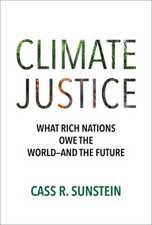 Climate JusticeCass R. SunsteinPreț: 156.27 lei
 -
 Climate Change and Human MigrationLyly LuhachackPreț: 122.53 lei
 -
 Preț: 426.07 lei
 -
 Principles of International Environmental LawProfessor Philippe SandsPreț: 445.51 lei
 -
 A Barrister for the EarthMonica Feria-TintaPreț: 152.31 lei
 -
 -18%Preț: 151.84 lei184.46 lei
 -
 Sink or Swim: How the world needs to adapt to a changing climateSusannah Fisher-21%Preț: 94.46 lei118.89 lei
 -
 Climate JusticeMary Robinson-35%Preț: 48.29 lei74.30 lei
 -
 HydrojusticeAndreas Philippopoulos-MihalopoulosPreț: 81.95 lei
 -
 -33%Preț: 561.23 lei839.18 lei
 -
 Preț: 280.13 lei
 -
 Preț: 108.18 lei
 -
 Human RightsShami ChakrabartiPreț: 75.22 lei
 -
 Yearbook of International Disaster Law: Volume 5 (2022)Giulio Bartolini-18%Preț: 1266.71 lei1544.76 lei
 -
 Climate Change, Environmental Refugees, and Human Rights in the Middle EastMahmood Monshipouri-23%Preț: 201.12 lei260.00 leiNou
De ce să citești această carte
Această carte este esențială pentru experții în drept internațional, responsabilii de politici publice și consultanții de mediu care doresc să înțeleagă mecanismele legale de prevenire a migrației forțate. Veți câștiga o perspectivă clară asupra modului în care obligațiile de adaptare pot deveni standarde juridice obligatorii, oferind soluții concrete pentru gestionarea riscurilor climatice și protejarea drepturilor omului în regiunile cele mai expuse schimbărilor globale.
Despre autor
Lauren Sakae Nishimura este o specialistă recunoscută în drept internațional, cu o expertiză profundă la intersecția dintre schimbările climatice, drepturile omului și migrație. Lucrarea sa se bazează pe o cercetare academică riguroasă și pe o înțelegere fină a mecanismelor ONU, precum Convenția-cadru privind schimbările climatice. Prin contribuțiile sale, Nishimura caută să ofere claritate juridică unor concepte complexe, facilitând dialogul între teoria dreptului mediului și practica umanitară, fiind o voce autoritară în definirea responsabilităților statelor în era antropocenului.
Descriere
Recenzii
This timely book offers a fresh and compelling approach to climate mobility. By placing the international climate change regime front and centre, Nishimura shows how states' adaptation commitments could be better leveraged to help avert displacement, protect people from foreseeable risks of serious harm, and safeguard fundamental rights and resources. This thoughtfully crafted work is a must-read for scholars working on human mobility in the context of climate change and disasters.
While it is still debated whether and when migration is a way for affected people to adapt to the adverse effects of climate change, or rather a particularly salient example of non-economic loss and damage, Lauren Sakae Nishimura's highly innovative book turns the discussion on its head. By asking how climate adaptation measures can help people stay in place or facilitate their migration in safety and dignity, and by exploring the benefits of integrating international human rights guarantees into states' adaptation obligations under the UNFCCC and the Paris Agreement, she offers a new approach to climate change and human mobility. This approach has enormous conceptual and practical potential.
This book is a timely and rigorous response to the question of how the obligations of states in the climate change regime interact with established protections from human rights law. Nishimura's voice rings clearly on how states must anticipate the needs of individuals and communities who move away from the harm caused by changing temperatures and weather patterns. States' duties to take account of the needs of other states (drawing on equity and other principles from the Paris Agreement) are also significant. The arguments showcase specialist legal and policy analysis as well as a broader examination of systemic integration in public international law.
The author provides doctrinal tools to treat adaptation obligations as enforceable standards, to integrate human rights norms into climate planning, national adaptation strategies, and international cooperation frameworks, and to frame climate-related mobility as a matter of prevention and accountability. The analysis is particularly valuable for lawyers working in government advisory roles, international organisations, climate finance institutions, and strategic litigation, as it offers a legally coherent basis for engaging upstream with planning, funding, and support obligations. In doing so, the book helps practitioners move beyond reactive responses to displacement and toward a more legally grounded, anticipatory approach to climate governance and human mobility.