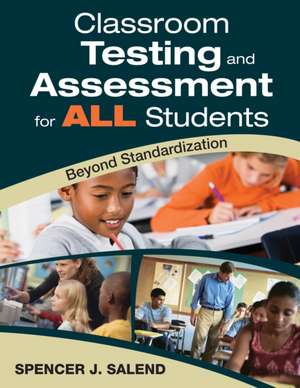
Classroom Testing and Assessment for ALL Students: Beyond Standardization
Autor Spencer J. Salenden Limba Engleză Electronic book text – 22 noi 2012
Preț: 191.12 lei
Puncte Express: 287
Indisponibil temporar
Doresc să fiu notificat când acest titlu va fi disponibil:
Se trimite...
Specificații
ISBN-13: 9781452211725
ISBN-10: 1452211728
Pagini: 176
Dimensiuni: 216 x 279 mm
Ediția:1
Editura: SAGE Publications
Colecția Corwin
Locul publicării:Thousand Oaks, United States
ISBN-10: 1452211728
Pagini: 176
Dimensiuni: 216 x 279 mm
Ediția:1
Editura: SAGE Publications
Colecția Corwin
Locul publicării:Thousand Oaks, United States
Recenzii
“A
rare
opportunity
for
the
new
generation
of
educators
to
learn
alongside
an
experienced
educator
to
integrate
all
learning
styles
into
assessments.
Principals
should
consider
this
for
faculty
book
studies.
The
presented
techniques
will,
no
doubt,
raise
standardized
test
scores
while
teachers
continue
to
present
real
curriculum.”
"Middle and secondary teachers will find this book extremely useful. It flows logically through the assessment process with a plethora of examples for a range of students."
"Middle and secondary teachers will find this book extremely useful. It flows logically through the assessment process with a plethora of examples for a range of students."
Cuprins
Acknowledgments
About the Author
Introducing Inclusive Classroom Testing and Assessment Practices
1. Creating and Grading Valid and Accessible Teacher-Made Tests
What Factors Should I Consider in Determining the Content of My Tests?
How Can I Foster the Readability and Legibility of My Tests?
How Can I Format My Tests to Help My Students to Be Organized and Motivated and to Pay Attention?
How Can I Help My Students Understand and Follow Test Directions?
How Can I Compose Understandable, Useful, Valid, and Appropriate Test Items?
How Can I Grade My Teacher-Made Tests?
2. Determining and Implementing Valid and Appropriate Testing Accommodations
What Are the Elements of Valid Testing Accommodations?
What Are the Different Types of Testing Accommodations?
Who Is Eligible to Receive Testing Accommodations?
How Are Valid and Appropriate Testing Accommodations for Students Determined?
How Can the Implementation of Testing Accommodations Be Fostered?
3. Using Technology-Based Testing
How Can Technology-Based Testing Be Used to Enhance Student Motivation and Feedback and Minimize Student Errors?
How Can Technology-Based Testing Be Used to Present Test Directions and Items to Students?
How Can Technology-Based Testing Be Used to Help Students Respond to Objective Test Questions?
How Can Technology-Based Testing Be Used to Help Students Respond to Essay Tests Questions?
What Concerns Need to Be Considered and Addressed When Using Technology-Based Testing?
4. Teaching Effective Study and Test-Taking Skills and Strategies
How Can I Assess My Students? Study and Test-Taking Skills and Strategies?
What Effective Study Skills and Strategies Do My Students Need to Learn?
What Effective Test-Taking Skills and Strategies Do My Students Need to Learn?
How Can I Help My Students Who Experience Test Anxiety?
How Can I Teach Effective Study and Test-Taking Skills and Strategies to My Students?
How Can I Work With My Students? Families to Support Their Children?s Use of Effective Study and Test-Taking Skills?
5. Using Classroom Assessments
How Can I Use Classroom Assessments to Monitor the Learning Progress of My Students?
How Can I Use Classroom Assessments to Implement Performance Assessment?
How Can I Use Technology to Implement Performance Assessment?
Appendix A
Appendix B
References
Index
About the Author
Introducing Inclusive Classroom Testing and Assessment Practices
1. Creating and Grading Valid and Accessible Teacher-Made Tests
What Factors Should I Consider in Determining the Content of My Tests?
How Can I Foster the Readability and Legibility of My Tests?
How Can I Format My Tests to Help My Students to Be Organized and Motivated and to Pay Attention?
How Can I Help My Students Understand and Follow Test Directions?
How Can I Compose Understandable, Useful, Valid, and Appropriate Test Items?
How Can I Grade My Teacher-Made Tests?
2. Determining and Implementing Valid and Appropriate Testing Accommodations
What Are the Elements of Valid Testing Accommodations?
What Are the Different Types of Testing Accommodations?
Who Is Eligible to Receive Testing Accommodations?
How Are Valid and Appropriate Testing Accommodations for Students Determined?
How Can the Implementation of Testing Accommodations Be Fostered?
3. Using Technology-Based Testing
How Can Technology-Based Testing Be Used to Enhance Student Motivation and Feedback and Minimize Student Errors?
How Can Technology-Based Testing Be Used to Present Test Directions and Items to Students?
How Can Technology-Based Testing Be Used to Help Students Respond to Objective Test Questions?
How Can Technology-Based Testing Be Used to Help Students Respond to Essay Tests Questions?
What Concerns Need to Be Considered and Addressed When Using Technology-Based Testing?
4. Teaching Effective Study and Test-Taking Skills and Strategies
How Can I Assess My Students? Study and Test-Taking Skills and Strategies?
What Effective Study Skills and Strategies Do My Students Need to Learn?
What Effective Test-Taking Skills and Strategies Do My Students Need to Learn?
How Can I Help My Students Who Experience Test Anxiety?
How Can I Teach Effective Study and Test-Taking Skills and Strategies to My Students?
How Can I Work With My Students? Families to Support Their Children?s Use of Effective Study and Test-Taking Skills?
5. Using Classroom Assessments
How Can I Use Classroom Assessments to Monitor the Learning Progress of My Students?
How Can I Use Classroom Assessments to Implement Performance Assessment?
How Can I Use Technology to Implement Performance Assessment?
Appendix A
Appendix B
References
Index
Descriere
Use
teacher-made
tests,
appropriate
testing
accommodations,
technology-based
testing,
and
classroom-based
assessments
to
give
students
with
diverse
needs
the
opportunity
to
achieve!
Notă biografică
A former teacher in the New York City School System, Spencer J. Salend is a professor at SUNY-New Paltz, where he teaches courses on educational assessment and serves as the coordinator of the Special Education Program. He is the author of the best-selling, easy-to-read, and practical book, Creating Inclusive Classrooms: Effective and Reflective Practices. Widely known for his work in translating research into practice, he has published and presented on such topics as educational assessment, inclusive educational practices, and teaching students from culturally and linguistically diverse backgrounds. In recognition of the significance of his research and its benefits to others, he was selected as a recipient of the State University of New York¿s Faculty Scholar Award and the Chancellor¿s Research Recognition Award. He has also served as a project director and program evaluator for numerous federal and state projects and has shared his work by engaging in a variety of professional development and activities.