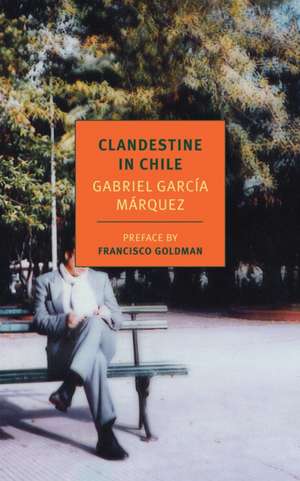
Clandestine In Chile
Autor Gabriel Garcia Marquezen Limba Engleză Paperback – 6 iul 2010
Pentru cercetătorii istoriei Americii Latine și studenții la jurnalism, Clandestine In Chile reprezintă o resursă esențială, oferind o perspectivă documentară riguroasă asupra rezistenței culturale sub regimul Pinochet. Suntem de părere că această lucrare demonstrează măiestria lui Gabriel Garcia Marquez de a transforma reportajul politic într-o narațiune tensionată, aproape cinematografică. Premisa este una de un risc extrem: întoarcerea regizorului Miguel Littín în țara natală, deghizat, pentru a demasca brutalitatea dictaturii prin intermediul filmului. Spre deosebire de realismul magic din One Hundred Years of Solitude sau explorările lirice ale dorinței din Love in the Time of Cholera, aici autorul revine la originile sale de reporter, adoptând un stil sobru, dar incisiv. Putem afirma că volumul completează perspectiva oferită de Pinochet de Genaro Arriagada, adăugând dimensiunea umană și riscul personal al disidentului în fața structurilor de putere descrise teoretic de Arriagada. De asemenea, lucrarea rezonează cu temele exilului din Feeding on Dreams de Ariel Dorfman, însă se distinge prin focalizarea pe acțiunea sub acoperire și pe actul de a documenta vizual o realitate interzisă. Structura este alertă, menținând un echilibru între tensiunea unui thriller politic și rigoarea faptului divers, oferind cititorului o imagine nefiltrată a Chile-ului de la jumătatea anilor '80.
Preț: 114.62 lei
Carte disponibilă
Livrare economică 19 mai-02 iunie
Livrare express 02-08 mai pentru 18.15 lei
Specificații
ISBN-10: 1590173406
Pagini: 160
Ilustrații: black & white illustrations
Dimensiuni: 129 x 203 x 17 mm
Greutate: 0.18 kg
Ediția:Main
Editura: New York Review Books
V-ar putea interesa
-
 Collected NovellasGabriel Garcia MarquezPreț: 97.62 lei
 -
 del Amor Y Otros DemoniosGabriel García MárquezPreț: 119.42 lei
 -
 El Coronel No Tiene Quien Le Escriba / No One Writes to the Colonel and Other StoriesGabriel García MárquezPreț: 73.72 lei
 -
 A Secret for Julia – A NovelPatricia SagastizabalPreț: 120.77 lei
 -
 Of Love and Other DemonsGabriel García MárquezPreț: 81.15 lei
 -
 El General En Su Laberinto / The General in His LabyrinthGabriel García MárquezPreț: 86.19 lei
 -
 Memoria de MIS Putas Tristes / Memories of My Melancholy WhoresGabriel García MárquezPreț: 74.19 lei
 -
 SoutholdGeoffrey K. FlemingPreț: 174.74 lei
 -
 Candlewood LakeSusan MurphyPreț: 174.74 lei
 -
 Naugatuck RevisitedRin GagliardiPreț: 174.50 lei
 -
 BridesburgFrederick SieglePreț: 174.74 lei
 -
 Larz Anderson ParkEvan P. IdePreț: 174.74 lei
 -
 SpringfieldJean-Rae TurnerPreț: 174.94 lei
 -
 Woonsocket RevisitedRobert R. BellerosePreț: 174.50 lei
 -
 Briarcliff LodgeRob YasinsacPreț: 174.74 lei
 -
 Long Island's Military HistoryGlen WillifordPreț: 174.74 lei
De ce să citești această carte
Recomandăm această carte oricui dorește să înțeleagă mecanismele dictaturii și curajul necesar pentru a spune adevărul sub represiune. Cititorul câștigă acces la o lecție de jurnalism narativ de înaltă clasă, semnată de un maestru al literaturii mondiale. Este o lectură fundamentală pentru cei interesați de istoria politică a Americii de Sud și de rolul cinematografiei ca instrument de protest social.
Despre autor
Gabriel García Márquez (1927–2014) a fost un romancier, jurnalist și scenarist columbian, figură centrală a literaturii secolului XX și laureat al Premiului Nobel pentru Literatură în 1982. Deși este recunoscut la nivel mondial pentru popularizarea realismului magic, cariera sa a fost profund ancorată în jurnalismul de investigație, profesie pe care a exercitat-o cu un spirit critic acerb la adresa politicilor interne și externe. Această experiență de reporter i-a permis să scrie lucrări de non-ficțiune de o precizie remarcabilă, precum relatarea de față, demonstrând angajamentul său constant față de realitățile socio-politice ale Americii Latine.
Notă biografică
Asa Zatz was born in Mexico and has translated nearly one hundred books. He lives in New York.
Francisco Goldman is the author of four novels, The Long Night of White Chickens, The Ordinary Seaman, The Divine Husband, the forthcoming Say Her Name, and one work of nonfiction, The Art of Political Murder.
Descriere scurtă
Afterwards, the great novelist Gabriel García Márquez sat down with Littín to hear the story of his escapade, with all its scary, comic, and not-a-little surreal ups and downs. Then, applying the same unequaled gifts that had already gained him a Nobel Prize, García Márquez wrote it down. Clandestine in Chile is a true-life adventure story and a classic of modern reportage.
Recenzii
"The journalism which began Márquez's Nobel Prize-winning career is employed here not only to tell Littín's remarkable story, but offer a tragic summary of Chilean politics." —The Independent (London)
"Reissued nearly 25 years after its initial appearance, the book recounts a middle-aged caper, vainglorious yet genuinely gripping. Time has drained the adventure of its urgency, and our geographical and cultural distance blunts its force. Still, this remains a significant document. An invaluable preface by Francisco Goldman explains why." —The Boston Globe
“Clandestine in Chile is a memoir of Mr. Littin’s six-week adventure, as told to and recast by Mr. Garcia Marquez, and a sketch for what the latter calls the film behind the film, the personal story he finds more moving than the original film project. The idea is moving, indeed dazzling...[Gabriel Garcia Márquez] seems chiefly to have lent some of his own quietly lyrical cadences to certain images and chapter endings…he evokes well the haunting cold of autumn in Chile, and gently registers the exile’s nostalgias and surprises.” ߝMichael Wood, The New York Times
“Garcia Marquez has written a terse political thriller with shafts of insight into conflicts of identity.” ߝNewsweek
“In Garcia Marquez’s prose, Littin’s actions become truly heroic and the clandestine hero achieves the grandeur of all popular heroes…readers now have the story of a magnificent civil disobedience.” ߝThe Globe and Mail (Canada)
“Garcia Marquez’s book is based on hours of taped interviews with Littin, and is retold in the first person, which gives it suspense and immediacy and brings embattled Chile vividly to life…it portrays a government without legitimacy, a people living in fear and a resistance movement determined to fight for change.” ߝThe Sunday Times (London)
“A rousing adventure story, this is also the best reportage available about conditions in Chile today.”
“It is excellent journalism...this book remains an interesting historical document—smuggled across the Chilean border like contraband—of what life was like under the old dictator…I have never read a book that pokes quite such irreverent fun at the dangers of military power.” ߝThe Independent (London)
“Fluid and full of surprises.” ߝThe Washington Post
“Two foremost artists of Latin America meet in this breathtaking story…Clandestine is a fascinating literary journey…the book alone is celebration enough of human ingenuity and determination. I recommend it wholeheartedly.” ߝMarjorie Agosin, The Christian Science Monitor
“Marquez re-creates the story brilliantly from taped interviews with Littin and writes it in first person.” ߝClaire Scobie, The Sun Hearld (Sydney)
“An extraordinary if Chaplinesque adventure which would make good comedy if it did not take place against the background of one of the most repressive regimes in modern times…[it succeeds] as a reporting style swinging freely between effervescence and emotionalism.” ߝCourrier Mail