Cantitate/Preț
Produs

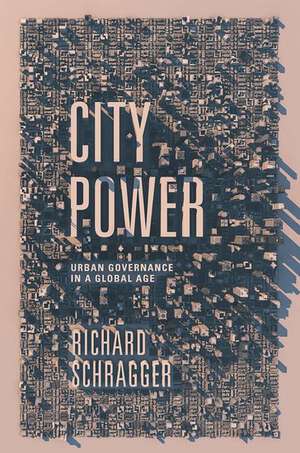
City Power: Urban Governance in a Global Age

Autor Richard C. Schragger
en Limba Engleză Hardback – 24 noi 2016

Bazându-ne pe analizele de guvernanță urbană publicate de Oxford University Press, volumul City Power semnat de Richard C. Schragger oferă o perspectivă provocatoare asupra capacității orașelor de a genera schimbare socială într-o eră a globalizării. Ne-a atras atenția modul în care autorul deconstruiește mitul conform căruia municipalitățile sunt neputincioase în fața capitalului transnațional. Plecând de la contrastul dintre colapsul financiar al Detroit-ului și ambițiile de reducere a inegalității din New York, Schragger demonstrează că slăbiciunea orașelor nu este o fatalitate economică, ci o alegere politică și constituțională.

Subliniem rigoarea cu care este tratată ideea de autonomie locală. Autorul argumentează că orașele care au implementat măsuri de redistribuire a bunăstării sau au crescut salariul minim nu au suferit exodul de capital prezis de teoriile clasice, ci au experimentat adesea o renaștere economică. Stilul este analitic și dens, fiind o resursă esențială pentru cei care studiază științele politice și sociologia urbană. Această lucrare acoperă aceeași arie ca The Twenty-First Century City de Stephen Goldsmith, dar cu o abordare mult mai critică față de modelul birocratic redus; în timp ce Goldsmith pune accent pe tăieri de taxe și eficiență administrativă, Schragger pledează pentru o centralitate a puterii municipale în gândirea economică și legală, refuzând ideea că orașele trebuie doar să „se facă frumoase” pentru investitori. De asemenea, spre deosebire de Fractured Cities de Brian D. Jacobs, care se concentrează pe declin și polarizare, City Power oferă un cadru teoretic pentru redobândirea controlului politic local.

Citește tot Restrânge

Preț: 24673 lei

Preț vechi: 31938 lei
-23%

Puncte Express: 370

Carte tipărită la comandă

Livrare economică 04-09 iunie


Specificații

ISBN-13: 9780190246662
ISBN-10: 0190246669
Pagini: 336
Dimensiuni: 163 x 236 x 31 mm
Greutate: 0.59 kg
Editura: Oxford University Press
Colecția OUP USA
Locul publicării:New York, United States

De ce să citești această carte

Recomandăm această carte oricărui specialist în politici publice sau urbanism care dorește să înțeleagă de ce orașele sunt adesea blocate în structuri legislative rigide. Cititorul va câștiga o perspectivă juridică și economică nouă asupra modului în care puterea locală poate fi exercitată pentru a combate inegalitatea, dincolo de constrângerile pieței globale. Este un argument solid pentru revitalizarea democrației la nivel municipal.


Despre autor

Richard C. Schragger este un respectat profesor de drept, specializat în drept constituțional și politici urbane. Activitatea sa academică se concentrează pe intersecția dintre geografie, economie și cadrul legal care definește autoritatea locală în Statele Unite. În City Power, el își folosește expertiza juridică pentru a demonstra cum limitele constituționale impuse de state și de guvernul federal au modelat, de fapt, capacitatea orașelor de a se auto-guverna, oferind o critică pertinentă a structurilor de putere contemporane.


Descriere

In 2013, Detroit filed the largest municipal bankruptcy in US history. That dubious honor marked the end of a long decline, during which city leaders slashed municipal costs and sought desperately to attract private investment. That same year, an economically resurgent New York City elected a progressive mayor intent on reducing income inequality and spurring more equitable economic development. Whether or not Mayor Bill de Blasio realizes his legislative vision, his agenda raises a fundamental question: can American cities govern or are they relatively powerless in the face of global capital? Both Detroit's demise and reigning theories of city agency suggest that in a world dominated by footloose transnational capital, cities have little capacity to effect social change. Cities have to "compete" with each other by offering favorable deals to corporations, reducing tax rates, limiting the public sector, and pursuing "business-friendly" policies. The notion that cities can do little but make themselves attractive to global capital also underscores a pervasive skepticism of municipal politics. Conventional economic wisdom asserts that cities cannot do very much. Conventional political wisdom asserts that cities should not do very much. In City Power, Richard C. Schragger challenges both these claims. He argues that cities can govern, but only if we let them. In the past decade, city leaders across America have raised the minimum wage, expanded social services, put conditions on incoming development, and otherwise engaged in social welfare redistribution. These cities have not suffered from capital flight. Indeed, many are experiencing an economic renaissance. Schragger argues that the range of city policies is not limited by the requirements of capital but instead by a constitutional structure that serves the interests of state and federal officials. Having weak cities is a political choice. City Power shows how cities can govern despite these constitutional limitations--and why we should want them to. It argues that in an era of global capital, municipal power is more relevant to citizen well-being, not less. Instead of treating the exercise of city power as marginal-ineffectual at best, corrupt and unattractive at worst--Schragger argues that the city should be at the very center of our economic, legal, and political thinking.

Recenzii

I have been recommending this book to my friends working in community economic development, who are trying to understand what distinctive competency can mean in a global market. I have also been recommending it to students of urban theory, who share the pleasure of following along in the construction of theory-and the space to deconstruct it further. Researchers will find here a raft of theoretical propositions begging for empirical confirmation. And I recommend it to anyone else, for the enthralling fun of watching someone build something new and marvelous from a heap of simple pieces. After reading this book, you will no longer see things quite the same as you did before.

Notă biografică

Perre Bowen Professor of Law and Barron F. Black Research Professor of Law, University of Virginia School of Law