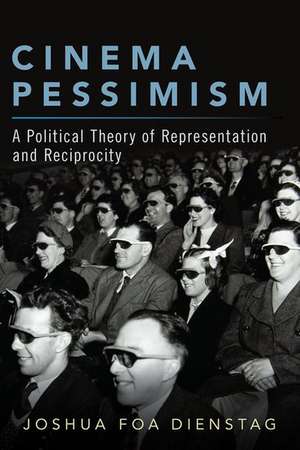
Cinema Pessimism: A Political Theory of Representation and Reciprocity
Autor Joshua Foa Dienstagen Limba Engleză Paperback – 7 ian 2020
Observăm în Cinema Pessimism o abordare neconvențională a crizei democrației reprezentative, pornind de la analiza modului în care interacționăm emoțional cu imaginile filmice. Capitolul dedicat filmului Her și cel axat pe Blade Runner devin puncte de plecare esențiale pentru a înțelege cum reprezentarea poate crea o iluzie de reciprocitate și libertate, mascând adesea pericole politice care rămân invizibile în dezbaterile academice tradiționale. Joshua Foa Dienstag nu se limitează la o critică a mass-mediei, ci investighează tensiunea inerentă dintre plăcerea estetică și exigențele cetățeniei într-un stat egalitar.
Suntem de părere că forța acestui volum rezidă în aplicarea pesimismului filosofic — o temă recurentă în opera autorului, explorată pe larg în lucrarea sa anterioară, Pessimism — ca instrument de diagnosticare a limitelor democrației. Spre deosebire de abordările care caută soluții definitive pentru apatia cetățenească, Joshua Foa Dienstag susține că aceste tensiuni sunt necesare și insurmontabile. Cititorii familiarizați cu Intermedialities de Davide Panagia vor aprecia modul în care acest volum duce mai departe conversația dintre teoria politică și experiența cinematografică, însă Cinema Pessimism se distinge printr-un ton mai pragmatic și o selecție de filme contemporane și documentare care forțează granițele reprezentării.
Structurată în 192 de pagini sub egida Oxford University Press, lucrarea demonstrează că cinema-ul nu este doar o oglindă a politicului, ci un laborator în care putem observa riscurile substituirii realității cu simulacre de participare. Este o lectură densă, dar clară, care recontextualizează eșecurile reprezentării politice prin prisma unor concepte precum răul, fericirea și limitele identității umane.
Preț: 247.87 lei
Carte tipărită la comandă
Livrare economică 20 noiembrie-01 decembrie
Specificații
ISBN-10: 0190067721
Pagini: 192
Dimensiuni: 206 x 137 x 10 mm
Greutate: 0.25 kg
Editura: Oxford University Press
Colecția OUP USA
Locul publicării:New York, United States
De ce să citești această carte
Recomandăm această carte cercetătorilor și studenților la științe politice sau studii cinematografice care doresc să depășească analizele clasice despre democrație. Cititorul câștigă o perspectivă critică asupra modului în care cultura vizuală ne modelează așteptările politice, învățând să recunoască „iluzia libertății” în structurile reprezentative actuale. Este un argument solid pentru acceptarea limitelor politicului ca formă de rezistență împotriva populismului și a falselor promisiuni de reciprocitate.
Despre autor
Joshua Foa Dienstag este profesor de științe politice la University of California, Los Angeles (UCLA). Cercetările sale se concentrează pe intersecția dintre teoria politică, filosofie și estetică, fiind recunoscut pentru reabilitarea pesimismului ca tradiție intelectuală viabilă. Este autorul lucrării Dancing in Chains: Narrative and Memory in Political Theory și al volumului Pessimism, unde analizează influența unor gânditori precum Nietzsche și Schopenhauer asupra modernității. Prin Cinema Pessimism, Dienstag își consolidează poziția de teoretician care utilizează formele narative și cinematografice pentru a chestiona fundamentele democrației liberale.
Descriere
Recenzii
Dienstag's book, by focusing on film, offers an intriguing approach to this problem ... there is enough heft to each individual part of the book to justify its inclusion in the ranks of valuable studies of the challenges and dangers of political representation.
How can the movies instruct us in the forms and feelings of democratic representation? How does political theory explain our attachments to cinematic realism and our investments in characters that resemble us? Exploring these questions, Cinematic Pessimism mounts a critique of our 'representative condition,' namely the collective desire that the movies and our elected leaders reflect us in near every detail. From his inventive reading of such films as Blade Runner, Her, The Man Who Shot Liberty Valance, and Up we learn that perfect representation may inhibit our freedom, happiness, and capacity for mutual regard. Cinema dramatizes this dilemma and, in Dienstag's reading, helps us to think beyond it. Anyone wanting to understand the aesthetic allure of democratic representation needs to read this compelling book.
Cinema Pessimism vividly demonstrates the importance of film to democratic theory's ongoing reassessment of political representation. Through brilliant engagements with such films as Blade Runner, Her, and The Man Who Shot Liberty Valence, Dienstag reveals the limitations of prevailing theoretical models and develops his own distinctively "pessimist" argument about political representation's fraught role as bothan enabler and an obstacle to democratic freedom. This book makes a decisive contribution to the political theory of film.
Studies of the political significance of film often worry that political life is threatened by the widespread passion for movies, in much the way that it is supposedly threatened by comics, rock'n'roll, rap, or the 'boob tube.' Dienstag's worry is deeper. In five lucid and provocative readings of films such as Her and Europa, he explores the prospect that filmic representation of the world itself reveals the possibilities and especially the dangers of the seemingly quite different representation of people and interests in contemporary politics. The result might be described as an updating of Rousseau's critique of the theater for our time.
Notă biografică
Cuprins
- Introduction: Experiments in the Representative Condition.
- 1. Citizenship in an Age of Representation: her and us
- 2. Blade Runner's Humanism
- 3. The Legitimacy of Representation: The Man Who Shot Liberty Valance
- 4. Representing Evil: Von Trier's Werewolves
- 5. The UP Series and the Future of Representation
- 6. Conclusion: Cinema Pessimism
- Notes
- Bibliography
- Index