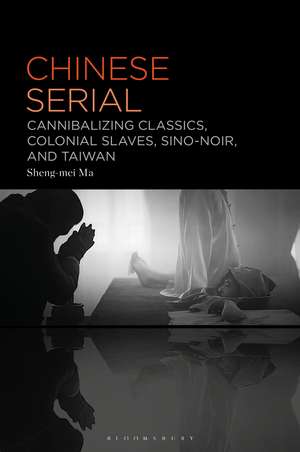
Chinese Serial: Cannibalizing Classics, Colonial Slaves, Sino-Noir, and Taiwan
Autor Professor or Dr. Sheng-mei Maen Limba Engleză Hardback – 12 oct 2026
China's never-ending toothsome and nauseous cannibalistic trope continues in modern (neo)colonial feeding frenzy in Lu Xun, Wu Zhuoliu, and Yu Hua. Embodying (neo)colonial powers, the epithet "foreign devils" in Lu Xun and his contemporaries turns into an idol should one of the devils love chinoiserie as much as Robert Hans van Gulik, who sires the oc/cult in the Tang dynasty's Judge-cum-Detective Dee. Dynastic TV dramas on Dee and others invariably feature the proverbial "half-men," eunuchs who usurp the imperial power, exposing the master-slave bond/age in figurative castration.
This flesh-eating chop suey feast comes to span China, Europe, and America, where Oriental stigma of slanting eyes is transformed into stigmata of white and off-white-mainstream and ethnic-spiritual triumphalism. Asian North American self-Orientalizing meets one Asian immigrant talking back from Taiwan's juancun, military dependents' village. This magical menu even boasts of the as yet inedible rock of Taiwan, which fantasizes itself a tasty morsel to Japan to perish any thought of Red China's maws. Seriality then turns deadly in Chinese TV dramas featuring serial killers and dismemberments. Does this turn to Sino-noir signal a psychological displacement from one's terminal condition, cowering under that which cannot be named-the dictatorship not so much of the proletariat as of the Party secretariat?
After this teasing/teething "Appetizer" of an introduction that sets the table of contents-or just the table-the cannibalistic chop suey countenances "Ten Courses" and one "Dessert," all in the flourishes of the Edwardian font becoming any designer menu at an upscale establishment. The appetizer, ten courses, and dessert make twelve dishes, a perfect Taiwanese banquet. Bon Appetit!
Preț: 596.43 lei
Preț vechi: 878.86 lei
-32% Precomandă
Puncte Express: 895
Carte nepublicată încă
Livrare prin curier în România Precomanda se expediază când titlul devine disponibil.
Transport gratuit pentru acest produs Plată online sau ramburs, în funcție de opțiunile comenzii.
Retur gratuit în 14 zile Comandă securizată și suport în română.
Doresc să fiu notificat când acest titlu va fi disponibil:
Se trimite...
Specificații
ISBN-13: 9798216450047
Pagini: 240
Ilustrații: 38 bw illus
Dimensiuni: 152 x 229 mm
Editura: Bloomsbury Publishing
Colecția Bloomsbury Academic
Locul publicării:New York, United States
Pagini: 240
Ilustrații: 38 bw illus
Dimensiuni: 152 x 229 mm
Editura: Bloomsbury Publishing
Colecția Bloomsbury Academic
Locul publicării:New York, United States
Cuprins
List of Illustrations
Acknowledgement
Appetizer
1. The First Course: Mythical Monkey: Eat People or Oneself, Spill Blood or Light
2. The Second Course: Lu Xun: Socialist Superman, Dangling Sick Man
3. The Third Course: The Orphan Teared Up; Surreal Horror Tore Up
4. The Fourth Course: The Oc/cult in Dee: Di Gong, Van Gulik, Tsui Hark, Chinese TV
5. The Fifth Course: Master-Slave Bond/age in China's Wuxia with Eunuchs
6. The Sixth Course: Stigma/ta: Eyes Slant like Chinks of Christ, or Chin-Kee of American Born Chinese
7. The Seventh Course: Bao and Turning Red: Eating Chinese in Bloody Toronto
8. The Eighth Course: Get Out of the Village: Watching The Prisoner with Chinese Subtitles in Juancun
9. The Ninth Course: Colonial "Shina Swine"; Millennial Taiwan's Nipponophile
10. The Tenth Course: Sino-Noir of Serial Killers and Dismemberments
The Dessert of Taiwan
Bibliography
Endnotes
Index
Acknowledgement
Appetizer
1. The First Course: Mythical Monkey: Eat People or Oneself, Spill Blood or Light
2. The Second Course: Lu Xun: Socialist Superman, Dangling Sick Man
3. The Third Course: The Orphan Teared Up; Surreal Horror Tore Up
4. The Fourth Course: The Oc/cult in Dee: Di Gong, Van Gulik, Tsui Hark, Chinese TV
5. The Fifth Course: Master-Slave Bond/age in China's Wuxia with Eunuchs
6. The Sixth Course: Stigma/ta: Eyes Slant like Chinks of Christ, or Chin-Kee of American Born Chinese
7. The Seventh Course: Bao and Turning Red: Eating Chinese in Bloody Toronto
8. The Eighth Course: Get Out of the Village: Watching The Prisoner with Chinese Subtitles in Juancun
9. The Ninth Course: Colonial "Shina Swine"; Millennial Taiwan's Nipponophile
10. The Tenth Course: Sino-Noir of Serial Killers and Dismemberments
The Dessert of Taiwan
Bibliography
Endnotes
Index
Recenzii
Chinese Serial is an intellectually critical study that rethinks Chinese literary and media traditions through the lens of seriality and consumption. Erudite, original, and unsettling in the best sense, it laid out new dining tables/set up an interesting dinner set for dinner conversations around Sinophone literary, media, and cultural studies.
This is an excellent book with a provocative thread that serves as a poignant metaphor for aspects of Chinese tradition that devour and annihilate.
Tracing a history of cannibalism in cultural production from China, Hong Kong, Taiwan, and their diasporas, this delectable intervention from Sheng-mei Ma discusses the ideological and artistic implications of (literally, figuratively) consuming others. With provocative flair, Ma challenges established readings of canonical texts and celebratory readings of popular works, casting a sceptical eye on the political and psychological dynamics that have shaped them, and exposing the endurance of historical tropes including exoticization and self-Orientalization.
This is an excellent book with a provocative thread that serves as a poignant metaphor for aspects of Chinese tradition that devour and annihilate.
Tracing a history of cannibalism in cultural production from China, Hong Kong, Taiwan, and their diasporas, this delectable intervention from Sheng-mei Ma discusses the ideological and artistic implications of (literally, figuratively) consuming others. With provocative flair, Ma challenges established readings of canonical texts and celebratory readings of popular works, casting a sceptical eye on the political and psychological dynamics that have shaped them, and exposing the endurance of historical tropes including exoticization and self-Orientalization.