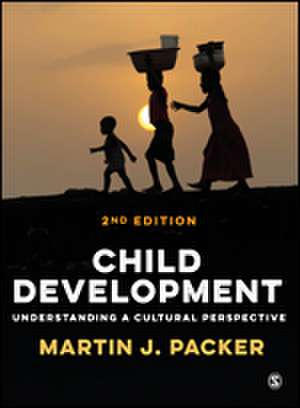
Child Development: Understanding A Cultural Perspective
Autor Martin J. Packeren Limba Engleză Electronic book text – 20 apr 2021
Remarcăm în această a treia ediție a lucrării Child Development o deschidere interdisciplinară pronunțată, unde psihologia dezvoltării se intersectează organic cu antropologia culturală, biologia evoluționistă și sociologia. Autorul Martin J. Packer propune o premisă fundamentală: cultura nu este doar un context extern, ci o componentă intrinsecă a dezvoltării psihologice a fiecărui copil. Această perspectivă extinde cadrul propus de Culture and Human Development de Jaan Valsiner cu date noi, punând un accent sporit pe modul în care comunitatea modelează structurile cognitive și emoționale încă din perioada prenatală.
Structura volumului urmărește o progresie cronologică riguroasă, facilitând înțelegerea etapelor de creștere de la naștere până la adolescență. Capitolul dedicat perspectivelor teoretice oferă o sinteză critică a curentelor majore — de la behaviorism la psihologia constructivistă — pregătind terenul pentru analizele complexe despre evoluția limbajului și sociogeneză. Putem afirma că textul reușește să interconecteze aspectele fizice și cognitive ale dezvoltării, evitând fragmentarea informației. Comparativ cu A Student's Guide to Developmental Psychology de Margaret Harris, care se concentrează pe reperele tradiționale de dezvoltare, lucrarea lui Packer se distinge prin utilizarea studiilor de caz transculturale și prin încurajarea constantă a gândirii critice prin secțiuni dedicate de reflecție.
În contextul operei sale, acest manual reprezintă o rafinare a temelor explorate în The Science of Qualitative Research, aplicând rigoarea metodologică a cercetării calitative în analiza parcursului ontogenetic. Reținem că această ediție a fost recalibrată pentru a servi drept resursă principală în mediul universitar, oferind un glosar esențial și instrumente de revizuire online, adaptate nevoilor studenților contemporani.
Preț: 292.87 lei
Indisponibil temporar
Specificații
ISBN-10: 1529756510
Pagini: 624
Dimensiuni: 189 x 246 mm
Ediția:Second Edition
Editura: SAGE Publications
Colecția Sage Publications Ltd
Locul publicării:London, United Kingdom
De ce să citești această carte
Această carte este esențială pentru studenții de la psihologie și științele educației care doresc să înțeleagă dezvoltarea copilului dincolo de parametrii pur biologici. Cititorul câștigă o perspectivă globală prin studii de caz din diverse culturi, învățând să coreleze teoria cu practica socială. Este un instrument academic precis, optimizat pentru cursuri introductive, care clarifică procesele complexe ale creșterii umane într-un format accesibil și bine structurat.
Despre autor
Martin J. Packer este profesor asociat de psihologie la Universitatea de los Andes din Bogota și un cercetător recunoscut în domeniul psihologiei culturale și al metodelor calitative. Autorul unor lucrări de referință precum The Science of Qualitative Research și Changing Classes, Packer și-a dedicat cariera studierii modului în care mediul social și școlar modelează individul. Experiența sa de editor la publicații de prestigiu precum „Qualitative Research in Psychology” se reflectă în rigoarea și claritatea expunerii din Child Development, consolidându-i reputația de specialist în analiza interdisciplinară a dezvoltării umane.
Descriere scurtă
Taking a chronological approach, from prenatal development to adolescence, your knowledge of developmental psychology will grow with the child.
To help you in your studies
· Social, cognitive, emotional and physical aspects of development are interwoven to help you connect the material
· You can read case studies from across the globe to enable you to compare cultures
· Key research studies are highlighted to help you get to grips with the theory
· You’ll be encouraged to ‘Stop and think’ and engage your critical skills
With this new edition we've reduced the number of chapters so it covers only what you need to know and we've added a glossary to help with understanding.
This textbook is essential reading for undergraduate students taking an introductory course in child development or developmental psychology.
Recenzii
Cuprins
Chapter 2: Evolution and Human Development
Chapter 3: Prenatal Development, Birth, and the Newborn (Conception to 6 weeks of age)
Chapter 4: Infancy—A Practical Understanding of the World (6 weeks—12 months)
Chapter 5: Infancy—Towards Biological Differentiation (6 weeks—12 months)
Chapter 6: Toddlerhood—A World of Irresistible Invitations (1 year—30 months)
Chapter 7: Toddlerhood—Towards Psychological Differentiation (1 year—30 months)
Chapter 8: Early Childhood—Captured by Appearances (3—6 years)
Chapter 9: Early Childhood—Origins of Verbal Thought (3—6 years)
Chapter 10: Middle Childhood—In Work and School (6—12 years)
Chapter 11: Middle Childhood—Understanding Institutional Roles (6—12 years)
Chapter 12: The Teenage Years—Adolescent or Adult? (12 years and up)
Chapter 13: The Teenage Years—Differentiation Between Actual and Possible (12 years and up)