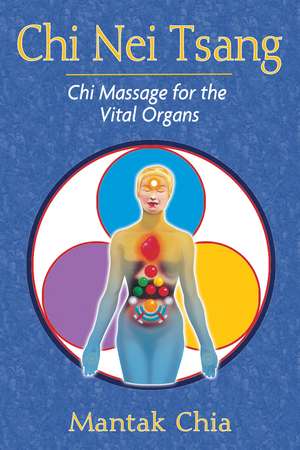
Chi Nei Tsang: Chi Massage for the Vital Organs
Autor Mantak Chiaen Limba Engleză Paperback – 26 dec 2006
Prezentat într-un format paperback generos de peste 400 de pagini, volumul Chi Nei Tsang impresionează prin calitatea grafică a celor 243 de ilustrații. Acestea sunt esențiale pentru un manual practic, oferind claritate vizuală asupra punctelor de presiune și a fluxurilor energetice, rezistând utilizării repetate în timpul sesiunilor de lucru. Observăm o abordare riguroasă a sănătății abdominale, considerată în tradiția taoistă sediul emoțiilor și al vitalității.
Descoperim aici o metodă străveche de autovindecare, adaptată omului modern care se confruntă cu afecțiuni provocate de stres și tensiune acumulată. Cei care au explorat deja Chi Self-Massage vor aprecia în această lucrare profunzimea tehnicilor aplicate organelor interne; dacă volumul anterior se concentra pe simțuri și exterior, Chi Nei Tsang pătrunde în profunzimea cavității abdominale pentru a debloca energia stagnante. Subliniem că autorul, Mantak Chia, face o legătură directă între sănătatea fizică și echilibrul emoțional, oferind instrumente pentru gestionarea furiei sau a anxietății prin masaj și respirație.
Cartea este organizată progresiv: începe cu pregătirea și protecția practicantului, continuă cu tehnici specifice pentru intestine, sistemul limfatic și organele vitale, și culminează cu aplicații practice pentru afecțiuni comune. Această structură transformă textul dintr-un simplu ghid într-un curs complet de medicină internă taoistă. În contextul operei sale, lucrarea completează viziunea din Awaken Healing Energy Through the Tao, trecând de la circulația energetică generală la intervenția punctuală asupra organelor, fiind o piesă fundamentală pentru oricine dorește să stăpânească sistemul Universal Healing Tao.
Preț: 105.37 lei
Preț vechi: 138.95 lei
-24%
Carte disponibilă
Livrare economică 14-26 august
Specificații
ISBN-10: 1594771057
Pagini: 416
Ilustrații: 243 b&w illustrations
Dimensiuni: 152 x 229 x 23 mm
Greutate: 0.54 kg
Editura: Inner Traditions/Bear & Company
Colecția Destiny Books
Locul publicării:United States
V-ar putea interesa
-
 Telling LiesPaul EkmanPreț: 101.25 lei
 -
 Karate's Supreme UltimatePatrick McDermottPreț: 90.13 lei
 -
 -19%Preț: 81.30 lei99.91 lei
 -
 Preț: 166.58 lei
 -
 Awakening the Luminous MindTenzin Wangyal RinpochePreț: 95.86 lei
 -
 Awakening the Sacred BodyTenzin Wangyal RinpochePreț: 106.47 lei
 -
 MatrixingAl CasePreț: 336.97 lei
 -
 Clarity and TranquilityStuart Alve OlsonPreț: 150.87 lei
 -
 Preț: 157.95 lei
 -
 The Complete Guide to Northern Praying Mantis Kung FuStuart Alve OlsonPreț: 126.30 lei
 -
 Spectrum of EcstasyKhandro DechenPreț: 151.54 lei
 -
 -26%Preț: 73.16 lei98.56 lei
 -
 Karsai Nei TsangMantak ChiaPreț: 92.06 lei
 -
 The Yoga of TruthPeter MarchandPreț: 90.94 lei
 -
 -38%Preț: 97.54 lei156.38 lei
 -
 -12%Preț: 100.77 lei114.14 lei
 -
 Greatest Kan and Li: Gathering the Cosmic LightMantak Chia-31%Preț: 137.45 lei200.14 lei
 -
 -21%Preț: 100.12 lei126.40 lei
 -
 Pi Gu Chi Kung: Inner Alchemy Energy FastingMantak Chia-25%Preț: 74.14 lei98.79 lei
 -
 Yoga Nidra Meditation: The Sleep of the SagesPierre Bonnasse-25%Preț: 74.17 lei98.82 lei
 -
 -25%Preț: 74.59 lei99.42 lei
 -
 History of Karate and the Masters Who Made ItMark I. Cramer-19%Preț: 108.87 lei134.73 lei
 -
 -26%Preț: 208.32 lei280.44 lei
 -
 Daoist Meridian Yoga: Activating the Twelve Pathways for Energy Balance and HealingCamilo Sanchez, L.Ac, Sanchez, L.Ac, MOM-20%Preț: 166.94 lei209.05 lei
 -
 Unmasking the FacePaul EkmanPreț: 91.69 lei
 -
 The Essence of Shaolin White CraneJwing Ming YangPreț: 221.53 lei
De ce să citești această carte
Recomandăm această carte celor care doresc să preia controlul asupra propriei sănătăți prin metode holistice. Este un instrument practic pentru terapeuți și pentru cei care suferă de probleme digestive sau de stres cronic. Cititorul câștigă o înțelegere profundă a modului în care emoțiile afectează organele interne și învață tehnici concrete, ilustrate pas cu pas, pentru detoxifiere și revitalizare energetică direct în centrul vital al corpului.
Despre autor
Maestrul Mantak Chia, elev al mai multor maeștri taoiști, este o figură centrală în aducerea practicilor ezoterice orientale în Occident. A fondat sistemul Healing Tao în America de Nord în 1979, extinzându-l ulterior la nivel mondial sub numele de Universal Healing Tao. Director al Tao Garden Health Spa din Thailanda, a publicat peste 50 de titluri de referință, printre care se numără și Taoist Secrets of Pregnancy, Birth, and Healing Love. Prin activitatea sa de decenii, a certificat mii de instructori, dedicându-și viața predării tehnicilor de circulație a energiei Chi și alchimiei interne.
Descriere scurtă
Notă biografică
Extras
Balancing Emotions and Tonifying Organs
Webster’s Medical Dictionary defines tonicity as “Tonus; a state of normal tension of the tissues by virtue of which the parts are ready to function in response to a suitable stimulus.” This describes the state in which you want to leave the person’s body: Its systems are balanced and ready for whatever happens next. Achieving this state may involve flushing out stagnant emotional blocks, stale winds, and other decaying energies.
Tonifying the Organs and Releasing Emotional Energy
Tonifying the organs begins to happen automatically right after they have been detoxified. The energy spent by the organs in storing and processing the toxicity is now available for beneficial use by the organs. In Chi Nei Tsang, points on the energy channels of those organs are also stimulated. Tonification is very soothing, and you may easily cause the person to fall asleep.
Lungs
1. One hand holds the lung point, Lung-1, on the chest, while the other hand is massaging the lung area marked on the Chi Nei Tsang chart. Massage the point on both sides, starting on the left.
2. While you are pressing the points, the person being massaged should inhale through your hands. When exhaling, he or she should softly make the Lungs’ Sound (Ssssssss) and visualize the color white. Both of you may feel sadness coming out, or a heavy sigh. After the lungs’ energy has been cleared of negative influences, try to sense whether it is strong, healthy, cool, and dry. Be aware of your particular methods of sensing. You may be very good at noticing emotional response, or better at determining subtle changes in organ temperatures. You might have your own method or strong intuitive feelings. Sometimes the change in energy is dramatic, but at times it can be subtle.
3. If more energy is required, stimulate Large Intestine-4 (LI-4) in the web of the thumb and forefinger.
4. Monitor the lungs’ pulse on the wrist.
All the organs can be tonified similarly, but do not fear that a lot of unpredictable emotional energy is going to come your way. Usually one emotion will release, and this will help to relax the tension in the neighboring organs according to the Laws of the Five Phases of Energy.
You can work together to forestall or lessen the impact of the emotional release. If your client loses a positive state of mind, teach him or her how to recapture it, or the negative emotion that is released could be transferred to you. If you can determine what negative emotions are predominant, both of you should focus on the opposite positive emotion as you begin the emotional release. Both of you should do the Inner Smile as well.
Heart
When a person is impatient, anxious, hasty, and/or feels hatred, the heart area will be congested, tight, painful, and blocked. Breathing can be difficult. To release the tension and tightness and increase self-esteem and confidence, massage the sternum close to the heart.
1. Use the one finger technique, starting from the top of the sternum working down in small spirals to the tip of the sternum. If you find painful parts, work slowly and gently, but spend time on it. Look at the person’s face. If it shows pain, just hold the point at the tip of the sternum and HT-7 for a while. Massage the tip of the sternum gently and carefully since it is soft. Work thoroughly as you massage from the top of the sternum down to its tip.
2. Massage in between the ribs and the places at which they are joined to the sternum. Work specifically in the area below the collarbone. Here you will find painful spots on most people.
3. If there is a lot of pain, ask the student to make the Heart’s Sound (Hawwwwww) and visualize the color red as he/she is massaged.
Tonifying the Navel Center Chi and Reducing Stress
This is an exercise to reduce stress and recharge Navel Center Chi.
1. Place the right thumb on the right hipbone and spread the fingers over the kidney. The middle finger should be on the sacrum with the other fingers lying along the spine. If you have small hands and are working on someone very big, just be sure to cover the kidney with your hand. Use the hand to send energy to the kidney. A strong kidney can nourish the whole body. It is especially beneficial for the lower abdomen, since it can release lower back pain and tension.
2. Place the left palm above the navel, just below the sternum. Press down with the left palm in a counterclockwise circular motion. Press up with the right hand. Gradually, move the left palm lower toward the navel.
3. Practice nine, eighteen, or 36 times. Rest and concentrate on the navel for a while. Feel the Chi energy start to move in the navel and collect at the Navel Center.
4. Switch hands and do the same on the left side. Place your right hand on the navel and your left hand on the hip and kidney. Use the right heel, palm, and fingers to massage the Chi of the navel in clockwise movements gradually descending from the sternum area toward the navel. You can do this nine, eighteen, or thirty-six times.
Cuprins
Putting Chi Nei Tsang into Practice
Introduction: What Is Chi Nei Tsang?
1 • Working in the Navel Center
2 • Techniques for Preparing, Training, and Protecting Yourself
3 • Observing the Body: Looking, Feeling, and Asking
4 • Opening the Gates and Chasing the Winds
5 • Detoxifying the Skin and the Large and Small Intestines
6 • Balancing Emotions and Tonifying Organs
7 • Detoxifying the Organs
8 • Detoxifying the Lymphatic System
9 • Centering, Balancing, and Flushing
10 • Applying Chi Nei Tsang to Common Ailments
11 • Working Procedures
12 • Chi Nei Tsang and Stress Management
13 • Chi Nei Tsang and Clinical Psychology
14 • Interviews and Case Histories
Bibliography and Recommended Books
About the Author
The Universal Tao System and Training Center
Index
Recenzii
"The system works to address conditions and symptoms modern medicine is often unable to cure because a physical source for the problems cannot easily be found."