
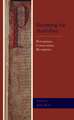
Chaucer's Neoplatonism: Varieties of Love, Friendship, and Community: Studies in Medieval Literature
Autor John M. Hillen Limba Engleză Paperback – 6 feb 2020







Preț: 258.75 lei
Preț vechi: 358.00 lei
-28%
Puncte Express: 388
Carte tipărită la comandă
Livrare economică 11-25 iunie
Specificații
ISBN-13: 9781498561952
ISBN-10: 1498561950
Pagini: 210
Dimensiuni: 155 x 222 x 16 mm
Greutate: 0.32 kg
Editura: Bloomsbury Publishing
Colecția Lexington Books
Seria Studies in Medieval Literature
Locul publicării:New York, United States
ISBN-10: 1498561950
Pagini: 210
Dimensiuni: 155 x 222 x 16 mm
Greutate: 0.32 kg
Editura: Bloomsbury Publishing
Colecția Lexington Books
Seria Studies in Medieval Literature
Locul publicării:New York, United States
Cuprins
Chapter One - Chaucer's Neoplatonism: Varieties of Love, Friendship and Community
Chapter Two - Varieties of Supposition and the Truth Value of Story
Chapter Three - Varieties of Friendship: Pandarus, Troilus and Noble Friendship
Chapter Four - Avuncular Form and Pandarus's Several Embassies
Chapter Five - Varieties of Joy in Troilus and Criseyde
Chapter Six - Varieties of Invited "Compaignye" in the Pilgrimage to Canterbury
Conclusion - Chaucer's Neoplatonic Art
Chapter Two - Varieties of Supposition and the Truth Value of Story
Chapter Three - Varieties of Friendship: Pandarus, Troilus and Noble Friendship
Chapter Four - Avuncular Form and Pandarus's Several Embassies
Chapter Five - Varieties of Joy in Troilus and Criseyde
Chapter Six - Varieties of Invited "Compaignye" in the Pilgrimage to Canterbury
Conclusion - Chaucer's Neoplatonic Art
Recenzii
John Hill's detailed analysis of Chaucer's deeply thought, but playful, poetry emphasizes traces of divine forms in human affairs, however tangled with mere sense perceptions and degraded actions. Convincingly challenging the trend of some recent criticism, the poems (especially Troilus and Criseyde) are found to be shot through with Neoplatonic/Boethian notions of knowledge, love, joy, "full" friendship, and community.
An intelligent and wide-ranging reading of the major poems in terms of what Hill sees as Chaucer's loosely applied and rational Neo-Platonism. Staying close to the poetic texts, Hill focuses on Chaucer's varying treatments of the themes of love, friendship and community. Scholars and advanced students will find this book a companionable addition to their libraries
John M. Hill has done that rare thing: a new book on Chaucer that in fact shows us something new. Hill has applied a lifetime of learning to probing the heart of Chaucer's Boethian plenitude. What he finds is a deeply embedded Neoplatonism that, once seen through Hill's eyes, powers fresh, unexpectedly convincing readings of Chaucer's work, from the Book of the Duchess through Troilus to the Canterbury Tales.
An intelligent and wide-ranging reading of the major poems in terms of what Hill sees as Chaucer's loosely applied and rational Neo-Platonism. Staying close to the poetic texts, Hill focuses on Chaucer's varying treatments of the themes of love, friendship and community. Scholars and advanced students will find this book a companionable addition to their libraries
John M. Hill has done that rare thing: a new book on Chaucer that in fact shows us something new. Hill has applied a lifetime of learning to probing the heart of Chaucer's Boethian plenitude. What he finds is a deeply embedded Neoplatonism that, once seen through Hill's eyes, powers fresh, unexpectedly convincing readings of Chaucer's work, from the Book of the Duchess through Troilus to the Canterbury Tales.