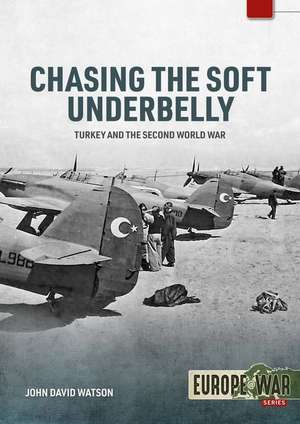
Chasing the Soft Underbelly
Autor John David Watsonen Limba Engleză Paperback – 17 apr 2023
În literatura academică dedicată celui de-Al Doilea Război Mondial, rolul Turciei este adesea redus la o simplă notă de subsol, atenția fiind captată de marile teatre de operațiuni. Volumul Chasing the Soft Underbelly vine să completeze această lacună, propunând o examinare riguroasă a modului în care un stat non-beligerant a influențat strategiile globale ale Marilor Puteri. Autorul John David Watson demonstrează că, deși Turcia a intrat oficial în conflict abia în februarie 1945, poziția sa geografică și controlul strâmtorilor au fost vitale pentru planurile lui Hitler, Stalin și Churchill. Ne-a atras atenția modul în care autorul analizează conceptul de „soft underbelly”, sintagma prin care Winston Churchill își exprima dorința de a lovi Germania prin Balcani, o viziune ce își avea rădăcinile în campania de la Gallipoli din Primul Război Mondial. Structura cărții este cronologică și echilibrată, începând cu starea forțelor armate turce înainte de 1939 și continuând cu jocurile diplomatice complexe menite să evite atragerea țării în tabăra Axei. Din punct de vedere vizual, ediția publicată de HELION & COMPANY este remarcabilă, incluzând 21 de profiluri color și 9 hărți care ajută la înțelegerea contextului geopolitic. Acoperă aceeași arie tematică a conflictului global ca The Second World War de David Horner, dar cu o abordare mult mai specifică și nișată. În timp ce volumul lui Horner oferă o perspectivă de ansamblu asupra tuturor fronturilor, Chasing the Soft Underbelly se concentrează exclusiv pe dimensiunea diplomatică și militară a Turciei, oferind detalii despre modul în care armata turcă s-a modernizat folosind echipament de la ambele tabere aflate în conflict.
Preț: 143.47 lei
Carte disponibilă
Livrare economică 09-23 noiembrie
Livrare express 23-29 octombrie pentru 28.06 lei
Specificații
ISBN-10: 1804510262
Pagini: 92
Ilustrații: 84 b/w photos, 21 colour profiles, 9 maps, 3 tables
Dimensiuni: 207 x 292 x 5 mm
Greutate: 0.39 kg
Editura: HELION & COMPANY
De ce să citești această carte
Recomandăm această carte istoricilor și pasionaților de istorie militară care doresc să înțeleagă subtilitățile diplomației de război. Cititorul câștigă o perspectivă rară asupra modului în care o națiune poate naviga între presiunile unor superputeri, menținându-și neutralitatea cu un cost economic imens. Este un studiu esențial despre importanța resurselor din Balcani și controlul strategic al accesului spre Marea Neagră.
Despre autor
John David Watson este un cercetător specializat în istorie militară, recunoscut pentru rigoarea cu care utilizează sursele primare și secundare în reconstrucția evenimentelor din perioada 1939-1945. Expertiza sa se concentrează pe zonele mai puțin explorate ale conflictului, analizând intersecția dintre diplomație, strategie militară și logistică. În lucrarea de față, Watson demonstrează o înțelegere profundă a contextului geopolitic al Turciei, reușind să scoată la lumină documente și planuri strategice care au rămas mult timp în umbra marilor bătălii europene.