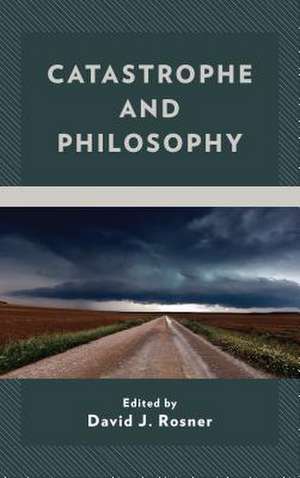
Catastrophe and Philosophy
Editat de David J. Rosner Contribuţii de JeiDong Ryu, Sarah K. Corrigan, Kwon Jong Yoo, John Ross, Steven Cresap, Diana Prokofyeva, David Wilkinson, Carsten Meiner, Phil Washburn, Robert Quist, Peter W. Wakefield, Nancy Reale, David Chalfin, Pedro Geiger, Marek Celinskien Limba Engleză Hardback – 4 dec 2018
Preț: 586.31 lei
Preț vechi: 865.89 lei
-32%
Puncte Express: 879
Carte tipărită la comandă
Livrare economică 21 noiembrie-05 decembrie
Livrare prin curier în România Termenul estimat este afișat lângă disponibilitate.
Transport gratuit pentru acest produs Plată online sau ramburs, în funcție de opțiunile comenzii.
Retur gratuit în 14 zile Comandă securizată și suport în română.
Specificații
ISBN-13: 9781498540117
ISBN-10: 1498540112
Pagini: 378
Ilustrații: 10 b/w photos;
Dimensiuni: 150 x 230 x 26 mm
Greutate: 0.68 kg
Editura: Bloomsbury Publishing
Colecția Lexington Books
Locul publicării:New York, United States
ISBN-10: 1498540112
Pagini: 378
Ilustrații: 10 b/w photos;
Dimensiuni: 150 x 230 x 26 mm
Greutate: 0.68 kg
Editura: Bloomsbury Publishing
Colecția Lexington Books
Locul publicării:New York, United States
Cuprins
Introductory Essay: Catastrophe and the Limits of Understanding, by David J. Rosner
Part I: The Ancient World
Catastrophe and Enlightenment: The Genesis of Buddhism's First Noble Truth, by JeiDong Ryu
The Missing God: Voices of Despair and Empathy in the Book of Lamentations, by Sarah K. Corrigan
Patterns of Post-Catastrophic Thought in Ancient China: The Growth of Philosophy after the Warring States Period, by Kwon Jong Yoo
Athens in Ruins: Plato and the Aftermath of the Peloponnesian War, by John Ross
Part II: The Middle Ages/Renaissance
Augustine's Anti-Catastrophe, by Steven Cresap
Values in the Time of Plague: Civilizational Trauma and Moral Nihilism in Boccaccio's Decameron, by David J. Rosner
The Search for Stability in Chaotic Times: Machiavelli, by Diana Prokofyeva
Part III: Modernity I: Early Modern Period
Three Catastrophes and One Philosopher: Atrocious Wars, and the Political Ideas of Thomas Hobbes, by David Wilkinson
"A New Philosophy Calls All into Doubt": The Epistemo
Part I: The Ancient World
Catastrophe and Enlightenment: The Genesis of Buddhism's First Noble Truth, by JeiDong Ryu
The Missing God: Voices of Despair and Empathy in the Book of Lamentations, by Sarah K. Corrigan
Patterns of Post-Catastrophic Thought in Ancient China: The Growth of Philosophy after the Warring States Period, by Kwon Jong Yoo
Athens in Ruins: Plato and the Aftermath of the Peloponnesian War, by John Ross
Part II: The Middle Ages/Renaissance
Augustine's Anti-Catastrophe, by Steven Cresap
Values in the Time of Plague: Civilizational Trauma and Moral Nihilism in Boccaccio's Decameron, by David J. Rosner
The Search for Stability in Chaotic Times: Machiavelli, by Diana Prokofyeva
Part III: Modernity I: Early Modern Period
Three Catastrophes and One Philosopher: Atrocious Wars, and the Political Ideas of Thomas Hobbes, by David Wilkinson
"A New Philosophy Calls All into Doubt": The Epistemo
Recenzii
The book presents a unique way of doing philosophy. It offers points of view from diverse scholars to deal with some of the most pressing problems faced by humanity including "existential catastrophes such as environmental degradation, global warming, overpopulation, the threat of nuclear conflagration, and widespread economic upheaval." Through these multiple perspectives, Professor David Rosner is able to capture "the sense-making activity" of the traditional philosophy, thus resuscitating philosophy and its sustained relevance during the 21st century.
A must read for all those who want to make sense of the human crises in all domains of life posed by the super-abundance of useless and useful information that is bombarded on the mind of the 21st century person.
In this book David Rosner skillfully brings together a number of essays that deal with maybe the most significant issue of any given period of time: catastrophe that radically affects our lives and our civilization. It seems that Emil Cioran is right when he says that civilizations begin in myth and end in doubt. A catastrophe brings us to a major dilemma related to the fundamental need of making sense in life and the non-sense and doubt that it implies and generates. The book illustrates powerfully how catastrophes change philosophies and worldviews and how changed philosophies might help deal with these types of extreme situations. This is a work of high relevance to our contemporary troubled world on many fronts as it offers empowering and valuable guidelines that could help in time of need.
A must read for all those who want to make sense of the human crises in all domains of life posed by the super-abundance of useless and useful information that is bombarded on the mind of the 21st century person.
In this book David Rosner skillfully brings together a number of essays that deal with maybe the most significant issue of any given period of time: catastrophe that radically affects our lives and our civilization. It seems that Emil Cioran is right when he says that civilizations begin in myth and end in doubt. A catastrophe brings us to a major dilemma related to the fundamental need of making sense in life and the non-sense and doubt that it implies and generates. The book illustrates powerfully how catastrophes change philosophies and worldviews and how changed philosophies might help deal with these types of extreme situations. This is a work of high relevance to our contemporary troubled world on many fronts as it offers empowering and valuable guidelines that could help in time of need.