Cantitate/Preț
Produs

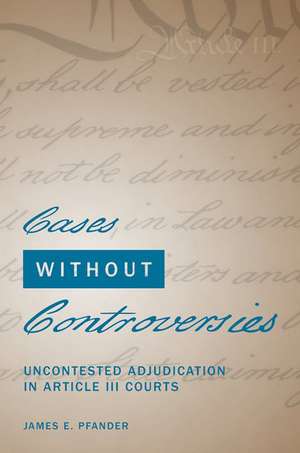
Cases Without Controversies: Uncontested Adjudication in Article III Courts

Autor James E. Pfander
en Limba Engleză Hardback – 21 sep 2021

Autorul James E. Pfander, profesor de drept cu o autoritate recunoscută în studiul istoriei juridice americane, propune în Cases Without Controversies o reevaluare fundamentală a modului în care instanțele federale își exercită autoritatea. Ne-a atras atenția rigoarea cu care Pfander fundamentează această lucrare pe o cercetare istorică aprofundată, demontând mitul conform căruia puterea judiciară conform Articolului III este limitată strict la disputele contradictorii. Considerăm că această analiză a jurisdicției voluntare — un concept familiar în sistemele de drept civil, dar adesea marginalizat în SUA — aduce o claritate necesară asupra procedurilor administrative și de supraveghere, precum falimentul sau emiterea mandatelor.

Putem afirma că volumul se distinge prin capacitatea de a separa noțiunile de „cazuri” și „controverse”, oferind o bază legală solidă pentru acțiunile judiciare unde nu există un adversar direct. Cititorii familiarizați cu Judicial Jurisdiction de Patrick Baude vor aprecia modul în care Pfander trece dincolo de prezentarea generală a competențelor instanțelor, oferind un context istoric antebelic care explică evoluția metodologiilor interpretative ale Curții Supreme. Spre deosebire de abordările pur teoretice, acest text publicat de Oxford University Press integrează exemple practice de naturalizare și cereri de habeas corpus.

În contextul operei sale, Cases Without Controversies reprezintă o extindere naturală a preocupărilor autorului pentru limitele și responsabilitățile puterii constituționale. Dacă în Constitutional Torts and the War on Terror Pfander analiza răspunsul judiciar la încălcările drepturilor omului, în lucrarea de față el se concentrează pe arhitectura internă a puterii de decizie, oferind un instrument esențial pentru înțelegerea proceselor politice și constituționale care definesc sistemul american actual.

Citește tot Restrânge

Preț: 66549 lei

Preț vechi: 88967 lei
-25%

Puncte Express: 998

Carte disponibilă

Livrare economică 29 mai-09 iunie


Specificații

ISBN-13: 9780197571408
ISBN-10: 0197571409
Pagini: 280
Dimensiuni: 236 x 155 x 23 mm
Greutate: 0.61 kg
Editura: Oxford University Press
Colecția OUP USA
Locul publicării:New York, United States

De ce să citești această carte

Această lucrare este esențială pentru cercetătorii în drept constituțional și istorie juridică. Cititorul câștigă o înțelegere profundă a modului în care instanțele federale pot funcționa legal în absența unei dispute directe. Este o recomandare fermă pentru cei care doresc să descifreze complexitatea Articolului III, oferind o perspectivă istorică documentată care justifică practicile judiciare moderne, de la naturalizare la proceduri de insolvență.


Despre autor

James E. Pfander este un distins specialist în drept constituțional și procedură civilă, fiind recunoscut pentru analizele sale meticuloase asupra sistemului judiciar federal al Statelor Unite. Cercetările sale se concentrează frecvent pe intersecția dintre istoria juridică și interpretarea constituțională modernă. Autor al mai multor volume de referință, printre care și Constitutional Torts and the War on Terror, Pfander a contribuit semnificativ la dezbaterea academică privind modul în care instanțele răspund provocărilor contemporane prin prisma precedentelor istorice. Activitatea sa este marcată de o capacitate rară de a clarifica concepte tehnice complexe pentru un public academic și profesional.


Descriere

This book offers a new account of the power of federal courts in the United States to hear and determine uncontested applications to assert or register a claim of right. Familiar to lawyers in civil law countries as forms of voluntary or non-contentious jurisdiction, these uncontested applications fit uneasily with the commitment to adversary legalism in the United States. Indeed, modern accounts of federal judicial power often urge that the language of the Article III of the U.S. Constitution limits federal courts to the adjudication of concrete disputes between adverse parties, thereby ruling out all forms of non-contentious jurisdiction. Said to rest on the so-called “case-or-controversy” requirement of Article III, this requirement of party contestation threatens the power of federal courts to conduct a range of familiar proceedings, such as the oversight of bankruptcy proceedings, the issuance of warrants, and the adjudication of applications for mandamus and habeas corpus relief. By recounting the tradition of naturalization and other uncontested litigation in antebellum America and coupling that tradition with an account of the important difference between cases and controversies, this book challenges the prevailing understanding of Article III. In addition to defending the power of federal courts to hear uncontested matters of federal law, the book examines the way the Constitution's meaning has changed over time and suggests a constructive interpretive methodology that would allow the Supreme Court to take account of the old and the new in defining the contours of federal judicial power.

Recenzii

Overall, Jim Pfander's book is legal history at its finest. He has done thorough research, drawn reasonable conclusions from the primary sources, fairly acknowledged possible competing interpretations, and explained complex legal and historical ideas clearly. No one has a better understanding of the historical meaning of Article III.

Notă biografică

James Pfander, author of dozens of articles and books, has served as the Owen L. Coon Professor of Law at Northwestern University Pritzker School of Law for more than a decade. Pfander's scholarship explores the nature of federal judicial power, the law of government accountability in modern America, and the history of the federal judicial system. A member of the American Law Institute, Pfander recently concluded his work as reporter/consultant to the Federal-State Jurisdiction Committee of the Judicial Conference of the United States. He has served as chair of both the federal courts and civil procedure sections of the Association of American Law Schools.