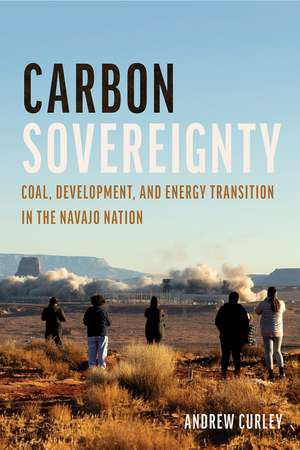
Carbon Sovereignty: Coal, Development, and Energy Transition in the Navajo Nation
Autor Andrew Curleyen Limba Engleză Paperback – 11 apr 2023
Tranziția energetică globală este adesea prezentată ca un proces pur tehnologic sau economic, însă Carbon Sovereignty ne obligă să recunoaștem dimensiunea sa profund politică și identitară. Subliniem modul în care Andrew Curley documentează evoluția Națiunii Navajo de la o economie dominată timp de jumătate de secol de cărbune către un prezent incert, marcat de închiderea marilor centrale în 2019. Lucrarea nu se limitează la o critică a extractivismului, ci analizează de ce unele comunități indigene au sprijinit activ industria combustibililor fosili, văzând în aceasta o cale spre autonomie financiară și suveranitate în fața colonialismului persistent.
Ne-a atras atenția rigoarea cu care Curley, el însuși membru al comunității Navajo, îmbină geografia umană cu etnografia. Prin cele 15 ilustrații și hărți incluse, volumul vizualizează transformările teritoriale, în timp ce interviurile cu minerii și politicienii locali oferă o voce celor direct afectați de „capitalismul prin colonialism”. Este o perspectivă nuanțată care refuză dihotomiile simple între ecologism și dezvoltare, arătând cum suveranitatea energetică devine o chestiune personală și urgentă.
Ca alternativă la Sovereignty for Survival de James Robert Allison, III pentru cursurile de studii etnice sau geografie politică, acest volum vine cu avantajul unei analize contemporane a procesului de de-carbonizare „în timp real”. În timp ce lucrarea lui Allison se concentrează pe succesele juridice ale anilor '70, Carbon Sovereignty explorează complexitatea și dilemele actuale ale abandonării cărbunelui. Reținem acest titlu ca pe o contribuție esențială la înțelegerea modului în care comunitățile marginalizate navighează între dependența economică de resurse și imperativul climatic.
Preț: 215.63 lei
Carte disponibilă
Livrare economică 18 mai-01 iunie
Specificații
ISBN-10: 081653960X
Pagini: 232
Ilustrații: 15 b&w illustrations, 2 maps, 3 tables
Dimensiuni: 152 x 229 x 18 mm
Greutate: 0.31 kg
Editura: University of Arizona Press
Colecția University of Arizona Press
De ce să citești această carte
Această lucrare este esențială pentru cei interesați de intersecția dintre drepturile popoarelor indigene și politicile climatice. Cititorul câștigă o înțelegere profundă a modului în care „energia verde” nu este neutră, ci trebuie negociată prin prisma justiției sociale și a istoriei coloniale. Este o recomandare solidă pentru studenții la sociologie și geografie care caută un studiu de caz aplicat despre sfârșitul erei cărbunelui.
Despre autor
Andrew Curley este un distins geograf și profesor, membru al Națiunii Navajo (Diné). Expertiza sa se concentrează pe intersecția dintre resursele naturale, suveranitatea indigenă și dezvoltarea economică în sud-vestul Statelor Unite. Prin activitatea sa academică, Curley investighează modul în care infrastructura energetică modelează relațiile de putere și identitatea politică a comunităților native. Această perspectivă dublă, de cercetător și membru al comunității analizate, conferă lucrărilor sale o profunzime etică și o acuratețe factuală remarcabilă în peisajul studiilor indigene contemporane.
Descriere scurtă
This comprehensive new work offers a deep dive into the complex inner workings of energy shift in the Navajo Nation. Geographer Andrew Curley, a member of the Navajo Nation, examines the history of coal development within the Navajo Nation, including why some Diné supported coal and the consequences of doing so. He explains the Navajo Nation’s strategic choices to use the coal industry to support its sovereignty as a path forward in the face of ongoing colonialism. Carbon Sovereignty demonstrates the mechanism of capitalism through colonialism and the construction of resource sovereignty, in both the Navajo Nation’s embrace and its rejection of a coal economy.
For the people of the Navajo Nation, energy sovereignty is dire and personal. Thanks to on-the-ground interviews with Diné coal workers, environmental activists, and politicians, Curley documents the real consequences of change as they happened. While some Navajo actors have doubled down for coal, others have moved toward transition. Curley argues that political struggles ultimately shape how we should understand coal, capitalism, and climate change. The rise and fall of coal magnify the nuance and complexity of change. Historical and contemporary issues intermingle in everyday life with lasting consequences.
Notă biografică
Recenzii
“Curley’s work defies the simplification of the Navajo Nation’s participation in the coal economy. He situates Navajo Nation support for coal in spatial and temporal context, taking into account the history of colonialism, the fraught development of the modern Navajo Nation government, and the demand for Navajo Nation resources in Western urban development. Curley’s thoughtful study engages with the moral economies advanced by both Diné coal miners and environmentalists, both of whom articulate Navajo ways of being with either coal labor or the development of a new economy based on alternative energy. His study will impact understandings of tribal sovereignty, tribal decision making, and tribal citizens’ political participation and advocacy in a context of fossil-fuel transition.”—Beth Rose Middleton Manning, author of Upstream: Trust Lands and Power on the Feather River
“Curley’s book offers perspectives and insights on the very complicated and pressing issues of coal, energy resources, Indigenous sovereignty, and community centering on diverse Diné voices and knowledge. His concept of carbon sovereignty reveals how tribal nations and individuals who are part of such intricate places and peoples face the challenges of a colonial capitalist world and climate change. Curley illuminates how Diné seek to survive and grow stronger as a people, connected to their land, family, and cultures. This book is a must-read for understanding how dynamic Indigenous peoples shape worlds, both physical and imagined, which in turn transform humanity through their environment, class, society, and culture.”—Farina King, co-author of Returning Home: Diné Creative Works from the Intermountain Indian School
"Carbon Sovereignty is valuable to anyone seeking to learn more about the issues facing the Navajo Nation, but also tribes in general. The existence of multiple vantage points, and the multiple reasons for making decisions, are often left out of the discussion on tribal dealings, but Dr. Curley centers these topics to approach the varying forces at play on tribal lands.”—Kevin D. Webster, Tribal College Journal