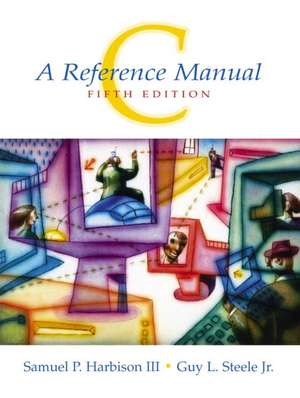
C: A Reference Manual: United States Edition
Autor Samuel P. Harbison, Guy L. Steele, Jr.en Limba Engleză Paperback – 20 feb 2002
Ediția a cincea a lucrării C de Samuel P. Harbison și Guy L. Steele, Jr. se concentrează pe standardul ISO/IEC 9899:1999, oferind în același timp suport complet pentru Standard C (1989) și C-ul tradițional. Considerăm esențial faptul că acest manual nu se rezumă la o singură iterație a limbajului, ci analizează evoluția și compatibilitatea dintre versiuni, inclusiv modul în care codul C poate fi utilizat în proiecte C++. Subliniem acoperirea extensivă a noilor funcționalități introduse de standardul C99, precum tipurile complexe, tablourile de lungime variabilă și bibliotecile destinate internaționalizării.
Structura textului este una tehnică și riguroasă, fiind concepută ca un manual de referință pentru implementatori și programatori care au nevoie de precizie în utilizarea virgulei mobile sau în gestionarea bibliotecilor de run-time. Ne-a atras atenția abordarea pragmatică a autorilor, care pun accent pe scrierea unui cod portabil și ușor de întreținut, o necesitate în sistemele care rulează încă milioane de linii de cod de tip legacy. Pe linia practică a volumului C/C++ Programmer's Reference de Herbert Schildt, lucrarea de față se diferențiază printr-o analiză mult mai profundă a detaliilor de implementare și a diferențelor istorice dintre standarde, fiind mai degrabă un instrument de diagnostic și referință decât un simplu ghid de sintaxă.
În comparație cu C in a Nutshell, care se axează pe standardele mai recente precum C11, C rămâne resursa fundamentală pentru înțelegerea mecanismelor interne ale limbajului așa cum au fost ele cristalizate în perioadele critice de standardizare. Este o piesă de bază în bibliografia de specialitate a editurii Pearson Education, oferind claritate acolo unde documentația tehnică standard poate fi ambiguă.
Preț: 545.12 lei
Preț vechi: 681.41 lei
-20%
Carte disponibilă
Livrare economică 07-21 noiembrie
Specificații
ISBN-10: 013089592X
Pagini: 560
Dimensiuni: 178 x 231 x 33 mm
Greutate: 0.61 kg
Ediția:Nouă
Editura: Pearson Education
Colecția Prentice Hall
Locul publicării:Upper Saddle River, United States
V-ar putea interesa
-
 C Programming LanguageDennis Ritchie-20%Preț: 385.95 lei482.43 lei
 -
 A Tour of C++Bjarne Stroustrup-20%Preț: 225.83 lei282.28 lei
 -
 C++20 for ProgrammersPaul Deitel-20%Preț: 365.11 lei456.39 lei
 -
 C++ in One Hour a Day, Sams Teach YourselfSiddhartha Rao-20%Preț: 278.04 lei347.55 lei
 -
 The Practice of ProgrammingBrian Kernighan-20%Preț: 304.16 lei380.20 lei
 -
 -20%Preț: 306.44 lei383.05 lei
 -
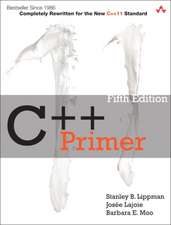 C++ PrimerStanley B. Lippman-20%Preț: 393.23 lei491.53 lei
 -
 C Primer PlusStephen Prata-20%Preț: 421.53 lei526.92 lei
 -
 The C++ Programming LanguageBjarne Stroustrup-20%Preț: 507.21 lei634.02 lei
 -
 C ProgrammingK N King-20%Preț: 468.88 lei586.09 lei
 -
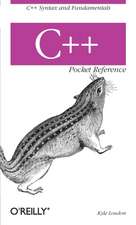 C++ Pocket ReferenceKyle Loudon-20%Preț: 110.10 lei137.63 lei
 -
 C++ All-in-One For DummiesJohn Paul Mueller-20%Preț: 227.58 lei284.48 lei
 -
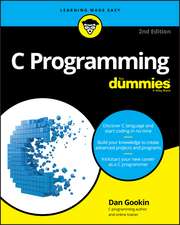 C Programming for DummiesDan Gookin-20%Preț: 170.73 lei213.41 lei
 -
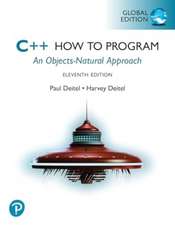 C++ How to Program, Global EditionPaul Deitel-20%Preț: 496.44 lei620.55 lei
 -
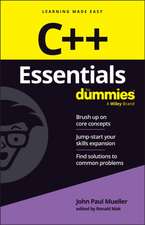 C++ Essentials for DummiesJohn Paul Mueller-20%Preț: 65.48 lei81.85 lei
 -
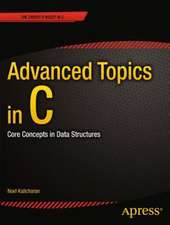 Advanced Topics in CNoel Kalicharan-20%Preț: 374.98 lei468.72 lei
 -
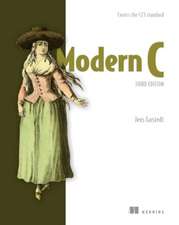 Modern C, Third EditionJens Gustedt-20%Preț: 350.34 lei437.92 lei
 -
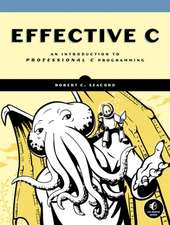 Effective C: An Introduction to Professional C ProgrammingRobert Seacord-36%Preț: 250.88 lei390.93 lei
 -
 Effective C, 2nd Edition: An Introduction to Professional C ProgrammingRobert C. Seacord-36%Preț: 296.21 lei462.40 lei
De ce să citești această carte
Recomandăm acest manual programatorilor care lucrează cu sisteme critice unde portabilitatea și conformitatea cu standardele ISO sunt obligatorii. Veți câștiga o înțelegere profundă a diferențelor dintre Standard C99 și versiunile anterioare, beneficiind de expertiza lui Guy L. Steele, Jr.. Este instrumentul ideal pentru a valida corectitudinea codului în proiecte complexe de inginerie software.
Descriere
Cuprins
1. Introduction.
2. Lexical Elements.
3. The C Preprocessor.
4. Declarations.
5. Types.
6. Conversions and Representations.
7. Expressions.
8. Statements.
9. Functions.
II. THE C LIBRARIES.
10. Introduction to the Libraries.
11. Standard Language Additions.
12. Character Processing.
13. String Processing.
14. Memory Functions.
15. Input/Output Facilities.
16. General Utilities.
17. Mathematical Functions.
18. Time and Date Functions.
19. Control Functions.
20. Locale.
21. Extended Integer Types.
22. Floating-point Environment.
23. Complex Arithmetic.
24. Wide and Multibyte Facilities
Appendix A. The ASCII Character Set.
Appendix B. Syntax of the C Language.
Appendix C. Answers to the Exercises.
Index.
Notă biografică
Caracteristici
- NEW - Coverage of the 1999 C Standard—Now included.
- The C language description now covers the new U.S. and international revision to C, adding complex and Boolean types, flexible arrays, improved international support, and many other changes. Ex.___
- The C language description now covers the new U.S. and international revision to C, adding complex and Boolean types, flexible arrays, improved international support, and many other changes. Ex.___
- NEW - Coverage of new features in the 1998 C++ standard.
- Provides advice on how to write C code that is compatible with C++. Ex.___
- Provides advice on how to write C code that is compatible with C++. Ex.___
- NEW - Author's Website (www.CAReferenceManual.com or www.prenhall.com/harbison)—Includes example code, additional C resources, and the latest clarifications and additions from the standardization committees.
- Emphasis on writing clean C programs.
- Illustrates how to create programs that are maximally portable and reusable in both C and C++ environments. Ex.___
- Illustrates how to create programs that are maximally portable and reusable in both C and C++ environments. Ex.___
- Chapter-end exercises—Detailed answers in the Appendix.
- Allows students to apply what they're learned in each chapter. Ex.___
- Allows students to apply what they're learned in each chapter. Ex.___