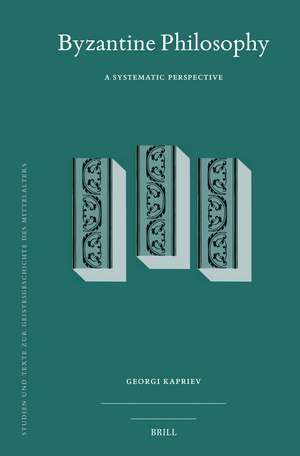
Byzantine Philosophy: A Systematic Perspective: Studien und Texte zur Geistesgeschichte des Mittelalters, cartea 138
Autor Georgi Kaprieven Limba Engleză Hardback – 8 mai 2025
Din seria Studien und Texte zur Geistesgeschichte des Mittelalters
- 18%
 Preț: 800.55 lei
 - 18%
 Preț: 764.28 lei
 - 18%
 Preț: 915.07 lei
 - 18%
 Preț: 662.04 lei
 - 18%
 Preț: 747.09 lei
 - 18%
 Preț: 741.54 lei
 - 18%
 Preț: 1716.29 lei
 - 18%
 Preț: 766.36 lei
 - 18%
 Preț: 702.19 lei
 - 18%
 Preț: 761.00 lei
 - nou
 Preț: 912.95 lei
 - 18%
 Preț: 778.11 lei
 - 18%
 Preț: 1473.62 lei
 - 18%
 Preț: 1037.02 lei
 - 18%
 Preț: 1460.72 lei
 - 18%
 Preț: 927.93 lei
 - 18%
 Preț: 927.42 lei
 - 18%
 Preț: 918.19 lei
 - 18%
 Preț: 1537.47 lei
 - 18%
 Preț: 1148.04 lei
 - 18%
 Preț: 994.09 lei
 - 18%
 Preț: 1573.35 lei
 - 18%
 Preț: 1038.62 lei
 - 18%
 Preț: 1137.27 lei
 - 18%
 Preț: 908.46 lei
 - 18%
 Preț: 906.78 lei
 - 18%
 Preț: 1151.48 lei
 - 18%
 Preț: 1457.30 lei
 - 18%
 Preț: 1513.82 lei
 - 18%
 Preț: 758.17 lei
Preț: 778.63 lei
Preț vechi: 949.55 lei
-18%
Puncte Express: 1168
Carte disponibilă
Livrare economică 06-17 noiembrie
Livrare prin curier în România Termenul estimat este afișat lângă disponibilitate.
Transport gratuit pentru acest produs Plată online sau ramburs, în funcție de opțiunile comenzii.
Retur gratuit în 14 zile Comandă securizată și suport în română.
Specificații
ISBN-13: 9789004728967
ISBN-10: 9004728961
Pagini: 412
Dimensiuni: 155 x 235 x 27 mm
Greutate: 0.81 kg
Editura: Brill
Colecția Brill
Seria Studien und Texte zur Geistesgeschichte des Mittelalters
ISBN-10: 9004728961
Pagini: 412
Dimensiuni: 155 x 235 x 27 mm
Greutate: 0.81 kg
Editura: Brill
Colecția Brill
Seria Studien und Texte zur Geistesgeschichte des Mittelalters
Notă biografică
Georgi Kapriev, D.Sc. (1960), St. Kliment Ochridski University, Sofia, Bulgaria, is a professor of ancient and medieval – Latin and Byzantine – philosophy. He is author of numerous books and articles, and editor of a number of volumes, including The Dionysian Traditions (Brepols, 2021) and (as co-editor and author) Grundriss der Geschichte der Philosophie: Die Philosophie des Mittelalters, Bd. 1: Byzanz, Judentum (Schwabe, 2019).
Cuprins
Preface
Introduction
1 Byzantium and the Byzantine Commonwealth
2 The Emergence of Byzantine Philosophy
3 The Patristics
4 Theology
5 Philosophy
6 Periodization of Byzantine Philosophical Culture
1 Byzantium and the Byzantine commonwealth
8 Rationality and Thirst for Knowledge
9 Philosophy in Byzantium and Byzantine philosophy
10 Conclusion
1 Teachings on the Energies
1 The Teaching of Aristotle
2 The Interpretation of the Theory of Energies by Martin Heidegger
3 Hellenic Reception
4 Beginning of the Christian Reception of the Doctrine of Energies
5 The Doctrine of Energies in Christian Thinkers of the 4th Century
6 Dionysius the Pseudo-Areopagite
7 Maximus the Confessor
8 John Damascene
9 An Intermediate Balance
10 The Doctrine of Energies and Western Philosophical Thought
11 Photius of Constantinople
12 Michael Psellus
13 Nicetas of Maroneia
14 George of Cyprus (GregoryII)
15 Gregory Palamas
16 Barlaam, Acindynus and Gregoras
17 Prochorus Cydones
18 The Doctrine of Energies in the Works of the next Palamite Generation
19 Essential Energy and Accident
20 The Lack of Correctly Formulated Logical Distinction between Essence and Energy
21 George Scholarius and the Definition of the Distinction
22 Perichoresis and Synergy
23 Callistus Angelicudes: Essential Energy and Hypostasis
24 Hexis—the Hypostasizing Factor
2 The Principles of Being
1 Dionysius the Pseudo-Areopagite
2 Maximus the Confessor
3 Metaphysics of the Concrete
4 The Analogous Independence of Being
5Logos/Principle of Essence and Tropos/Mode of Existence
6 Being—Well/Bad-Being—Eternal-Being
7 The Co-Creator
3 Nature and Hypostasis
1 Nature/Essence
2 Hypostasis
3 Hypostasis and Person
4 Relation and Synergy
5 Individual
4 The Human Being
1 The logos of Man
2 Image of God, Microcosm and Ancestral Sin
3 The Psychosomatic Unity of the Human Being
4 The Human Body
5 The Soul
5 Human Knowledge
1 Rational Knowledge
2 Experiential Knowledge
6 Will and Freedom
1 John Cassian’s Doctrine of Freedom
2 The Cappadocians
3 Nemesius of Emesa
4 Maximus the Confessor
5 John Damascene
6 Photius of Constantinople
7 Michael Psellus
8 Providence and Fortune in Historiography
9 The Debate about Fate in the 15th Century
10 Deification and Freedom according to Gregory Palamas
11 Concluding Remarks
7 Time, Aeon, Eternity
1 Hellenic Tradition
2 Basil the Great. The Cappadocians
3 Maximus the Confessor
4 Michael Psellus
5 System of the Interaction of Structures
6 Concluding Observations
8 History and metaphysics
1 Political Thought and Historiography
2 Historicity as a Foundational Element of Byzantine Philosophy
Bibliography
Indices
Part1 The Context
Introduction
1 Byzantium and the Byzantine Commonwealth
2 The Emergence of Byzantine Philosophy
3 The Patristics
4 Theology
5 Philosophy
6 Periodization of Byzantine Philosophical Culture
1 Byzantium and the Byzantine commonwealth
8 Rationality and Thirst for Knowledge
9 Philosophy in Byzantium and Byzantine philosophy
10 Conclusion
Part2 Main Topics and Concepts
1 Teachings on the Energies
1 The Teaching of Aristotle
2 The Interpretation of the Theory of Energies by Martin Heidegger
3 Hellenic Reception
4 Beginning of the Christian Reception of the Doctrine of Energies
5 The Doctrine of Energies in Christian Thinkers of the 4th Century
6 Dionysius the Pseudo-Areopagite
7 Maximus the Confessor
8 John Damascene
9 An Intermediate Balance
10 The Doctrine of Energies and Western Philosophical Thought
11 Photius of Constantinople
12 Michael Psellus
13 Nicetas of Maroneia
14 George of Cyprus (GregoryII)
15 Gregory Palamas
16 Barlaam, Acindynus and Gregoras
17 Prochorus Cydones
18 The Doctrine of Energies in the Works of the next Palamite Generation
19 Essential Energy and Accident
20 The Lack of Correctly Formulated Logical Distinction between Essence and Energy
21 George Scholarius and the Definition of the Distinction
22 Perichoresis and Synergy
23 Callistus Angelicudes: Essential Energy and Hypostasis
24 Hexis—the Hypostasizing Factor
2 The Principles of Being
1 Dionysius the Pseudo-Areopagite
2 Maximus the Confessor
3 Metaphysics of the Concrete
4 The Analogous Independence of Being
5Logos/Principle of Essence and Tropos/Mode of Existence
6 Being—Well/Bad-Being—Eternal-Being
7 The Co-Creator
3 Nature and Hypostasis
1 Nature/Essence
2 Hypostasis
3 Hypostasis and Person
4 Relation and Synergy
5 Individual
4 The Human Being
1 The logos of Man
2 Image of God, Microcosm and Ancestral Sin
3 The Psychosomatic Unity of the Human Being
4 The Human Body
5 The Soul
5 Human Knowledge
1 Rational Knowledge
2 Experiential Knowledge
6 Will and Freedom
1 John Cassian’s Doctrine of Freedom
2 The Cappadocians
3 Nemesius of Emesa
4 Maximus the Confessor
5 John Damascene
6 Photius of Constantinople
7 Michael Psellus
8 Providence and Fortune in Historiography
9 The Debate about Fate in the 15th Century
10 Deification and Freedom according to Gregory Palamas
11 Concluding Remarks
7 Time, Aeon, Eternity
1 Hellenic Tradition
2 Basil the Great. The Cappadocians
3 Maximus the Confessor
4 Michael Psellus
5 System of the Interaction of Structures
6 Concluding Observations
8 History and metaphysics
1 Political Thought and Historiography
2 Historicity as a Foundational Element of Byzantine Philosophy
Bibliography
Indices