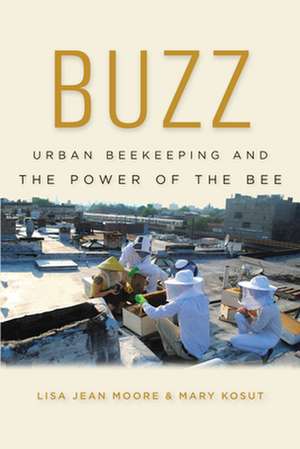
Buzz
Autor Lisa Jean Moore, Mary Kosuten Limba Engleză Paperback – 27 sep 2013
Suntem de părere că literatura academică a neglijat mult timp rolul insectelor în construcția identității sociale urbane, limitându-se adesea la studii de biologie sau ecologie aplicată. Volumul Buzz vine să umple această lacună, propunând o perspectivă sociologică asupra relației dintre oameni și albine în inima metropolei New York. Depășind cadrul tehnic al apiculturii, Lisa Jean Moore și Mary Kosut investighează cum această mică insectă a devenit un simbol cultural omniprezent, de la metafora „stupului” social până la mișcările ecologiste contemporane. Lucrarea extinde cadrul propus de Honey Bees de Stephen Buchmann cu date noi din spațiul urban modern, unde apicultura pe acoperișuri devine o formă de rezistență și reconectare cu natura. Merită menționat că abordarea este una profund etnografică: autoarele nu se limitează la observația teoretică, ci participă direct la viața comunităților de apicultori, purtând costume de protecție și documentând ritualurile de recoltare a mierii în Brooklyn. Putem afirma că Buzz se înscrie natural în opera Lisei Jean Moore, continuând preocuparea sa pentru biopolitică și vizibilitatea corpurilor, teme explorate anterior în The Body Reader sau Gendered Bodies. Dacă lucrările sale precedente analizau construcția socială a corpului uman, aici focusul se mută pe intersecția dintre specii. Spre deosebire de eseistica lui Mark L. Winston din From Where I Sit – Essays on Bees, Beekeeping, and Science, care privește apicultura prin prisma responsabilității științifice, Moore și Kosut se concentrează pe modul în care interacțiunea cu albinele ne ajută, în esență, să ne definim pe noi înșine ca societate.
Preț: 265.96 lei
Carte tipărită la comandă
Livrare economică 27 noiembrie-11 decembrie
Specificații
ISBN-10: 147982738X
Pagini: 251
Dimensiuni: 151 x 228 x 22 mm
Greutate: 0.39 kg
Ediția:New.
Editura: NEW YORK UNIVERSITY PRESS
V-ar putea interesa
-
 An Essay on the Principle of Population and Other WritingsThomas MalthusPreț: 78.38 lei
 -
 -30%Preț: 843.83 lei1206.79 lei
 -
 Gendered BodiesJudith Lorber-23%Preț: 711.72 lei924.31 lei
 -
 Cities and Sovereignty – Identity Politics in Urban SpacesDiane E. DavisPreț: 215.14 lei
 -
 Buenos Aires: 400 YearsStanley R. RossPreț: 195.74 lei
 -
 No Shame in My GameKatherine S. NewmanPreț: 127.69 lei
 -
 History of Future CitiesDaniel BrookPreț: 188.40 lei
 -
 The Body: Social and Cultural DissectionsLisa Jean Moore-5%Preț: 1814.08 lei1909.57 lei
 -
 The Body: Social and Cultural DissectionsLisa Jean Moore-5%Preț: 612.53 lei644.77 lei
 -
 Population and SocietyGregg Lee CarterPreț: 175.86 lei
 -
 Missing BodiesMonica J. Casper-23%Preț: 629.88 lei818.03 lei
 -
 September 12Gregory SmithsimonPreț: 294.38 lei
 -
 Re-Presenting the CityAnthony D. King-23%Preț: 632.63 lei821.60 lei
 -
 Re-Presenting the CityAnthony D KingPreț: 305.03 lei
 -
 Heroic EffortsJennifer Lois-23%Preț: 628.77 lei816.58 lei
 -
 The Urbanization of InjusticeAndy Merrifield-23%Preț: 630.74 lei819.14 lei
 -
 City of DisorderAlex S VitalePreț: 276.86 lei
 -
 The Body ReaderLisa Jean Moore-23%Preț: 713.96 lei927.23 lei
 -
 The Body ReaderLisa Jean MoorePreț: 297.96 lei
 -
 An Agenda for PeopleNafis Sadik-23%Preț: 631.29 lei819.86 lei
 -
 An Agenda for PeopleNafis SadikPreț: 278.25 lei
 -
 Life on the BrinkPhilip CafaroPreț: 269.46 lei
 -
 Uprooting Urban AmericaHorace R. HallPreț: 397.20 lei
 -
 Latino HeartlandSujey VegaPreț: 292.22 lei
 -
 No Matter How Loud I ShoutEdward HumesPreț: 110.51 lei
 -
 Population 10 BillionProfessor Danny Dorling-25%Preț: 75.84 lei101.76 lei
De ce să citești această carte
Această carte este esențială pentru studenții și cercetătorii din sociologie și antropologie, dar și pentru pasionații de ecologie urbană. Cititorul câștigă o înțelegere profundă a modului în care natura supraviețuiește în spații betonate și cum simbolismul albinelor ne influențează consumul și cultura. Este o recomandare concretă pentru cei care vor să vadă dincolo de biologia insectei, înțelegând impactul ei asupra comunităților umane moderne.
Despre autor
Lisa Jean Moore este profesoară de sociologie și studii de gen la Purchase College, State University of New York. Expertiza sa vastă în domeniul biopoliticii și al sociologiei corpului este reflectată în lucrări de referință precum „Sperm Counts” și The Body Reader. În colaborare cu Mary Kosut, Moore își extinde cercetarea asupra relațiilor inter-specii, aducând un aparat critic riguros analizei fenomenelor culturale contemporane. Este o figură centrală în editarea seriei „Biopolitics” la NEW YORK UNIVERSITY PRESS, fiind recunoscută pentru capacitatea de a conecta științele sociale cu problemele acute de tehnosferă și sănătate.
Descriere scurtă
Recenzii
"For almost as long as I have been working in the field of human-animal studies, I have wanted someone to seriously investigate people's relationships with insects. With Buzz, Lisa Jean Moore and Mary Kosut have made a unique, important, and fascinating addition to the literature. Both authors are talented and observant believers in hands-on research.After reading Buzz, you will forever see bees and those who care for them differently."--Clinton Sanders,author of Regarding Animals "Buzz is a fascinating reminder of the interconnections between humans and animals, even in that most urban of environments, New York City. Lisa Jean Moore and Mary Kosut properly remind us that this tiny insect, the humble honeybee, carries much cultural baggage--a source of honeyed food and occasionally the vector of death. As we come to recognize the limits and dangers of environmental change, Buzz reminds us that we should remember not only what bees mean to us humans, but how humans shape bee colonies. The accounts of urban beekeepers and the recent growth of tended hives throughout the boroughs emphasize that the diversity of human interests matches the diversity of nature. Ultimately, as Moore and Kosut recognize in this intrepid and lively tour of beedom, nature is cultural."--Gary Alan Fine,author of Sticky Reputations: The Politics of Collective Memory in Midcentury America "In this fascinating blend of sociology, ecology, ethnographic research, and personal memoir, the authors range through all of the aspects of the human relationship with the honeybee."--Booklist, September 2013 "Covering everything from the place of honey in artisanal food shops and health-related goods, to cultural and media images, the authors describe how the bee has manifested as a cultural representation of the natural world and how people respond to it...readers with a keen desire to understand how bees fit into society and sustainability will find this text on human/insect relations an intriguing read."--Library Journal