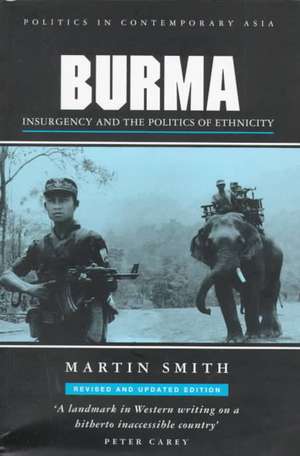
Burma: Insurgency and the Politics of Ethnicity
Autor Martin Smithen Limba Engleză Paperback – 15 iun 1999
With unparalleled command of largely inaccessible Burmese sources and interviews with many of the leading participants, Martin Smith charts the rise of modern political parties and unravels the complexities of the long-running insurgencies waged by opposition groups, including the Communist Party of Burma, the Karen National Union and a host of other ethnic nationalist movements. It is essential reading for those interested in the conditions giving rise to guerrilla warfare, the character of national liberation movements, and the impact of ethnicity on political conflict.
Preț: 266.48 lei
Preț vechi: 309.58 lei
-14%
Puncte Express: 400
Carte tipărită la comandă
Livrare economică 08-22 decembrie
Livrare prin curier în România Termenul estimat este afișat lângă disponibilitate.
Transport gratuit de la 400.00 lei Plată online sau ramburs, în funcție de opțiunile comenzii.
Retur gratuit în 14 zile Comandă securizată și suport în română.
Specificații
ISBN-13: 9781856496605
ISBN-10: 1856496600
Pagini: 544
Dimensiuni: 152 x 230 x 34 mm
Greutate: 0.8 kg
Ediția:2
Editura: Bloomsbury Publishing
Colecția Zed Books
Locul publicării:London, United Kingdom
ISBN-10: 1856496600
Pagini: 544
Dimensiuni: 152 x 230 x 34 mm
Greutate: 0.8 kg
Ediția:2
Editura: Bloomsbury Publishing
Colecția Zed Books
Locul publicării:London, United Kingdom
Cuprins
Part I: The Roots of Conflict
1. The Burmese Way to Stagnation and the Crisis of 1988
2. The Peoples of Burma: A Historic and Ethnic Background
3. Order Without Meaning: British Rule and the Rise of the National Liberation Movement
4. War and Independence: 1942-48
5. Insurgency as a Way of Life
Part II Insurrections in the Parliamentary Era
6. The Final Seizure of Power: A Country Goes Underground
7. Failure, Retrenchment and the United Fronts: The Communist Movement 1948-52
8. The Battle for Kawthoolei: The Spread of Ethnic Rebellion
9. Revisionism and the 1955 Line: The Prospect of Peace
10. The Collapse of Parliamentary Democracy: Ne Win Seizes Power
Part III Insurrections in the Ne Win era
11. Military Rule and Peace Parley
12. Cultural Revolution
13. The North-East Command and the Four Cuts
14. The Failure of U Nu's Parliamentary Democracy Party, Keren Unity and Emergence of the National Democratic Front
15. The War in the North, Opium and the 1980/1 Peace Parley
16. The Nationalities Question
Part IV: The 1980s: A Decade of Upheaval
17. The Democracy Upbringing and the CPB
18. The 1989 CPB Mutinies: The End of the road?
19. The War Goes On: The NDF and the KNU
20. A New Cycle of Conflict?: The 1990 General Election and the DAB
Part V Burma at the Century's End
21. The 1990s: Deadlock or the Dawning of New Realities?
Part I: The Roots of Conflict
1. The Burmese Way to Stagnation and the Crisis of 1988
2. The Peoples of Burma: A Historic and Ethnic Background
3. Order Without Meaning: British Rule and the Rise of the National Liberation Movement
4. War and Independence: 1942-48
5. Insurgency as a Way of Life
Part II Insurrections in the Parliamentary Era
6. The Final Seizure of Power: A Country Goes Underground
7. Failure, Retrenchment and the United Fronts: The Communist Movement 1948-52
8. The Battle for Kawthoolei: The Spread of Ethnic Rebellion
9. Revisionism and the 1955 Line: The Prospect of Peace
10. The Collapse of Parliamentary Democracy: Ne Win Seizes Power
Part III Insurrections in the Ne Win era
11. Military Rule and Peace Parley
12. Cultural Revolution
13. The North-East Command and the Four Cuts
14. The Failure of U Nu's Parliamentary Democracy Party, Keren Unity and Emergence of the National Democratic Front
15. The War in the North, Opium and the 1980/1 Peace Parley
16. The Nationalities Question
Part IV: The 1980s: A Decade of Upheaval
17. The Democracy Upbringing and the CPB
18. The 1989 CPB Mutinies: The End of the road?
19. The War Goes On: The NDF and the KNU
20. A New Cycle of Conflict?: The 1990 General Election and the DAB
Part V Burma at the Century's End
21. The 1990s: Deadlock or the Dawning of New Realities?
1. The Burmese Way to Stagnation and the Crisis of 1988
2. The Peoples of Burma: A Historic and Ethnic Background
3. Order Without Meaning: British Rule and the Rise of the National Liberation Movement
4. War and Independence: 1942-48
5. Insurgency as a Way of Life
Part II Insurrections in the Parliamentary Era
6. The Final Seizure of Power: A Country Goes Underground
7. Failure, Retrenchment and the United Fronts: The Communist Movement 1948-52
8. The Battle for Kawthoolei: The Spread of Ethnic Rebellion
9. Revisionism and the 1955 Line: The Prospect of Peace
10. The Collapse of Parliamentary Democracy: Ne Win Seizes Power
Part III Insurrections in the Ne Win era
11. Military Rule and Peace Parley
12. Cultural Revolution
13. The North-East Command and the Four Cuts
14. The Failure of U Nu's Parliamentary Democracy Party, Keren Unity and Emergence of the National Democratic Front
15. The War in the North, Opium and the 1980/1 Peace Parley
16. The Nationalities Question
Part IV: The 1980s: A Decade of Upheaval
17. The Democracy Upbringing and the CPB
18. The 1989 CPB Mutinies: The End of the road?
19. The War Goes On: The NDF and the KNU
20. A New Cycle of Conflict?: The 1990 General Election and the DAB
Part V Burma at the Century's End
21. The 1990s: Deadlock or the Dawning of New Realities?
Part I: The Roots of Conflict
1. The Burmese Way to Stagnation and the Crisis of 1988
2. The Peoples of Burma: A Historic and Ethnic Background
3. Order Without Meaning: British Rule and the Rise of the National Liberation Movement
4. War and Independence: 1942-48
5. Insurgency as a Way of Life
Part II Insurrections in the Parliamentary Era
6. The Final Seizure of Power: A Country Goes Underground
7. Failure, Retrenchment and the United Fronts: The Communist Movement 1948-52
8. The Battle for Kawthoolei: The Spread of Ethnic Rebellion
9. Revisionism and the 1955 Line: The Prospect of Peace
10. The Collapse of Parliamentary Democracy: Ne Win Seizes Power
Part III Insurrections in the Ne Win era
11. Military Rule and Peace Parley
12. Cultural Revolution
13. The North-East Command and the Four Cuts
14. The Failure of U Nu's Parliamentary Democracy Party, Keren Unity and Emergence of the National Democratic Front
15. The War in the North, Opium and the 1980/1 Peace Parley
16. The Nationalities Question
Part IV: The 1980s: A Decade of Upheaval
17. The Democracy Upbringing and the CPB
18. The 1989 CPB Mutinies: The End of the road?
19. The War Goes On: The NDF and the KNU
20. A New Cycle of Conflict?: The 1990 General Election and the DAB
Part V Burma at the Century's End
21. The 1990s: Deadlock or the Dawning of New Realities?
Recenzii
For an understanding of Burma's prolonged, continuing and largely unknown crisis no better work is available than this detailed, well-written and informative book.
Reportage at its best: expansive in concept, detailed in execution, passionate in its search for truth. An exceptional book.
Smith's book fills a void in Burma studies which will make it the basic reference work for years to come.
A masterful documentary history.
The definitive work on what is indeed the central problem in Burma.
An extremely detailed and well-organized look at the country's civil war.
Outstanding. Smith has woven a seamless narrative which interrelates the modern history of the heartland with the hills and finally makes sense of the complex history of the country. He has set a new standard in field research.
Smith's book, with its mass of original information on the post-independence history of the country's regional and ethnic movements, is a landmark.
Reportage at its best: expansive in concept, detailed in execution, passionate in its search for truth. An exceptional book.
Smith's book fills a void in Burma studies which will make it the basic reference work for years to come.
A masterful documentary history.
The definitive work on what is indeed the central problem in Burma.
An extremely detailed and well-organized look at the country's civil war.
Outstanding. Smith has woven a seamless narrative which interrelates the modern history of the heartland with the hills and finally makes sense of the complex history of the country. He has set a new standard in field research.
Smith's book, with its mass of original information on the post-independence history of the country's regional and ethnic movements, is a landmark.