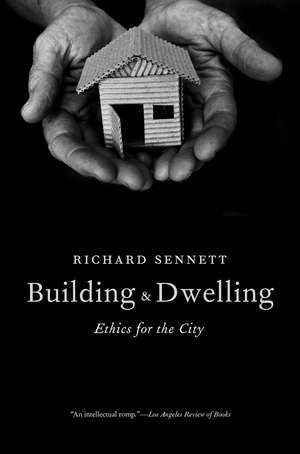
Building and Dwelling: Ethics for the City
Autor Richard Sennetten Limba Engleză Paperback – 22 aug 2023
Descoperim în Building and Dwelling o sinteză metodologică a carierei de peste cinci decenii a lui Richard Sennett, organizată în jurul distincției fundamentale dintre mediul construit fizic și experiența locuirii. Structura volumului urmărește evoluția planificării urbane, de la intervențiile istorice din Paris sau Barcelona până la complexitatea tehnologică din Shanghai-ul contemporan, pentru a demonstra cum designul spațial influențează direct capacitatea cetățenilor de a gestiona diversitatea și conflictul. Suntem de părere că forța acestui volum rezidă în abordarea interdisciplinară: Richard Sennett nu se limitează la urbanism pur, ci integrează sociologia și filozofia, invocând perspectivele lui Heidegger sau Walter Benjamin pentru a explica relația dintre etică și arhitectură. Această lucrare completează temele explorate anterior în Together, unde autorul analiza cooperarea ca meșteșug, și în The Fall of Public Man, unde investiga declinul spațiului public. Dacă în Designing Disorder pleda pentru imperfecțiune ca formă de vitalitate, aici își rafinează viziunea asupra „orașului deschis” — un sistem capabil să absoarbă complexitatea fără a impune o ordine rigidă. Cititorii familiarizați cu The Good City de Allan B. Jacobs vor aprecia în lucrarea lui Richard Sennett trecerea de la viziunea planificatorului estetic la o analiză profund sociologică a modului în care etica locuirii poate deveni cea mai practică soluție pentru crizele urbane moderne. Textul evită soluțiile simpliste, propunând în schimb un model de urbanism umanist, unde designul încurajează interacțiunea socială și reziliența colectivă.
Preț: 132.84 lei
Carte indisponibilă temporar
Specificații
ISBN-10: 0300269838
Pagini: 352
Dimensiuni: 156 x 235 x 22 mm
Greutate: 0.52 kg
Editura: Yale University Press
Colecția Yale University Press
De ce să citești această carte
O recomandare esențială pentru studenții la urbanism, sociologie și arhitectură, dar și pentru orice cetățean interesat de viitorul metropolelor. Richard Sennett oferă o perspectivă rară, îmbinând rigoarea academică cu experiența practică de planificator. Cititorul câștigă o înțelegere profundă a modului în care structura străzilor și a clădirilor ne modelează comportamentul social, primind argumente solide pentru un model de oraș mai uman, etic și adaptabil.
Despre autor
Richard Sennett este un distins profesor de sociologie la London School of Economics și New York University, fiind considerat unul dintre cei mai importanți teoreticieni contemporani ai vieții urbane. Cariera sa îmbină cercetarea academică de vârf cu practica directă în planificarea urbană, oferindu-i o perspectivă unică asupra modului în care societatea și spațiul construit interacționează. De la debutul său cu „The Uses of Disorder” în 1970, a publicat lucrări fundamentale care explorează munca, autoritatea și spațiul public, fiind recunoscut pentru capacitatea de a citi „secretele” orașului modern prin detalii cotidiene.
Descriere scurtă
“Constantly stimulating ideas from a veteran of urban thinking.”—Jonathan Meades, The Guardian
In this sweeping work, the preeminent sociologist Richard Sennett traces the anguished relation between how cities are built and how people live in them, from ancient Athens to twenty-first-century Shanghai. He shows how Paris, Barcelona, and New York City assumed their modern forms; rethinks the reputations of Jane Jacobs, Lewis Mumford, and others; and takes us on a tour of emblematic contemporary locations, from the backstreets of Medellín, Colombia, to Google headquarters in Manhattan.
Through it all, Sennett laments that the “closed city”—segregated, regimented, and controlled—has spread from the Global North to the exploding urban centers of the Global South. He argues instead for a flexible and dynamic “open city,” one that provides a better quality of life, that can adapt to climate change and challenge economic stagnation and racial separation.
With arguments that speak directly to our moment—a time when more humans live in urban spaces than ever before—Sennett forms a bold and original vision for the future of cities.
Recenzii
“[Building and Dwelling] distills into a single volume [Sennett’s] thoughts on how urban design shapes the ways in which we relate to one another. . . . Sennett is as passionate as ever about the richness and complexity of public life. . . . [He] needles Google’s New York headquarters, which he finds to be an island frat house, introspective and infantile, ‘in the city but not of it.’ . . . Part of the charm of Building and Dwelling is its intimacy. . . . There is an extraordinary account of ethnic relations in the Hatton Garden community of London where Sennett lives. . . . Well-timed for the disputes of our day.”—Justin McGuirk, New Yorker
“[Building and Dwelling] reads like the summation of a life lived in cities and is, ultimately, a paean to their unpredictability, a call for tolerance and a celebration of difference.”—Edwin Heathcote, Financial Times
“Constantly stimulating ideas from a veteran of urban thinking.”—Jonathan Meades, The Guardian
“Thank god for Richard Sennett. . . . Essential reading for all students of the city.”—Anna Minton, Prospect
“A very rich manuscript which analyzes cities on a long historic spectrum.”—Yona Ginsberg, Journal of Housing and the Built Environment
“An intellectual romp.”—Los Angeles Review of Books