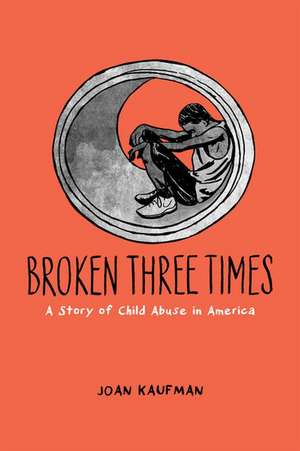
Broken Three Times: A Story of Child Abuse in America
Autor Joan Kaufmanen Limba Engleză Hardback – 7 apr 2016
Preț: 427.71 lei
Preț vechi: 503.19 lei
-15%
Puncte Express: 642
Carte disponibilă
Livrare economică 16-30 noiembrie
Livrare prin curier în România Termenul estimat este afișat lângă disponibilitate.
Transport gratuit pentru acest produs Plată online sau ramburs, în funcție de opțiunile comenzii.
Retur gratuit în 14 zile Comandă securizată și suport în română.
Specificații
ISBN-13: 9780199399154
ISBN-10: 0199399158
Pagini: 160
Dimensiuni: 155 x 236 x 20 mm
Greutate: 0.4 kg
Editura: Oxford University Press
Colecția OUP USA
Locul publicării:New York, United States
ISBN-10: 0199399158
Pagini: 160
Dimensiuni: 155 x 236 x 20 mm
Greutate: 0.4 kg
Editura: Oxford University Press
Colecția OUP USA
Locul publicării:New York, United States
V-ar putea interesa
-
 Victims No Longer (Second Edition)Mike LewPreț: 126.28 lei
 -
 What Daddy DidDonna FordPreț: 108.07 lei
 -
 Daddy's Little SecretTina Davis-20%Preț: 70.68 lei88.78 lei
 -
 Secret EvilZara GillPreț: 115.22 lei
 -
 Girl for SaleLara Mcdonnell-18%Preț: 76.10 lei93.07 lei
 -
 A Sister's SecretDebbie Grafham-20%Preț: 62.50 lei78.18 lei
 -
 TorturedVictoria Spry-23%Preț: 77.08 lei100.63 lei
 -
 How Could She?Dana FowleyPreț: 114.47 lei
 -
 I Shot DaddyStacey LannertPreț: 116.01 lei
 -
 Helping Battered Women: New Perspectives and RemediesAlbert R. Roberts-11%Preț: 312.81 lei352.91 lei
 -
 The Politics of Child Abuse in AmericaLela B. Costin-10%Preț: 331.53 lei369.02 lei
 -
 Pedophiles and Priests: Anatomy of a Contemporary CrisisPhilip Jenkins-12%Preț: 304.28 lei343.87 lei
 -
 -16%Preț: 345.81 lei410.94 lei
 -
 Delayed Prosecution for Childhood Sexual AbusePenney Lewis-30%Preț: 623.14 lei888.68 lei
 -
 -16%Preț: 282.26 lei335.69 lei
 -
 Behind Closed DoorsJenny Tomlin-27%Preț: 67.71 lei92.33 lei
 -
 Touched by EvilMichele Knight-25%Preț: 75.85 lei101.15 lei
 -
 -27%Preț: 78.31 lei106.64 lei
 -
 DorieDorie van StonePreț: 77.60 lei
 -
 The Story of Baby P: Setting the Record StraightR. A. Y. JonesPreț: 134.62 lei
 -
 Preț: 214.05 lei
 -
 -58%Preț: 59.30 lei141.74 lei
Notă biografică
Joan Kaufman, PhD, is a clinical psychologist and Associate Professor of Psychiatry at Yale University School of Medicine. She is also Director of the Child and Adolescent Research and Education (CARE) Program and Director of the Child Welfare Unit of the Zigler Center for Child Development and Social Policy.