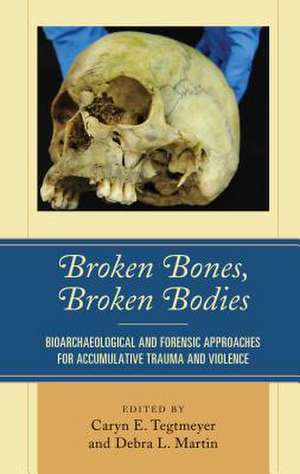
Broken Bones, Broken Bodies: Bioarchaeological and Forensic Approaches for Accumulative Trauma and Violence
Editat de Caryn E. Tegtmeyer, Debra L. Martin Contribuţii de Petra Banks, Eric J. Bartelink, Derek A. Boyd, John J. Crandall, Michelle Davenport, Carlina de la Cova, Sharon M. Derrick, William O. Gazza, Ryan P. Harrod, Margaret Judd, Meaghan A. Kincaid, Ryan King, Kristin A. Kuckelman, Jennifer C. Love, Sarah A. Mathena, Heather L. MacInnes, Colleen F. Milligan, Julia R. Prince-Buitenhuys, Sarah A. Schrader, Stuart Tyson Smith, Alyssa Y. Willett, Aaron R. Woods, Molly K. Zuckermanen Limba Engleză Hardback – 14 iul 2017
Preț: 616.15 lei
Preț vechi: 912.18 lei
-32%
Puncte Express: 924
Carte tipărită la comandă
Livrare economică 08-22 decembrie
Livrare prin curier în România Termenul estimat este afișat lângă disponibilitate.
Transport gratuit pentru acest produs Plată online sau ramburs, în funcție de opțiunile comenzii.
Retur gratuit în 14 zile Comandă securizată și suport în română.
Specificații
ISBN-13: 9781498547147
ISBN-10: 1498547141
Pagini: 274
Ilustrații: 14 BW Illustrations, 12 Tables
Dimensiuni: 159 x 238 x 26 mm
Greutate: 0.59 kg
Editura: Bloomsbury Publishing
Colecția Lexington Books
Locul publicării:New York, United States
ISBN-10: 1498547141
Pagini: 274
Ilustrații: 14 BW Illustrations, 12 Tables
Dimensiuni: 159 x 238 x 26 mm
Greutate: 0.59 kg
Editura: Bloomsbury Publishing
Colecția Lexington Books
Locul publicării:New York, United States
Cuprins
Introduction, by Caryn E. Tegtmeyer and Debra L. Martin
Chapter 1: Injury Recidivism Revisited: Clinical Research, Limitations and Implications for Bioarchaeology, by Margaret Judd
Part I: Prehistoric Case Studies of Injury Recidivism
Chapter 2:Socializing Violence: Interpersonal Violence Recidivism at Abu Fatima (Sudan), by Sarah A. Schrader and Stuart Tyson Smith
Chapter 3: Cranial Trauma and Victimization among Ancestral Pueblo Farmers of the Northern San Juan Region, by Kristin A. Kuckelman
Chapter 4: Injury and Re-injury among the Ancestral Pueblo and Fremont, by Ryan P. Harrod, Alyssa Willett, Meaghan Kincaid, Aaron Woods
Part II: Historic Case Studies of Injury Recidivism
Chapter 5: Disease, Trauma & Stigma: Did Chronic Infection with Syphilis Influence Experiences of Trauma and Recidivistic Trauma in Post-Medieval London? by Molly K. Zuckerman, Michelle Davenport, Petra Banks, and Ryan King
Chapter 6: Evaluating the Evidence for Injury Recidivism in Two Parish Communities from Industrial-era London, by Derek A. Boyd and Colleen F. Milligan
Chapter 7: Sugar and Suffering: A Case Study on Injury Recidivism, Overall Health, and Structural Violence from the Holy Trinity Lutheran Church, by Sarah A. Mathena and Molly K. Zuckerman
Chapter 8: The Bioarchaeology of Violence Recidivism and Labor Abuse in 19th Century Chinese by Ryan P. Harrod and John J. Crandall
Chapter 9: Fractured Lives: Structural Violence, Trauma, and Recidivism in Urban and Industrialized 19th-Century-Born African Americans and Euro-Americans, by Carlina de la Cova
Part III: Contemporary Case Studies of Injury Recidivism
Chapter 10: An Exploration of Skeletal Evidence of Injury Recidivism in Cases of Transients and Homelessness from Northern California, by Julia R. Prince-Buitenhuys, Heather L. MacInnes, Colleen F. Milligan, and Eric J. Bartelink
Chapter 11: Homicide in Sin City: Patterns of Violent Death and Injury Recidivism in Clark County, NV, by Caryn E. Tegtmeyer, Debra L. Martin, and William Gazza
Chapter 12: A Life History of Skeletal Trauma: Cases from a Medical Examiner's Office, by Jennifer C. Love and Sharon M. Derrick
Conclusion, by Debra L. Martin and Caryn E. Tegtmeyer
About the Contributors
Chapter 1: Injury Recidivism Revisited: Clinical Research, Limitations and Implications for Bioarchaeology, by Margaret Judd
Part I: Prehistoric Case Studies of Injury Recidivism
Chapter 2:Socializing Violence: Interpersonal Violence Recidivism at Abu Fatima (Sudan), by Sarah A. Schrader and Stuart Tyson Smith
Chapter 3: Cranial Trauma and Victimization among Ancestral Pueblo Farmers of the Northern San Juan Region, by Kristin A. Kuckelman
Chapter 4: Injury and Re-injury among the Ancestral Pueblo and Fremont, by Ryan P. Harrod, Alyssa Willett, Meaghan Kincaid, Aaron Woods
Part II: Historic Case Studies of Injury Recidivism
Chapter 5: Disease, Trauma & Stigma: Did Chronic Infection with Syphilis Influence Experiences of Trauma and Recidivistic Trauma in Post-Medieval London? by Molly K. Zuckerman, Michelle Davenport, Petra Banks, and Ryan King
Chapter 6: Evaluating the Evidence for Injury Recidivism in Two Parish Communities from Industrial-era London, by Derek A. Boyd and Colleen F. Milligan
Chapter 7: Sugar and Suffering: A Case Study on Injury Recidivism, Overall Health, and Structural Violence from the Holy Trinity Lutheran Church, by Sarah A. Mathena and Molly K. Zuckerman
Chapter 8: The Bioarchaeology of Violence Recidivism and Labor Abuse in 19th Century Chinese by Ryan P. Harrod and John J. Crandall
Chapter 9: Fractured Lives: Structural Violence, Trauma, and Recidivism in Urban and Industrialized 19th-Century-Born African Americans and Euro-Americans, by Carlina de la Cova
Part III: Contemporary Case Studies of Injury Recidivism
Chapter 10: An Exploration of Skeletal Evidence of Injury Recidivism in Cases of Transients and Homelessness from Northern California, by Julia R. Prince-Buitenhuys, Heather L. MacInnes, Colleen F. Milligan, and Eric J. Bartelink
Chapter 11: Homicide in Sin City: Patterns of Violent Death and Injury Recidivism in Clark County, NV, by Caryn E. Tegtmeyer, Debra L. Martin, and William Gazza
Chapter 12: A Life History of Skeletal Trauma: Cases from a Medical Examiner's Office, by Jennifer C. Love and Sharon M. Derrick
Conclusion, by Debra L. Martin and Caryn E. Tegtmeyer
About the Contributors
Recenzii
An engaging collection of papers concerning a health condition that many bioarchaeologists will have encountered but may not have formally identified. The cultural contexts of the studies are quite varied, and this helps to illustrate the different circumstances in which injury recidivism may occur.... I hope this stimulating volume encourages scholarly attention to these areas.
This book captures a zeitgeist in the study of human remains, reflecting the coming-together of shared research themes and ethical concerns in the disciplines of forensic anthropology and bioarcheology. These diverse studies show that regardless of time and space, the lives of injury recidivists have shared commonalities: structural violence and socio-economic inequalities. Their osteobiographies are powerful; and at times, make for heart-breaking reading. They serve to remind us that our work has impact and resonance for understanding the wider social context in which injuries are sustained, all too frequently by the most vulnerable in a community.
This book captures a zeitgeist in the study of human remains, reflecting the coming-together of shared research themes and ethical concerns in the disciplines of forensic anthropology and bioarcheology. These diverse studies show that regardless of time and space, the lives of injury recidivists have shared commonalities: structural violence and socio-economic inequalities. Their osteobiographies are powerful; and at times, make for heart-breaking reading. They serve to remind us that our work has impact and resonance for understanding the wider social context in which injuries are sustained, all too frequently by the most vulnerable in a community.