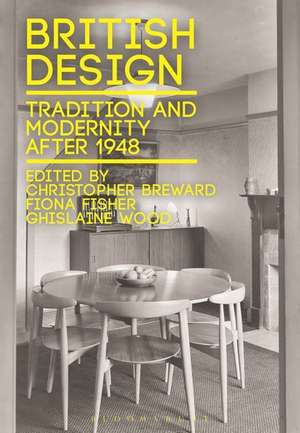
British Design
Editat de Christopher Breward, Fiona Fisher, Ghislaine Wooden Limba Engleză Paperback – 22 oct 2015
The contributors address significant moments and phenomena in the historical and social history of British design, from the rise and fall of the English Country House style and the Brutalist architectural boom of the 1960s to the modern shopping space, and consider the work of key contemporary designers ranging from Tommy Roberts to Thomas Heatherwick. British Design provides new criticism and analysis on how design, from the immediate post-war period to the present day, has developed and changed how we live and how we interact with the spaces in which we live.
British Design is split into 13 chapters and is richly illustrated with 65 images, 16 of which are in full colour.
Preț: 222.46 lei
Preț vechi: 282.31 lei
-21%
Puncte Express: 334
Carte disponibilă
Livrare economică 04-18 noiembrie
Livrare prin curier în România Termenul estimat este afișat lângă disponibilitate.
Transport gratuit de la 400.00 lei Plată online sau ramburs, în funcție de opțiunile comenzii.
Retur gratuit în 14 zile Comandă securizată și suport în română.
Specificații
ISBN-13: 9781472505378
ISBN-10: 1472505379
Pagini: 240
Ilustrații: 49 bw and 16 colour illus
Dimensiuni: 171 x 241 x 12 mm
Greutate: 0.51 kg
Editura: BLOOMSBURY ACADEMIC
Locul publicării:London, United Kingdom
ISBN-10: 1472505379
Pagini: 240
Ilustrații: 49 bw and 16 colour illus
Dimensiuni: 171 x 241 x 12 mm
Greutate: 0.51 kg
Editura: BLOOMSBURY ACADEMIC
Locul publicării:London, United Kingdom
V-ar putea interesa
-
 British Architecture: A Very Short IntroductionDana Arnold-20%Preț: 56.25 lei70.16 lei
 -
 Modern Buildings in BritainOwen Hatherley-14%Preț: 281.52 lei328.92 lei
 -
 The Sources of Modern Architecture and DesignNikolaus Pevsner-21%Preț: 105.72 lei133.48 lei
 -
 The Bible of British TasteRuth Guilding-17%Preț: 217.94 lei261.97 lei
 -
 The Book by DesignP. J. M. MarksPreț: 314.56 lei
 -
 Eight Decades of British DesignMark Cortes Favis-19%Preț: 255.40 lei315.81 lei
 -
 Modernity Britain: 1957-1962David Kynaston-31%Preț: 97.24 lei140.33 lei
 -
 The Invention of British ArtBendor GrosvenorPreț: 316.76 lei
 -
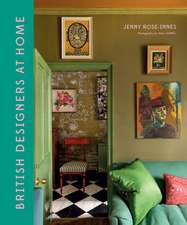 British Designers at HomeJenny Rose-Innes-21%Preț: 232.56 lei294.56 lei
 -
 -35%Preț: 211.29 lei324.12 lei
 -
 -16%Preț: 270.55 lei321.69 lei
 -
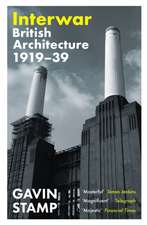 Interwar: British Architecture 1919-39Gavin Stamp-23%Preț: 148.05 lei192.56 lei
 -
 Up in the AirHolly SmithPreț: 151.38 lei
 -
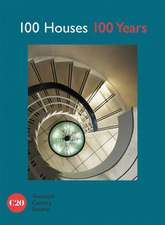 100 HOUSES 100 YEARSTwentieth Century Society-17%Preț: 161.29 lei193.54 lei
 -
 Post-Modern Buildings in BritainElain Harwood-15%Preț: 167.29 lei195.67 lei
 -
 How to Design a GardenJohn Brookes (landscape designer)-18%Preț: 118.03 lei143.63 lei
 -
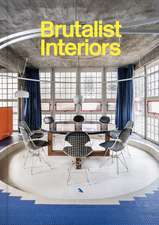 Brutalist InteriorsBlake Gopnik-30%Preț: 221.96 lei316.98 lei
 -
 Post-War Homes: Mid-Century British ArchitectureDominic BradburyPreț: 403.75 lei
Cuprins
Foreword
British Design 1948-2012: Innovation in the Modern Age: A Retrospective View, Christopher Breward, Edinburgh College of Art, UK and Ghislaine Wood, Victoria & Albert Museum, UK
The Spaces and Places of British Modernity, Fiona Fisher and Penny Sparke, Kingston University, UK
1. The Primavera Story, 1946-1967, Janine Barker, Northumbria University, UK and Cheryl Buckley, University of Brighton, UK
2. Tommy Roberts: Kleptomania to Two Columbia Road, Paul Gorman, Visual Culture Writer, UK
3. John Fowler, Nancy Lancaster and the English Country House, Martin Wood, Designer and Writer, UK
4. At Home with Modern Design, 1958-1965: A Case Study, Christine Lalumia, Design Historian, UK
5. Conservative Flagship. Interior design for RMS Windsor Castle, 1960, Harriet McKay, Royal College of Art and Suffolk New College, UK
6. Bernat Klein: Colouring the Interior, Fiona Anderson, National Museums Scotland, UK
7. Ancient Spaces in Modern Dress: Basil Spence at the University of Sussex, Maurice Howard, University of Sussex, UK
8. Architects Co-partnership: Private Practice for Public Service, Alan Powers, Writer and Curator, UK
9. Something Fierce: Brutalist Historicism in the University of Essex Library, Jules Lubbock, University of Essex, UK
10. Hidden Internationalisms: Tradition and Modernism in Post-war Primary School Design 1948-1972, Catherine Burke, University of Cambridge, UK
11. Clean Living Under Difficult Circumstances. Modernist Pop and Modernist Architecture: A Short History of a Misunderstanding, Owen Hatherley, Journalist, UK
12.
Edinburgh on the Couch,
Richard J. Williams, University of Edinburgh, UK
13. Heatherwick Studio: A New Bus for London, Abraham Thomas, Sir John Soane's Museum, UK
Bibliography
Index
British Design 1948-2012: Innovation in the Modern Age: A Retrospective View, Christopher Breward, Edinburgh College of Art, UK and Ghislaine Wood, Victoria & Albert Museum, UK
The Spaces and Places of British Modernity, Fiona Fisher and Penny Sparke, Kingston University, UK
1. The Primavera Story, 1946-1967, Janine Barker, Northumbria University, UK and Cheryl Buckley, University of Brighton, UK
2. Tommy Roberts: Kleptomania to Two Columbia Road, Paul Gorman, Visual Culture Writer, UK
3. John Fowler, Nancy Lancaster and the English Country House, Martin Wood, Designer and Writer, UK
4. At Home with Modern Design, 1958-1965: A Case Study, Christine Lalumia, Design Historian, UK
5. Conservative Flagship. Interior design for RMS Windsor Castle, 1960, Harriet McKay, Royal College of Art and Suffolk New College, UK
6. Bernat Klein: Colouring the Interior, Fiona Anderson, National Museums Scotland, UK
7. Ancient Spaces in Modern Dress: Basil Spence at the University of Sussex, Maurice Howard, University of Sussex, UK
8. Architects Co-partnership: Private Practice for Public Service, Alan Powers, Writer and Curator, UK
9. Something Fierce: Brutalist Historicism in the University of Essex Library, Jules Lubbock, University of Essex, UK
10. Hidden Internationalisms: Tradition and Modernism in Post-war Primary School Design 1948-1972, Catherine Burke, University of Cambridge, UK
11. Clean Living Under Difficult Circumstances. Modernist Pop and Modernist Architecture: A Short History of a Misunderstanding, Owen Hatherley, Journalist, UK
12.
Edinburgh on the Couch,
Richard J. Williams, University of Edinburgh, UK
13. Heatherwick Studio: A New Bus for London, Abraham Thomas, Sir John Soane's Museum, UK
Bibliography
Index
Recenzii
This compact volume represents good value for money with many fresh ideas and perceptive overviews. As a handbook of ideas about the history of British design from the post-war years to the 2010s, it is useful and thought provoking and gathers together leading experts, emerging and established researchers and polemicists.
Anyone who's wondered how the Britain of utility furniture and wartime rationing managed to evolve into 'Cool Britannia' will find this a remarkable book. The authors work from case studies, achieving a remarkably nuanced portrait of a country in transition. From the trend setting crafts for sale at the London boutique Primavera to the "fun furniture" available at Mr Freedom, the examples presented in this edited volume are like a breath of fresh air; they also provide a counterweight to older, decorous studies of British "good taste." The interiors of post-war country house decorators like John Fowler and modernist architects like Mary Crowley and David Medd receive equal treatment. British interior design emerges as transgressive and eccentric, romantic and--at its best--ingenious.
Anyone who's wondered how the Britain of utility furniture and wartime rationing managed to evolve into 'Cool Britannia' will find this a remarkable book. The authors work from case studies, achieving a remarkably nuanced portrait of a country in transition. From the trend setting crafts for sale at the London boutique Primavera to the "fun furniture" available at Mr Freedom, the examples presented in this edited volume are like a breath of fresh air; they also provide a counterweight to older, decorous studies of British "good taste." The interiors of post-war country house decorators like John Fowler and modernist architects like Mary Crowley and David Medd receive equal treatment. British interior design emerges as transgressive and eccentric, romantic and--at its best--ingenious.