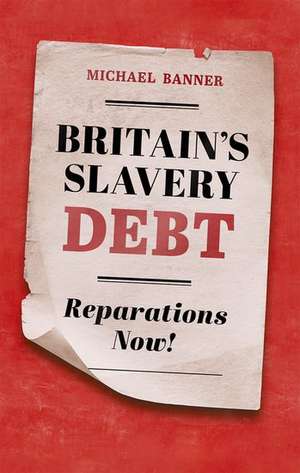
Britain's Slavery Debt: Reparations Now!
Autor Michael Banneren Limba Engleză Hardback – 25 apr 2024
Observăm o creștere a relevanței academice pentru tema justiției reparatorii, iar Britain's Slavery Debt se poziționează ca o resursă esențială pentru studenții și specialiștii în drept internațional, etică politică și istorie colonială. Într-un context în care universitățile și instituțiile publice britanice își reevaluează moștenirea istorică, Michael Banner oferă un argument juridic și moral riguros, necesar pentru orice analiză critică a responsabilității statale.
Remarcăm structura pragmatică a volumului: autorul nu se limitează la o pledoarie teoretică, ci analizează punctual obiecțiile comune — precum argumentul că „sclavia a fost legală la vremea respectivă” sau că generațiile actuale nu pot fi pedepsite pentru greșelile strămoșilor. Spre deosebire de Blood Legacy Reckoning with a Family's Story of Slavery, care explorează această temă printr-o lentilă personală și genealogică, lucrarea de față propune un model sistemic. O considerăm o alternativă solidă la Colonialism, Slavery, Reparations and Trade pentru cursurile de politici publice și sociologie, având avantajul unei propuneri concrete de calcul a datoriei, bazată pe cifrele compensațiilor istorice plătite în 1833.
În contextul operei sale anterioare, precum Christian Ethics and Contemporary Moral Problems, Michael Banner continuă să aplice rigoarea teologiei morale asupra unor tensiuni sociale acute. Dacă în lucrările precedente se concentra pe bioetică sau etica vieții cotidiene, aici extinde cadrul de analiză către macro-etică și responsabilitate națională. Rezultatul este un text dens, dar accesibil, care transformă o dezbatere adesea abstractă într-un plan de acțiune pentru instituțiile contemporane.
Preț: 105.74 lei
Preț vechi: 126.25 lei
-16%
Carte disponibilă
Livrare economică 15-26 mai
Livrare express 01-07 mai pentru 44.75 lei
Specificații
ISBN-10: 0198889445
Pagini: 194
Dimensiuni: 143 x 223 x 15 mm
Greutate: 0.34 kg
Editura: OUP OXFORD
Colecția OUP Oxford
Locul publicării:Oxford, United Kingdom
De ce să citești această carte
Recomandăm această carte cercetătorilor și studenților interesați de mecanismele prin care istoria colonială influențează economia prezentă. Cititorul câștigă o înțelegere clară a cadrului legal CARICOM și a modului în care reparațiile pot fi calculate practic. Este un instrument indispensabil pentru a înțelege de ce dezbaterea despre sclavie nu este doar despre trecut, ci despre echitatea economică actuală a Marii Britanii în raport cu fostele colonii.
Despre autor
Michael Banner este profesor de teologie morală și socială „F. D. Maurice” la King's College, Londra. Expertiza sa academică se situează la intersecția dintre etică, teologie și antropologie socială, fiind recunoscut pentru modul în care analizează problemele morale contemporane prin prisma tradiției creștine și a gândirii critice. În lucrările sale, precum The Ethics of Everyday Life sau The Doctrine of God and Theological Ethics, acesta explorează modul în care valorile umane sunt construite și contestate în spațiul public, o perspectivă pe care o extinde acum asupra problematicii complexe a sclaviei și a datoriei istorice.
Descriere
Recenzii
One of Britain's most acute and independent ethical thinkers here sets out the case for reparations to those whose ancestors suffered from the Atlantic slave trade, and does so with exemplary clarity and force. Detailing the shameful history of the trade, and countering all the commonest arguments against reparations, Banner presents one of the most powerful cases yet for an urgent new look at an imperative most of us still - embarrassingly - do not want to attend to.
Michael Banner's book takes us through the literary labyrinth of the erupting reparatory justice discourse. It is a roller coaster read, a turbulent ride in western reasoning about its greatest crime against humanity - the transatlantic chattel enslavement of millions of Africans over several centuries. He ends his endeavour with the declaration that the enslaved and not the enslavers should have received compensation. This is a major contribution to the reparations movement and will be celebrated also for its timeliness.
Michael Banner urges Britons to ponder the case for British slavery reparations. Acknowledging that no recompense or "final reckoning", can ever be made for slavery, Banner contends that financial compensation must nevertheless be part of the solution to Britain's relationship with the Caribbean, [imploring] the government to begin with the 20-million-pound payment that slaveholders received for the loss of their human property as the starting point for a project of moral repair...With ethical clarity at its foundation, Britain's Slavery Debt wades into important debates on the legacies of slavery and racism.
Distinguished by a combination of sound historic assessment and clear-eyed moral judgement, this short, well-written, and accessible book provides an unanswerable case for reparations.
a heartfelt and trenchant plea for Britain to pay slavery reparations to the Caribbean ... Excellent
I would contend that this is an important book that takes its place alongside other works that are lesser known or appreciated. As Banner himself notes, this conversation did not start with his book, and I would contend that it should not revolve around this tome. That said, this discussion is all the richer and clearer because of Banner's notable work. Equally, given the stature of the writer, his engagement with the subject will undoubtedly give it greater credence, gravitas and exposure.