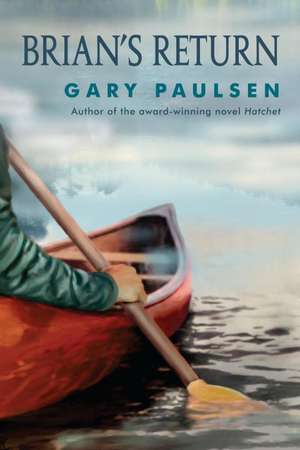
Brian's Return
Autor Gary Paulsenen Limba Engleză Paperback – 13 mar 2012 – vârsta de la 10 ani
În acest roman de aventură captivant, Brian's Return de Gary Paulsen ne oferă o perspectivă surprinzătoare asupra supraviețuirii: uneori, civilizația este un mediu mai ostil decât sălbăticia. Apreciem curajul autorului de a nu opri povestea la momentul salvării, ci de a explora trauma și alienarea unui tânăr care nu mai găsește sens în zgomotul și superficialitatea liceului. Credem că această etapă a călătoriei lui Brian Robeson este esențială pentru a înțelege evoluția sa ca personaj. Subliniem faptul că, spre deosebire de volumele anterioare, unde miza era supraviețuirea biologică, aici conflictul este unul interior. Brian se simte mai singur printre colegi decât a fost vreodată în nordul Canadei. Într-o manieră similară cu Ghost of Spirit Bear de Ben Mikaelsen, unde protagonistul se confruntă cu provocările reintegrării școlare după un exil auto-impus, Brian's Return tratează tema actuală a apartenenței și a nevoii de reconectare cu natura pentru a-și găsi liniștea mentală. Stilul lui Gary Paulsen rămâne unul direct și onest, ancorat în experiențe reale de viață. Dacă în Brian's Winter am văzut o realitate alternativă a luptei cu frigul, aici vedem maturizarea definitivă a unui băiat care înțelege că „acasă” nu este neapărat un loc cu patru pereți. Este o lectură cu un ritm introspectiv, care oferă tinerilor cititori o validare a sentimentelor de inadaptare, transformând dorința de evadare într-o căutare spirituală legitimă.
Preț: 60.47 lei
Carte disponibilă
Livrare economică 11-25 noiembrie
Specificații
ISBN-10: 0307929604
Pagini: 160
Dimensiuni: 139 x 211 x 10 mm
Greutate: 0.14 kg
Editura: RANDOM HOUSE CHILDREN'S BOOKS
V-ar putea interesa
-
 Roald Dahl: Whizzpopping Joke BookRoald Dahl-20%Preț: 45.44 lei56.73 lei
 -
 Family TiesGary PaulsenPreț: 40.74 lei
 -
 A Matter of DaysAmber KizerPreț: 83.79 lei
 -
 You Have Seven MessagesStewart LewisPreț: 91.48 lei
 -
 The LivingMatt de la PeñaPreț: 74.19 lei
 -
 The Islands at the End of the WorldAustin AslanPreț: 96.00 lei
 -
 -25%Preț: 54.40 lei72.72 lei
 -
 Preț: 47.54 lei
 -
 Secret Kingdom: Mermaid Magic: Book 32Rosie Banks-27%Preț: 35.80 lei49.17 lei
 -
 Six Scary StoriesStephen KingPreț: 110.09 lei
 -
 Far From YouTess Sharpe-25%Preț: 54.45 lei72.72 lei
De ce să citești această carte
Recomandăm această carte părinților care doresc să le ofere copiilor de peste 10 ani o poveste despre autenticitate și curajul de a-ți urma propriul drum. Cititorul va câștiga o înțelegere mai profundă a faptului că succesul nu înseamnă doar adaptarea la normele sociale, ci găsirea unui echilibru interior. Este un instrument excelent pentru a discuta despre sănătatea emoțională și relația omului modern cu mediul natural.
Despre autor
Gary Paulsen (1939–2021) a fost unul dintre cei mai respectați scriitori americani de literatură pentru copii și adolescenți, celebru pentru poveștile sale de tip „coming of age” desfășurate în sălbăticie. Autor a peste 200 de cărți, Paulsen a fost distins cu Premiul Margaret Edwards pentru contribuția sa de o viață la literatura pentru tineret. Experiențele sale personale, de la cursele cu sănii trase de câini până la viața în pădure, descrise detaliat în memorii precum Gone to the Woods, au oferit un realism inegalabil seriei Hatchet, transformându-l într-o voce autentică a genului de aventură.
Notă biografică
Extras
shoreline of a small lake he had flown into an hour earlier. Around him was the lake itself, an almost circular body of water of approximately
eighty acres surrounded by northern forest—pine, spruce, poplar and birch—and thick brush.
It was late spring—June 3, to be exact—and the lake was teeming, crawling, buzzing and flying with life. Mosquitos and flies filled the
air, swarming on him, and he smiled now, remembering his first horror at the small blood drinkers. In the middle of the canoe he had an old coffee
can with some kindling inside it, and a bit of birchbark, and he lit them and dropped a handful of green poplar leaves on the tiny fire. Soon smoke
billowed out and drifted back and forth across the canoe and the insects left him. He had repellant with him this time—along with nearly two
hundred pounds of other gear—but he hated the smell of it and found it didn't work as well as a touch of smoke now and then. The blackflies and
deerflies and horseflies ignored repellant completely—he swore they seemed to lick it off—but they hated the smoke and stayed well off the
canoe.
The relief gave him time to see the rest of the activity on the lake. He remained still, watching, listening.
To his left rear he heard a beaver slap the water with its tail and dive—a warning at the intruder, at the strange smoking log holding the
person. Brian smiled. He had come to know beaver for what they truly were—engineers, family-oriented home builders. He'd read that most of the
cities in Europe were founded by beaver. That beaver had first felled the trees along the rivers and dammed them up. The rising water killed more
trees and when the food was gone and the beaver had no more bark to chew they left. The dams eventually broke apart, and the water drained and left
large clearings along the rivers where the beaver had cut down all the trees. Early man came along and started cities where the clearings lay.
Cities like London and Paris were founded and settled first by beaver.
In front and to the right he heard the heavier footsteps of a deer moving through the hazel brush. Probably a buck because he heard no smaller
footsteps of a fawn. A buck with its antlers in velvet, more than likely, moving away from the smell of smoke from the canoe.
A frog jumped from a lily pad six feet away and had barely entered the water when a northern pike took it with a slashing strike that tore the
surface of the lake and flipped lily pads over to show their pale undersides.
Somewhere a hawk screeeeeennned, and he looked for it but could not see it through the leaves of the trees around the lake. It would be
hunting. Bringing home mice for a nest full of young. Looking for something to kill.
No, Brian thought—not in that way. The hawk did not hunt to kill. It hunted to eat. Of course it had to kill to eat—along with all other
carnivorous animals—but the killing was the means to bring food, not the end. Only man hunted for sport, or for trophies.
It is the same with me as with the hawk, Brian felt. He turned the paddle edgeways, eased it forward silently and pulled back with an even stroke. I
will kill to eat, or to defend myself. But for no other reason.
In the past two years, except for the time with Derek on the river, in a kind of lonely agony he had tried to find things to read or watch that
brought the woods to him. He missed the forest, the lakes, the wild as he thought of it, so much that at times he could not bear it. The
guns-and-hunting magazines, the hunting and fishing videos on television sickened him. Men using high-velocity weapons to shoot deer or elk from so
far away they could barely see them, or worse, blasting them from a blind or the back of a Jeep; baiting bear with pits full of rotten meat and
shooting them with rifles that could stop a car; taking bass for sport or money in huge contests with fancy boats and electronic gear that located
each fish individually.
Sport, they called it. But they weren't hunting or fishing because they needed to; they were killing to kill, not eat, to prove some kind of
worth, and he stopped reading the magazines and watching the videos. His survival in the wilderness had made him famous, in a small way, and some
of the magazines interviewed him, as did some of the hunting and sporting shows on television, but they got it all wrong. Completely wrong.
"Boy conquers savage wilderness!" some magazines said in the blurbs on the covers. "Learns to beat nature . . ."
It wasn't that way. Had never been that way. Brian hadn't conquered anything. Nature had whipped him, not the other way around; had beaten him
down and pounded the stupidity out of his brain until he had been forced to bend, forced to give, forced to learn to survive. He had learned the
most important fact of all, and the one that is so hard for many to understand or believe: Man proposes, nature disposes. He hadn't conquered
nature at all—he had become part of it. And it had become part of him, maybe all of him.
And that, he thought as the canoe slid gently forward, had been exactly the problem.
From the Hardcover edition.
Descriere scurtă
From the Paperback edition.