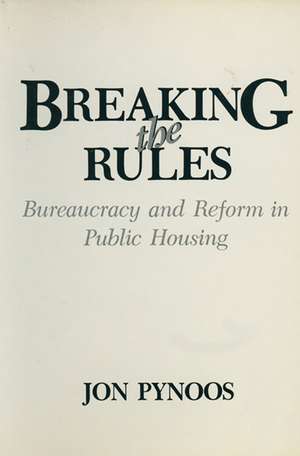
Breaking the Rules: Environment, Development and Public Policy: Cities and Development
Autor Jon Pynoosen Limba Engleză Paperback – oct 2011





Preț: 372.50 lei
Puncte Express: 559
Carte tipărită la comandă
Livrare economică 27 noiembrie-11 decembrie
Livrare prin curier în România Termenul estimat este afișat lângă disponibilitate.
Transport gratuit de la 400.00 lei Plată online sau ramburs, în funcție de opțiunile comenzii.
Retur gratuit în 14 zile Comandă securizată și suport în română.
Specificații
ISBN-13: 9781461293019
ISBN-10: 1461293014
Pagini: 244
Ilustrații: XIV, 221 p.
Dimensiuni: 152 x 229 x 14 mm
Greutate: 0.36 kg
Ediția:Softcover reprint of the original 1st ed. 1986
Editura: Springer
Colecția Environment, Development and Public Policy: Cities and Development
Seria Environment, Development and Public Policy: Cities and Development
Locul publicării:New York, NY, United States
ISBN-10: 1461293014
Pagini: 244
Ilustrații: XIV, 221 p.
Dimensiuni: 152 x 229 x 14 mm
Greutate: 0.36 kg
Ediția:Softcover reprint of the original 1st ed. 1986
Editura: Springer
Colecția Environment, Development and Public Policy: Cities and Development
Seria Environment, Development and Public Policy: Cities and Development
Locul publicării:New York, NY, United States
V-ar putea interesa
-
 Engineering SocietyKerstin BrückwehPreț: 415.38 lei
 -
 Q & A for KidsBetsy FrancoPreț: 95.43 lei
 -
 Media, Society, WorldNick CouldryPreț: 249.48 lei
 -
 Economic NetworksDavid KnokePreț: 200.81 lei
 -
 The Body and Social TheoryChris Shilling-8%Preț: 451.89 lei491.19 lei
 -
 -26%Preț: 1085.61 lei1476.13 lei
 -
 Preț: 342.95 lei
 -
 Key Concepts in Body and SocietyKate CreganPreț: 424.67 lei
 -
 -11%Preț: 67.06 lei75.65 lei
 -
 Extra VergineTom MüllerPreț: 176.91 lei
 -
 The Project SocietyAnders Fogh JensenPreț: 136.85 lei
Public țintă
ResearchCuprins
One: Bureaucracy and Public Housing.- Uses of Discretion.- Federal-Local Relationships: Clarity of Rules.- The Task Orientation of Street-Level Bureaucrats.- The Norms of the Staff.- The Influence of Third Parties.- Outside Intervention, Changing Conditions, and Reform.- Summary.- Two: The Emergence of Rules.- Locally Originated Rules.- The Happy Years: Patronage and Screening.- The Middle Years: Segregating New Clients.- Reform: Desegregating the Projects.- New Rules and Regulations.- Nationally Originated Rules.- Federal Intervention.- Response to the HUD Plan.- Another Reform: Leadership.- Conclusion.- Three: Breakdown of the Rule System.- Measurement Problems.- Working Conditions.- Information Gathering.- Division of Labor.- Crisis Situations.- Poor Vacancy Reporting.- Low Morale.- Priority Reduction and Abrogation of Power.- Client Rejection and Goal Failure.- Project Variation.- Applicant Preferences.- Shortcomings of the 1-2-3 Rule.- Staff Circumvention of the Rule.- Conclusion.- Four: Discretion, Staff Norms, and Outcomes.- Staff Discretion.- Bureaucratic Types and the Use of Discretion.- Traditionalists.- Reformers.- Survivalists.- Avoiders.- Outcomes.- Conclusion.- Five: The Influence of Third-Party Sponsors.- Referrals.- Information.- Access.- Service.- Advocacy.- Social Agencies.- Politicians.- Board Members and the Administrator.- Conclusion.- Six: Project-Level Discretion.- Managerial Practices for Controlling Admissions at the Projects.- Background of Managers and Nature of the Job.- Project-Level Control Mechanisms.- Situation as a Determinant of Discretion.- Project Profiles.- The Influence of Situation at Mary Ellen McCormick.- The Influence of Situation at Columbia Point.- Personal Style as a Determinant of Outcome.- Traditional Style.- Reform Style.-Conclusion.- Seven: Federal Intervention: HUD Monitoring, Feedback, and Evaluation.- Monitoring the BHA.- Written Reports.- Regular Audits.- Unsolicited BHA Feedback.- Public Channels.- Special Audits.- Evaluation.- HUD’s Power.- Conclusion.- Eight: The Later Years: Court-Initiated Reform Efforts.- Limited Intervention.- Improving the Tenant Selection, Assignment, and Transfer System.- Improving Efficiency.- Desegregating Developments.- Marketing Public Housing.- Increasing Managerial Discretion.- Increasing Screening.- Outcomes of Limited Intervention.- The Receivership.- Management Reorganization.- Screening.- Promoting Fair Housing.- Broad Range of Income.- Tenant Empowerment.- The End of Receivership.- Conclusion.- Nine: Summary and Implications.- Conditions for Reform.- Whom Shall Public Housing Serve?: The Influence of Socioeconomic Conditions.- Regulatory Justice: Uses of Discretion.- Federal-Local Relationships: Clarity of Rules.- The Influence of Third Parties.- The Power of Street-Level Bureaucrats.- Client Empowerment.- The Privatization of Public Housing.- General Implications.