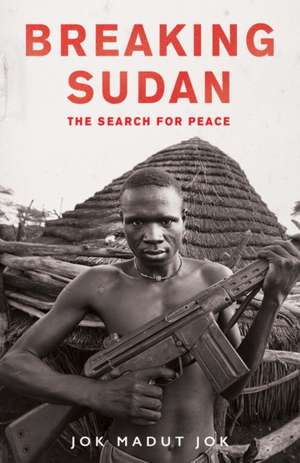
Breaking Sudan
Autor Jok Madut Joken Limba Engleză Hardback – 11 apr 2017
Considerăm că Breaking Sudan reprezintă o resursă academică fundamentală pentru studenții și specialiștii în relații internaționale, studii de securitate și istoria Africii, oferind o analiză critică a mecanismelor diplomatice care au eșuat în stabilizarea regiunii. Relevanța acestei lucrări este crucială pentru înțelegerea proceselor de mediere a conflictelor și a limitărilor acordurilor de pace internaționale, fiind un studiu de caz esențial pentru cursurile despre state eșuate și politici de secesiune. Remarcăm modul în care Jok Madut Jok disecă prăbușirea Acordului Cuprinzător de Pace (CPA) din 2005, argumentând că acesta, în loc să aducă stabilitate, a legitimat violența ca monedă de schimb politică. Structura volumului facilitează o progresie de la analiza macro-politică a relațiilor dintre nord și sud, la impactul devastator la nivel micro, documentat în capitolul dedicat experienței unui singur sat. Această abordare antropologică oferă o perspectivă umană rară asupra „subculturii armelor” care a erodat ordinea socială. În contextul operei autorului, cartea extinde cercetările din Sudan și War and Slavery in Sudan, trecând de la documentarea atrocităților și a sclaviei spre o examinare sistemică a modului în care ideologiile de eliberare au devenit poveri guvernamentale. Breaking Sudan este o alternativă necesară la The Fate of Sudan de John Young pentru cursurile de istorie contemporană a Africii, cu avantajul că aduce în prim-plan vocea unui expert local care înțelege nuanțele etnice și neîncrederea profundă ce sabotează orice tentativă de cooperare între cele două state.
Preț: 190.27 lei
Carte disponibilă
Livrare economică 16-30 noiembrie
Specificații
ISBN-10: 1786070030
Pagini: 384
Dimensiuni: 154 x 241 x 38 mm
Greutate: 0.63 kg
Editura: Oneworld Publications
V-ar putea interesa
-
 The Making of Modern South AfricaNigel WordenPreț: 288.73 lei
 -
 SandstormLindsey HilsumPreț: 92.21 lei
 -
 Summoned from the MarginLamin SannehPreț: 200.04 lei
 -
 K. O. MbadiweHollis R LynchPreț: 390.09 lei
 -
 -26%Preț: 68.68 lei92.66 lei
 -
 SudanJok Madut JokPreț: 114.72 lei
 -
 The Woman Who Would be KingKara CooneyPreț: 94.05 lei
 -
 AfricaTom YoungPreț: 70.91 lei
 -
 Radio CongoBen RawlencePreț: 89.54 lei
De ce să citești această carte
Recomandăm această carte cercetătorilor care doresc să înțeleagă de ce independența Sudanului de Sud nu a pus capăt violențelor. Cititorul câștigă o perspectivă profundă asupra eșecului diplomației internaționale și a modului în care istoria eliberării poate deveni un obstacol în construcția statală. Este o analiză lucidă despre cum pacea pe hârtie poate alimenta, în realitate, noi conflicte armate.
Despre autor
Jok Madut Jok este un renumit antropolog și istoric, profesor la Loyola Marymount University. Expertiza sa vastă în problemele Cornului Africii este dublată de o înțelegere profundă a dinamicii sociale și politice din regiune, fiind autorul unor lucrări de referință despre sclavia modernă și impactul războiului civil asupra populațiilor civile. Pregătirea sa academică îi permite să combine rigoarea cercetării istorice cu observația participantă specifică antropologiei, oferind o voce autoritară în dezbaterea despre viitorul Sudanului și al Sudanului de Sud.
Descriere scurtă
Sudan expert Jok Madut Jok investigates how violence has once more come to dominate a region where various political groups remain separated by deep-rooted mistrust and ethnic relations are nothing short of wrecked. Dissecting the failure of the peace agreement, he confronts the frightening possibility that it may have actually, in effect, legitimized the use of violence for the achievement of political goals. More than just a scrupulous survey of two countries ravaged by war, Breaking Sudan features starkly drawn portraits that provide a moving insight into how the Sudanese of the post-secession era continue to live with war.
Notă biografică
Cuprins
Preface
Acknowledgments
Abbreviations
Introduction: The ¿New Sudan¿: How Sudan¿s Break-Up Prepared the Ground for More War
Sudan after the CPA
South Sudan after the CPA
1 The Two Sudans and the Defeat of the CPA Reform Project
South Sudan and the burden of independence
Post-separation relations
The cooperation agreements
The cooperation agreements and continued military raids
2 Independent South Sudan and the Burden of Liberation History
The burden of the liberation wars
Political violence and the development of a sub-culture of guns
The CPA and the unrelenting violence
The CPA and the exclusionary peace
South Sudan and the legacy of liberation ideologies
3 Sudan¿s Wars: The Experience of One Village
4 Political Rivalries, the New Wars and the Crumbling Social Order
The 2013 outbreak of conflict: what caused this crisis?
How political disagreement turned violent
Power politics or tribal wars?
5 Reporting Sudan¿s Wars: The Media and the Blurred Line Between Informing and Inciting
War and sexual violence
Displacement and social life
6 Mixed Economies, Corruption and Social Disparity
The decentralized system of government and its shortfalls
Mixed economies, social disparities, conflict and the role of corruption
Governance and the role of policy research
7 Ethnic Relations, the New War and the (Dis)Unity of South Sudan
Obstacles to collective belonging
Public goods and services as the success of the state
History as the foundation of nationhood
The new civil war and prospects for a united South Sudan
Cultural exclusion could keep South Sudan in perpetual conflict
8 Conclusion: The Fates of the Two Sudans
Landing on hard ground
Ambivalent new neighbors
A history of violent interactions or a future of links?
Invisible connections and the promise of peaceful co-existence
Notes
Bibliography
Index