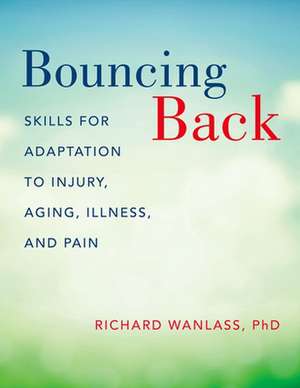
Bouncing Back: Skills for Adaptation to Injury, Aging, Illness, and Pain
Autor Richard Wanlassen Limba Engleză Paperback – 8 iun 2017
Preț: 213.50 lei
Preț vechi: 257.59 lei
-17%
Puncte Express: 320
Carte disponibilă
Livrare economică 30 octombrie-04 noiembrie
Livrare prin curier în România Termenul estimat este afișat lângă disponibilitate.
Transport gratuit de la 400.00 lei Plată online sau ramburs, în funcție de opțiunile comenzii.
Retur gratuit în 14 zile Comandă securizată și suport în română.
Specificații
ISBN-13: 9780190610555
ISBN-10: 0190610557
Pagini: 232
Dimensiuni: 213 x 277 x 18 mm
Greutate: 0.66 kg
Editura: Oxford University Press
Colecția OUP USA
Locul publicării:New York, United States
ISBN-10: 0190610557
Pagini: 232
Dimensiuni: 213 x 277 x 18 mm
Greutate: 0.66 kg
Editura: Oxford University Press
Colecția OUP USA
Locul publicării:New York, United States
Recenzii
A must-read for individuals adapting to any change in functioning due to injury, aging, illness, or pain and a valuable resource for cliniciansWhat makes this book stand out is the easily understandable step-by-step guide to changing behaviors that are obstacles to coping with loss of ability.
Dr. Wanlass does a superb job of integrating his decades of clinical experience with scientific data to create a powerful and user-friendly guide. A must-read for anyone attempting to navigate the inevitable changes in health and wellness that accompany us in our journey through life.
Each chapter is peppered with creative exercises that are readily accessible. I especially loved Wanlasss empathy intermixed with humor that makes the examples come aliveI look forward to recommending this workbook to my patients.
A much-needed, powerful, user-friendly guideProvides straightforward strategiesto help patients and families adapt and even thrive in the face of major life-changing challenges.
This is a great book that will be of wide valueI cant imagine anyone who wouldnt benefit from part of it!
Bouncing Back has been an essential component of my group therapy sessions for patients coping with pain and other chronic health conditions. This comprehensive handbook is written in a down-to-earth, easy-to-read format and has helped many of my patients move towards successful adaptation.
An encouraging must-have book, which will inspire empowerment and tenacity, as well as assist in optimizing quality of life.
Heartily recommended.
Dr. Wanlass does a superb job of integrating his decades of clinical experience with scientific data to create a powerful and user-friendly guide. A must-read for anyone attempting to navigate the inevitable changes in health and wellness that accompany us in our journey through life.
Each chapter is peppered with creative exercises that are readily accessible. I especially loved Wanlasss empathy intermixed with humor that makes the examples come aliveI look forward to recommending this workbook to my patients.
A much-needed, powerful, user-friendly guideProvides straightforward strategiesto help patients and families adapt and even thrive in the face of major life-changing challenges.
This is a great book that will be of wide valueI cant imagine anyone who wouldnt benefit from part of it!
Bouncing Back has been an essential component of my group therapy sessions for patients coping with pain and other chronic health conditions. This comprehensive handbook is written in a down-to-earth, easy-to-read format and has helped many of my patients move towards successful adaptation.
An encouraging must-have book, which will inspire empowerment and tenacity, as well as assist in optimizing quality of life.
Heartily recommended.
Notă biografică
Richard Wanlass is a healthcare professional who has devoted his career to helping his clients make the same types of adaptations taught in this book. Since 1987, he has served as Chief of Psychological, Social and Vocational Services in the University of California, Davis, Medical Center's Department of Physical Medicine and Rehabilitation, where he also holds the title of Clinical Professor.
Cuprins
- Introduction
- Chapter 1: Self-Management: Changing Behavior and Thoughts
- Goals and Avoidance Behavior Worksheet
- Adaptive Thinking Worksheet
- Chapter 2: Mood Regulation
- Improving Mood through Changing Behavior
- Increase Enjoyable Activities and Social Interactions
- Activity Modification Worksheet
- New Activities Worksheet
- Exercise
- Exercise Planning Worksheet
- Consult Your Healthcare Providers about Mood, Health, Nutrition, and Medication
- Mood, Health, Nutrition, and Medication Worksheet
- Perform Acts of Kindness
- Acts of Kindness Planning Worksheet
- Change Your Environment
- Environment Change Worksheet
- Smile and Laugh
- Smiling and Laughing Worksheet
- Improving Mood through Changing Thoughts
- Practice Self-Acceptance
- Self-Acceptance Worksheet
- Focus on the Positive
- Positive Focus Worksheet: Own Past Actions
- Positive Focus Worksheet: Others' Past Actions
- Positive Focus Worksheet: Present Situation
- Positive Focus Worksheet: The Future
- Practice Gratitude
- Gratitude Worksheet
- Update Your Identity and Purpose
- Values, Identity, and Purpose Worksheet
- Conclusions
- Chapter 3: Stress and Anxiety Management
- Understanding Stress and Anxiety
- What Are Stress and Anxiety?
- How to Recognize Stress
- Understanding Stress and Anxiety Worksheet
- Reducing Stress, Anxiety, and Tension
- Use Your Body to Relax
- Use Your Body to Relax Worksheet
- Use Your Mind to Relax
- Use Your Mind to Relax Worksheet
- Prioritize and Subdivide Goals
- Prioritize and Subdivide Goals Worksheet
- Choose When and How to Worry
- Choose When and How to Worry Worksheet
- Put the Situation into Perspective
- Put the Situation into Perspective Worksheet
- Avoid Avoidance
- Avoid Avoidance Worksheet
- Chapter 4: Anger and Frustration Management
- Time-Out
- Time-Out Worksheet
- More Realistic Thinking
- "Should Thoughts" Worksheet
- Assertive Communication
- Assertiveness Worksheet for Reducing Aggressive Communication
- Assertiveness Worksheet for Reducing Passive Communication
- Self-Care
- Self-Care Planning Worksheet
- Relaxation
- Relaxation Worksheet
- Humor
- Humor Worksheet
- Forgiveness
- Forgiveness Worksheet for Anger at Persons in your Past
- Forgiveness Worksheet for Anger at Persons in your Present
- Acknowledgment of Underlying Feelings
- Worksheet for Understanding and Expressing Feelings Underlying Anger
- Chapter 5: Relationship Management
- Increasing Cooperation
- Communication Skills for Increasing Cooperation Worksheet
- Building Social Connections
- Social Connection Planning Worksheet
- Making People Feel Liked, Listened to, and Appreciated
- Chapter 6: Memory Management
- Remembering Future Events, Appointments, and Obligations
- Remembering Future Events, Appointments, and Obligations Worksheet
- Remembering Names When Meeting People
- Remembering Names When Meeting People Worksheet
- Remembering What You Read
- Remembering What You Read Worksheet
- Remembering Where You Place Belongings
- Remembering Where You Place Belongings Worksheet
- Remembering to Take Medications
- Remembering to Take Medications Worksheet
- Remembering Jokes, Interesting Facts, and New Words
- Remembering Jokes, Interesting Facts, and New Words Worksheet
- Remembering What You Do and Talk About
- Memory Reinforcement Log
- Remembering What You Do and Talk About Worksheet
- Remembering Addresses and Directions
- Remembering Addresses and Directions Worksheet
- Remembering Shopping Lists and To-Do Lists
- The Roman Room Memory Technique
- Remembering Shopping Lists and To-Do Lists Worksheet
- Conclusions
- Chapter 7: Pain Management
- Activity Pacing
- Activity Pacing Worksheet
- Mood Improvement
- Mood Improvement Worksheet
- Movement
- Movement Worksheet
- Relaxation
- Relaxation Planning Worksheet
- Sleep Improvement
- Create a Proper Sleeping Environment
- Be Smart about Foods, Beverages, and Medicines
- Relax and Unwind Before Bed
- Relax While in Bed
- Limit Your Time in Bed
- Sleep Improvement Worksheet
- Focus Shifting
- Focus Shifting Worksheet
- Pain Behavior Reduction
- Pain Behavior Reduction Worksheet
- Physical Pain Management Strategies
- Physical Pain Management Strategies Worksheet
- Appropriate Use of Medications
- Appropriate Use of Medications Worksheet
- Expression of Emotions
- Emotional Expression Worksheet
- Socialization and Recreation
- Socialization and Recreation Worksheet
- Adaptive Thinking
- Adaptive Thinking Worksheet
- Conclusions
- Epilogue
- Index