Extras
Bodega Dreams by Ernesto QuinonezLeadtext: SAPO was different.Sapo was always Sapo, and no one messed with him because he had a reputation for biting. "When I'm in a fight," Sapo would spit, "whass close to my mouth is mine by right and my teeth ain't no fucken pawn-shop."I loved Sapo. I loved Sapo because he loved himself And I wanted to be able to do that, to rely on myself for my own happiness.Sapo, he relied on himself. He'd been this way since we met back in the fourth grade when he threw a book at Lisa Rivera's face because she had started to make fun of his looks by calling out, "ribbit, ribbit." But in truth, Sapo did look like a toad. He was strong, squatty, with a huge mouth framed by fat lips, freaking bembas that could almost swallow you. His eyes bulged in their sockets and when he laughed there was no denying the resemblance. It was like one huge, happy toad laughing right in front of you.As far back as I could remember Sapo had always been called Sapo and no one called him by his real name, Enrique. Usually Enriques are nicknamed Kilo or Kique. But Sapo didn't look like an Enrique anyway, whatever an Enrique is supposed to look like. Sapo could only be Sapo. And that's what everyone called him. It was rumored around the neighborhood that when Sapo came out, the nurses cleaned him up and brought him over to his father. His father saw the baby and said, "Coño, he looks like a frog" and quickly handed the baby to the mother. "Here, you take him." I think this story is true. But Sapo never bitched, as if he had said, "Fuck that shit. I'll love myself " And that's how I wanted to be.To have a name other than the one your parents had given you meant you had status in school, had status on your block. You were somebody. If anyone called you by your real name you were un mamao, a useless, meaningless thing. It meant that you hadn't proved yourself, it was open season for anybody who wanted to kick your ass. It was Sapo who taught me that it didn't matter if you lost the fight, only that you never backed down. The more guys that saw you lose fights without ever backing down, the better. This didn't mean you were home free, it simply meant bigger guys would think twice before starting something with you.Getting a name meant I had to fight. There was no way out of it. I got beat up a few times, but I never backed down. "You back down once," Sapo had told me, "and you'll be backin' down f' the res' of your life. It's a Timex world, everyone takes a lickin' but you got to keep on tickin'. Know what I'm sayin', papi?" Sapo was one of those guys who went around beating other kids up, but Sapo was different. Sapo loved himself. He didn't need teachers or anyone else telling him this. The meanest and ugliest kid on the block loved himself and not only that, he was my pana, my friend. This gave me hope, and getting a name seemed possible. So I decided that I no longer wanted to be called by the name my parents had given me, Julio. I wanted a name like Sapo had and so I looked for fights.It was always easy to get into fights if you hated yourself. So what if you fought a guy bigger than you who would kick your ass? So what if you got stabbed with a 007 in the back and never walked again? So what if someone broke your nose in a fight? You were ugly anyway. Your life meant shit from the start. It was as if you had given up on the war and decided to charge the tanks with your bare fists. Nothing brave in it, you just didn't give a shit anymore. It was easy to be big and bad when you hated your life and felt meaningless. You lived in projects with pissed-up elevators, junkies on the stairs, posters of the rapist of the month, and whores you never knew were whores until you saw men go in and out of their apartments like through revolving doors. You lived in a place where vacant lots grew like wild grass does in Kansas. Kansas? What does a kid from Spanish Harlem know about Kansas? All you knew was that one day a block would have people, the next day it would be erased by a fire. The burned-down buildings would then house junkies who made them into shooting galleries or become playgrounds for kids like me and Sapo to explore. After a few months, the City of New York would send a crane with a ball and chain to wreck the gutted tenements. A few weeks later a bulldozer would arrive and turn the block into a vacant lot. The vacant lot would now become a graveyard for stolen cars. Sapo and I played in those cars with no doors, tires, windows, or steering wheels, where mice had made their nests inside the slashed seats. Sapo loved killing the little mice in different ways. I liked to take a big piece of glass and tear open what was left of the, seat. I always hoped to find something the car thieves had hidden inside but had forgotten to take when they ditched the car. But I never found anything except foam and sometimes more mice.Fires, junkies dying, shootouts, holdups, babies falling out of windows were things you took as part of life. If you were a graffiti artist and people knew you were a good one, death meant an opportunity to make a few bucks. Someone close to the deceased, usually a woman, would knock on your door. "Mira, my cousin Freddy just passed away. Can you do him a R.I.P.?" You would bemoan Freddy's death whether you knew him or not, say you were sorry and ask what had happened, like you really cared. "Freddy? Freddy was shot by mistake. He wasn't stealin' not'en." You'd nod and then ask the person on what wall she wanted the R.I.P. and what to paint on it. "On the wall of P.S. 101's schoolyard. The back wall. The one that faces 111th Street. Freddy would hang there all night. I want it to say, 'Freddy the best of 109th Street, R.I.P.' And then I want the flag of Borinquen and a big conga with Freddy's face on it, can you paint that?" You would say, "Yeah, I can paint that" and never ask for the money up front, because then you wouldn't get tipped.I painted dozens of R.I.P.s for guys in El Barrio who felt small and needed something violent to jump-start their lives and at the same time end them. It was guys like these who on any given day were looking to beat someone up, so it was up to me to either become like them or get the shit kicked out of me.Junior High School 99 (aka Jailhouse 99), on 100th Street and First Avenue, became the outlet I needed. It was violently perfect and in constant turmoil within itself. It was a school that was divided by two powers, the white teachers and the Hispanic teachers. The white teachers had most of the power because they had seniority. They had been teaching before the chancellor of the Board of Education finally realized that the school was located in Spanish Harlem and practically all of the students were Latinos, and so changed the school's name from Margaret Knox to Julia de Burgos.To the white teachers we were all going to end up delinquents. "I get paid whether you learn or not" they would tell us. So we figured, hey, I ain't stealing food from your kid's mouth, why should I do my work? The whole time I was at Julia de Burgos, I had no idea the school was named after Puerto Rico's greatest poet, had no idea Julia de Burgos had emigrated to New York City and lived in poverty while she wrote beautiful verses. She lived in El Barrio and had died on the street. But we weren't taught about her or any other Latin American poets, for that matter. As for history, we knew more about Italy than our own Latin American countries. To Mr. Varatollo, the social studies teacher, everything was Italy this, Italy that, Italy, Italy, Italy. Didn't he know the history of the neighborhood? Hadn't he ever seen West Side Story? We hated Italians. At least that part of West Side Story was correct. Some Italians from the old days of the fifties and sixties were still around. They lived on Pleasant Avenue off 116th Street, and if you were caught around there at night you'd better have been a light-skinned Latino so you could pass yourself off as Italian. So, since we were almost convinced that our race had no culture, no smart people, we behaved even worse. It made us fight and throw books at one another, sell loose joints on the stairways, talk back to teachers, and leave classrooms whenever we wanted to. We hated the white teachers because we knew they hated their jobs. The only white teacher who actually taught us something, actually went through the hassle of making us respect her by never taking shit from us, was the math teacher, Ms. Boorstein. She once went toe-to-toe with Sapo. He was about to walk out of her classroom because he was bored, and she said to him, "Enrique, sit back down!" Sapo kept walking and she ran toward the door and blocked his path. She dared him to push her. She said to him, "I'll get your mother. I bet she hits harder." And Sapo had no choice but to go back to his seat. From that day on, no one messed with her. She might have been Jewish, but to us she was still white. Ms. Boorstein could yell like a Latin woman. To us she was always "that bitch." But we knew she cared, for the simple reason that she never called us names; she would yell but never call us names. She only wanted us to listen, and when we did well on her math tests she was all smiles.The Hispanic teachers, on the other hand, saw themselves in our eyes and made us work hard. Most of them were young, the sons and daughters of the first wave of Puerto Ricans who immigrated to El Barrio in the late forties and the fifties. These teachers never took shit from us (especially Sapo), and they were not afraid to curse in class: "Mira, sit down or I'll kick your ass down." At times they spoke to us harshly, as if they were our parents. This somehow made us fear and listen to them. They were not Puerto Ricans who danced in empty streets, snapping their fingers and twirling their bodies. Nor were they violent, with switchblade tempers. None of them were named Maria, Bernardo, or Anita. These teachers simply taught us that our complexion was made up of many continents, Africa, Europe, and Asia. To them our self-respect was more important than passing some test, because you can't pass a test if you already feel defeated. But the Hispanic teachers had very little say in how things were run in that school. Most of them had just graduated from a city university and couldn't rock the boat. Any boat.So we hated ourselves and fought every day. And finally, after a while, when I lost the fear of hitting someone else (not the fear of getting hit but of hitting someone else), I looked for fights. With Sapo watching my back, getting into fights was fun. During my three years at Julia de Burgos, I had more fights than Sapo. And since I was born with high, flat cheekbones, almond-shaped eyes, and straight black hair (courtesy of my father's Ecuadorian side of the family), and because kung fu movies were very popular at the time, when I was in the eighth grade, I was tagged Chino.I was happy with the name. Chino was a cool name, qué chévere. There were many guys named Chino in East Harlem but it wasn't a name that was just given to you. First, you had to look a bit Chinese, and second, you had to fight. It was an honor to be called Chino. But there were other honorable names in the neighborhood: Indio, if you had straight black hair, tan skin, and looked like a Taino; Batuka, if you liked Santana music and played the congas real good; Biscocho, if you were fat but told good jokes; and so on. Then there were names that were added to your name because of who you were, what you were known for, or what was said about you. Like a guy I knew named Junior, of 109th and Madison. Junior not only carried a knife, a jiga, in his back pocket, he had used it to cut someone's face. It was no big deal to carry a knife in your back pocket. Everyone did and everyone knew that 80 percent of it was just for show, puro aguaie. The other 20 percent you hoped would never come your way. But Junior was notorious for going straight for his jiga when he got into a fight. He didn't waste any time. It was Junior who introduced the phrase "Kool-Aid smile" when he cut a guy's face so bad, from ear to ear, that he was left looking like the chubby, smiling cartoon logo from Kool-Aid packets. Soon this term caught on and it became a street phrase: "Shut the fuck up or I'll give you a Kool-Aid smile." Junior was no longer just junior, but sometimes Junior Jiga of 109th Street.Then there were the names your parents had called you since you were a kid, bullshit names like Papito, Tato, Chave, Junito, Googie, Butchy, Tito. Those names meant shit around school, around the block, around the neighborhood. They carried no weight and it was usually guys stuck with those names that were always getting their asses kicked.© Ernesto Quinonez, 2000.

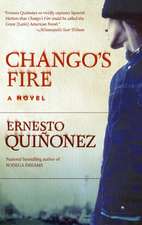 Chango's FireErnesto QuiñonezPreț: 98.30 lei
 Blood of ElvesAndrzej SapkowskiPreț: 52.45 lei
 Preț: 64.35 lei
 The Ibis TapestryMike NicolPreț: 90.85 lei
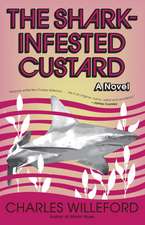 The Shark-Infested CustardCharles WillefordPreț: 105.41 lei
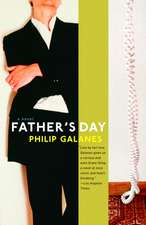 Father's DayPhilip GalanesPreț: 126.75 lei
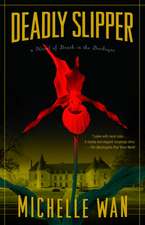 Deadly Slipper: A Novel of Death in the DordogneMichelle WanPreț: 102.35 lei
 After YouJojo Moyes-18%Preț: 59.52 lei72.37 lei
 Tomie: Complete Deluxe EditionJunji Ito-21%Preț: 173.77 lei220.75 lei
 Behind Closed DoorsB. A. Paris-22%Preț: 56.09 lei71.52 lei
 A Girl on the ShoreInio AsanoPreț: 109.14 lei