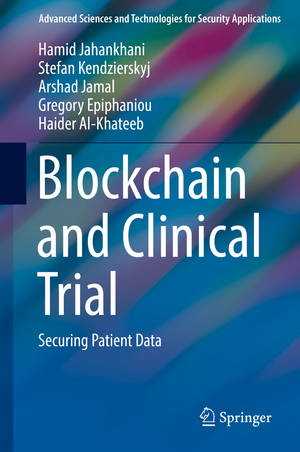
Blockchain and Clinical Trial: Advanced Sciences and Technologies for Security Applications
Editat de Hamid Jahankhani, Stefan Kendzierskyj, Arshad Jamal, Gregory Epiphaniou, Haider Al-Khateeben Limba Engleză Hardback – 18 apr 2019
Ne-a atras atenția modul în care volumul Blockchain and Clinical Trial depășește nivelul teoretic, oferind resurse metodologice precum Modelul Standardizat de Investigare Digitală (SDFIPM) și protocoale pentru lanțul de custodie sub formă de registru distribuit. Subliniem faptul că acest volum, publicat de Springer în seria Advanced Sciences and Technologies for Security Applications, abordează frontal criza de transparență din cercetarea clinică, unde lipsa fluxului de informații către pacienți și cercetători generează probleme de reproductibilitate și integritate a datelor. Descoperim aici o analiză tehnică a modului în care blockchain-ul poate securiza datele provenite de la dispozitivele IoT medicale, a căror proliferare pune o presiune imensă pe arhitecturile centralizate actuale. Dacă Blockchain For Healthcare Data Management v-a oferit cadrul teoretic al gestionării datelor pacienților, această carte oferă instrumentele practice pentru implementarea guvernanței securității informațiilor și a cadrelor de securitate hibride pentru Internetul Obiectelor Medicale (IoMT). Structura cărții este riguros segmentată, pornind de la transformarea digitală a sănătății și evoluând spre studii de caz concrete despre atacuri cibernetice și vulnerabilități în dispozitivele medicale. În contextul operei editorului Hamid Jahankhani, acest volum completează cercetările sale anterioare din Challenges in the IoT and Smart Environments, extinzând expertiza sa de la securitatea infrastructurilor critice la nișa vitală a trialurilor clinice și a identității suverane, temă explorată și în AI, Blockchain and Self-Sovereign Identity in Higher Education.
Din seria Advanced Sciences and Technologies for Security Applications
- 15%
 Preț: 621.19 lei
 - 18%
 Preț: 1000.35 lei
 - 20%
 Preț: 1029.44 lei
 - 15%
 Preț: 668.42 lei
 - 20%
 Preț: 1032.67 lei
 - 20%
 Preț: 1022.72 lei
 - 18%
 Preț: 760.39 lei
 - 15%
 Preț: 681.12 lei
 - 15%
 Preț: 729.67 lei
 - 18%
 Preț: 991.22 lei
 - 20%
 Preț: 1207.57 lei
 - 20%
 Preț: 1504.98 lei
 - 18%
 Preț: 815.93 lei
 - 20%
 Preț: 969.15 lei
 - 15%
 Preț: 672.83 lei
 - 18%
 Preț: 812.62 lei
 - 20%
 Preț: 1089.98 lei
 - 18%
 Preț: 928.18 lei
 - 18%
 Preț: 1270.36 lei
 - 20%
 Preț: 553.22 lei
 - 15%
 Preț: 671.56 lei
 - 18%
 Preț: 1268.99 lei
 - 15%
 Preț: 606.66 lei
 -
 Preț: 369.08 lei
 - 20%
 Preț: 1206.84 lei
 - 18%
 Preț: 761.05 lei
 - 15%
 Preț: 583.24 lei
 - 18%
 Preț: 1161.28 lei
 - 20%
 Preț: 971.68 lei
 - 24%
 Preț: 675.12 lei
 - 18%
 Preț: 1045.58 lei
 - 24%
 Preț: 847.87 lei
 - 24%
 Preț: 919.32 lei
 - 18%
 Preț: 746.56 lei
 - 20%
 Preț: 967.68 lei
 - 15%
 Preț: 723.33 lei
 - 18%
 Preț: 764.87 lei
 -
 Preț: 400.94 lei
 - 15%
 Preț: 728.35 lei
 - 24%
 Preț: 844.33 lei
Preț: 970.88 lei
Preț vechi: 1213.61 lei
-20%
Carte disponibilă
Livrare economică 17 noiembrie-01 decembrie
Specificații
ISBN-10: 3030112888
Pagini: 275
Ilustrații: 50 farbige Abbildungen, Bibliographie
Dimensiuni: 160 x 241 x 20 mm
Greutate: 0.58 kg
Ediția:1st ed. 2019
Editura: Springer
Seria Advanced Sciences and Technologies for Security Applications
Locul publicării:Cham, Switzerland
V-ar putea interesa
-
 Principles and Practice of Clinical ResearchJohn I. Gallin-9%Preț: 644.54 lei708.29 lei
 -
 Blockchain RevolutionDon Tapscott-18%Preț: 66.10 lei80.16 lei
 -
 The Blockchain and the New Architecture of TrustKevin Werbach-21%Preț: 150.74 lei190.73 lei
 -
 Blockchain and the LawPrimavera De FilippiPreț: 149.42 lei
 -
 -20%Preț: 428.84 lei536.04 lei
 -
 AI-Driven Innovations in Healthcare: Best Practices and Case StudiesJames R. Langabeer, PhD-5%Preț: 400.44 lei421.52 lei
 -
 Preț: 333.87 lei
 -
 -20%Preț: 139.09 lei173.87 lei
 -
 -23%Preț: 1334.44 lei1739.03 lei
 -
 -20%Preț: 18762.75 lei23453.45 lei
 -
 Blockchain Applications in the Smart EraSanjay Misra-18%Preț: 1070.91 lei1305.98 lei
 -
 -18%Preț: 1044.23 lei1273.46 lei
 -
 The Potential and Limitations of Bitcoin and EthereumS Thomas ZhangPreț: 324.85 lei
 -
 -20%Preț: 1331.62 lei1664.52 lei
 -
 Mobile Web and Intelligent Information SystemsMuhammad Younas-20%Preț: 433.53 lei541.91 lei
 -
 -19%Preț: 117.73 lei144.59 lei
De ce să citești această carte
Recomandăm acest volum profesioniștilor din securitate cibernetică și cercetătorilor clinici care au nevoie de soluții tehnice pentru integritatea datelor. Veți câștiga o înțelegere aplicată a modului în care registrele distribuite pot elimina frauda și erorile de date, beneficiind de modele de investigație digitală gata de implementat într-un sector medical tot mai vulnerabil la atacuri de tip ransomware.
Despre autor
Editorul principal, Hamid Jahankhani, este o autoritate recunoscută în domeniul securității cibernetice și al criminalisticii digitale. Expertiza sa vastă se reflectă în coordonarea unor lucrări fundamentale care analizează intersecția dintre tehnologiile emergente și siguranța publică. De la studii privind mediile inteligente și provocările IoT, până la strategii pentru orașe sustenabile și impactul inteligenței artificiale în educație, Jahankhani abordează tehnologia prin prisma guvernanței și a protecției datelor. În prezentul volum, el reunește specialiști pentru a aplica aceste principii de securitate în domeniul critic al cercetării medicale și trialurilor clinice.
Descriere scurtă
Lack of data transparency is an underlying theme within the clinical research world and causes issues of corruption, fraud, errors and a problem of reproducibility. Blockchain can prove to be a method to ensure a much more joined up and integrated approach to data sharing and improving patient outcomes. Surveys undertaken by creditable organisations in the healthcare industry are analysed in this book that show strong support for using blockchain technology regarding strengthening data security, interoperability and a range of beneficial use cases where mostly all respondents of the surveys believe blockchain will be important for the future of the healthcare industry.
Another aspect considered in the book is the coming surge of healthcare wearables using Internet of Things (IoT) and the prediction that the current capacity of centralised networks will not cope with the demands of data storage. The benefits are great for clinical research, but will add more pressure to the transparency of clinical trials and how this is managed unless a secure mechanism like, blockchain is used.
Cuprins
Notă biografică
Jahankhani’s principal research area for a number of years has been in the field of cyber security, information security and digital forensics. In partnership with the key industrial sectors, he has examined and established several innovative research projects that are of direct relevance to the needs of UK and European information security, digital forensics industries, Critical National Infrastructure and law enforcement agencies. He has planned, proposed and managed several collaborative projects, and secured a substantial research income of up to £6m.Professor Jahankhani is the Editor-in-Chief of the International Journal of Electronic Security and Digital Forensics, and International Journal of Electronic Democracy, both published by Inderscience, and general chair of the annual International Conference on Global Security, Safety and Sustainability (ICGS3). Hamid has edited and contributed to over 15 books and has over 150 conference and journal publications together with Various BBC radio interviews. Jahankhani has supervised to completion 13 PhD and professional doctorate degree students and overseen 67 PhD students progressing. In summer 2017 Hamid was trained as the GCHQ “cyberist” to train the next generation of cyber security experts through GCHQ CyberFirst initiative. As part of his research in partnership with the key industrial sectors, Jahankhani has examined and established several innovative research projects that are of direct relevance to the needs of UK and European information security, digital forensics industries and law enforcement agencies.
Most of his work in the field has been manifested in a number of ways so that it contributes significantly to the measures governments must take to protect the security of information on the Internet, the implications of cyber-crime in large corporations and individuals, threat Assessment, risk analysis and the formulation of security policies, vulnerability Assessment.
Jahankhani has been leading International and National research projects in a number of areas. Together with his research team and collaborators from Kaspersky Lab and Plymouth university he developed useful profiles of cyber criminals. In the case of cybercrime as there is a rapid change of the technology, therefore, cyber criminal’s behaviour may become dynamic. This change in behaviour will require a reclassification of the typology being currently used. Essentially, cyber criminal’sbehaviour is evolving and changing overtime with experience where they learn from their actions, or from their friend’s experience, which will enhance their skills. The offender signature which is a repetitive ritualistic behaviour that the offender usually displays at every crime scene provides police an appropriate profiling tool. This will give the investigator the opportunity to understand the motivations that drives the offender to perpetrate such crime. This development has resulted in assisting the researcher in the classifying of the type of perpetrator that is being sought. His longstanding and international recognized work in his field of research has generated esteem indicators such as;
- Setting up and editorship of the International Journal of Electronic Security and Digital Forensic
- Handbook on Electronic Security and Digital Forensics
- Annual international conference on global security safety and sustainability, ICGS3
Stefan holds an MSc in Cyber Security, attaining Distinction level and has published a number of articles and books concerning blockchain and clinical trials, critical national infrastructure, security/privacy of data and in the process of other related publishing works and also a speaker at cyber security events and conferences.