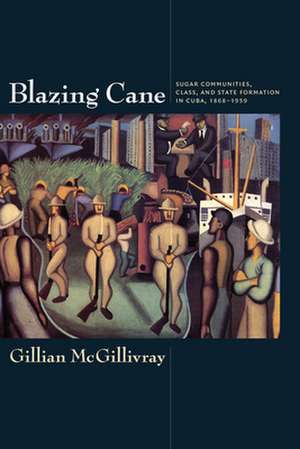
Blazing Cane
Autor Gillian McGillivrayen Limba Engleză Paperback – 23 noi 2009
Recomandăm acest volum ca referință academică esențială pentru nivelul de licență și master în istorie, studii latino-americane sau sociologie politică. În Blazing Cane, Gillian McGillivray propune o analiză riguroasă a modului în care industria zahărului a modelat statul cubanez, de la primul Război de Independență din 1868 până la Revoluția din 1959. Autorul utilizează un element simbolic și practic central — arderea trestiei — pentru a explica mecanismele de negociere și rezistență ale muncitorilor și fermierilor în fața structurilor de putere coloniale și imperiale. Lucrarea extinde cadrul propus de Lords of the Mountain de Louis A., Jr. Perez cu date noi din perioada 1934-1959, oferind o perspectivă mai largă asupra tranziției de la rețelele clientelare de tip caudillo la populismul de la mijlocul secolului al XX-lea. Spre deosebire de alte studii care se concentrează strict pe exploatarea forței de muncă, precum Black Labor, White Sugar, Gillian McGillivray demonstrează cum comunitățile rurale din estul și centrul Cubei au reușit să influențeze politicile de stat, transformând sabotajul economic într-un instrument de dobândire a puterii politice. Structurată cronologic în opt capitole, cartea debutează cu analiza „pactului colonial” și evoluează spre examinarea rezistenței împotriva hegemoniei americane și a dictaturilor locale. Documentația bogată, ce include 35 de fotografii de arhivă și hărți detaliate, susține o narațiune despre modernitate, naționalism și represiune în contextul Războiului Rece. Blazing Cane nu este doar o istorie a unei mărfuri, ci o cronică a formării identității naționale prin prisma conflictului social și economic din câmpurile de trestie.
Preț: 301.27 lei
Carte tipărită la comandă
Livrare economică 05-19 decembrie
Specificații
ISBN-10: 0822345420
Pagini: 416
Ilustrații: 35 photographs, 3 tables, 3 maps, 1 figure
Dimensiuni: 154 x 231 x 27 mm
Greutate: 0.59 kg
Editura: Duke University Press
Locul publicării:United States
V-ar putea interesa
-
 The GunC. J. ChiversPreț: 97.99 lei
 -
 Cuba and the United States: Intervention and Militarism, 1868-1933Jose M. HernándezPreț: 226.12 lei
 -
 In the Kingdom of IceHampton SidesPreț: 124.73 lei
 -
 A Tale of Two PlantationsRichard S. DunnPreț: 335.93 lei
 -
 Churchill Comes of AgeHal KlepakPreț: 190.98 lei
 -
 Ever FaithfulDavid SartoriusPreț: 252.06 lei
 -
 State of AmbiguitySteven PalmerPreț: 273.86 lei
 -
 Troubling FreedomNatasha LightfootPreț: 213.66 lei
 -
 We Dream TogetherAnne EllerPreț: 290.60 lei
 -
 Preț: 287.46 lei
 -
 -39%Preț: 79.63 lei130.34 lei
 -
 The Fast-Changing Arctic: Rethinking Arctic Security for a Warmer WorldBarry Scott ZellenPreț: 310.43 lei
 -
 Working with Children, Young People and FamiliesGraham BrothertonPreț: 396.91 lei
De ce să citești această carte
Considerăm această carte o achiziție valoroasă pentru cercetătorii interesați de istoria Cubei și de dinamica mișcărilor sociale rurale. Cititorul câștigă o înțelegere profundă a modului în care o singură industrie poate dicta parcursul politic al unei națiuni. Este o recomandare solidă pentru cei care doresc să depășească clișeele despre revoluțiile cubaneze, descoperind rădăcinile economice și sociale ale schimbărilor de regim din secolul trecut.
Descriere scurtă
Cuprins
Recenzii
"Gillian McGillivray offers a new and original understanding of the history of Cuba from the mid-nineteenth century to Castros Cuban revolution by reading that history from the perspective of two sugar communities. She stresses the agency of workers in sugar communities, who asserted demands and engaged with, as they helped shape, the rhetoric of the state and state formation. Blazing Cane is an important contribution to modern Cuban history, and a compelling case for the impossibility of separating the local from the national and transnational in any study.--William E. French, author of A Peaceful and Working People: Manners, Morals, and Class Formation in Northern Mexico
We know very little about the lives of sugar workers and their interactions with the managerial personnel of the mills in which they worked. Gillian McGillivray goes deep into documentary archives to address this gap in the historiography of Cuba. By examining Cuban society and politics through two sugar communities, she gives us an insightful look at how ordinary people coped with the complex and uncertain circumstances that surrounded them in the Cuban republic.--Alejandro de la Fuente, author of A Nation for All: Race, Inequality, and Politics in Twentieth-Century Cuba