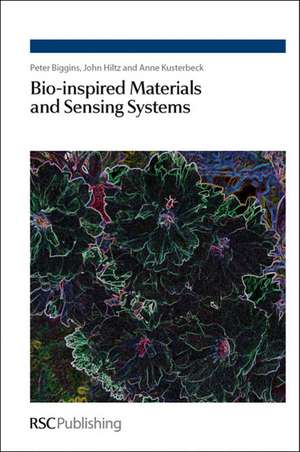
Bio-Inspired Materials and Sensing Systems
Autor Peter D E Biggins, Anne W Kusterbeck, John A Hiltzen Limba Engleză Hardback – 8 feb 2011
Notăm cu interes apariția volumului Bio-Inspired Materials and Sensing Systems, o monografie de nivel academic care se adresează studenților postuniversitari, cercetătorilor și practicienilor din domeniul securității. Această lucrare oferă o perspectivă tehnică asupra modului în care ingineria poate replica soluțiile naturii pentru a dezvolta sisteme capabile să funcționeze în medii extreme, un avantaj critic pentru infrastructurile de apărare moderne. Remarcăm structura riguroasă a celor zece capitole, care ghidează cititorul de la fundamentele bio-inspirației și abordările investiționale, către aspecte hardware precum suprafețele, receptorii și elementele de transducție (Capitolele 6 și 7). Subliniem importanța capitolului dedicat procesării și comunicării, care fundamentează tranziția de la componenta individuală la „sistemul de sisteme”. Cartea funcționează ca o alternativă aplicată la Nature-Inspired Sensors de Hossam Haick pentru cursurile de bio-nanotehnologie sau senzori avansați, având avantajul unei focalizări stricte pe scenarii operaționale de apărare și utilizarea modelelor comportamentale în strategii de căutare și pattern recognition. Spre deosebire de tratatele generale de biomimetică, acest volum propune un model conceptual specific pentru operațiuni autonome, unde detecția chimică și biologică este îmbunătățită prin imitarea strategiilor naturale de supraviețuire. Analiza nu se limitează la replicarea structurilor biologice, ci adaptează descoperirile pentru utilizarea practică în rețele de senzori sofisticați, oferind o bază solidă pentru dezvoltarea tehnologiilor de camuflaj și monitorizare ambientală.
Preț: 627.18 lei
Preț vechi: 704.69 lei
-11%
Carte disponibilă
Livrare economică 05-19 noiembrie
Specificații
ISBN-10: 1849731217
Pagini: 151
Dimensiuni: 161 x 241 x 17 mm
Greutate: 0.37 kg
Editura: RSC Publishing
V-ar putea interesa
-
 -23%Preț: 479.21 lei618.58 lei
 -
 BIOS Instant Notes in BiochemistryDavid HamesPreț: 276.91 lei
 -
 Preț: 267.49 lei
 -
 BIOS Instant Notes in Molecular BiologyAlexander McLennanPreț: 292.06 lei
 -
 Electrochemical Processes BiolLewenstam-9%Preț: 783.79 lei861.32 lei
 -
 TelomerasesLue-9%Preț: 863.45 lei948.84 lei
 -
 Biochemistry and Molecular Biology of Plants 2eBob B. Buchanan-23%Preț: 770.46 lei1000.60 lei
 -
 Principles of EcotoxicologyC. H. Walker-8%Preț: 579.46 lei629.86 lei
 -
 -18%Preț: 1269.57 lei1548.26 lei
 -
 Cysteine: Biosynthesis, Chemical Structure & ToxicityFyodor V Chorkina-27%Preț: 889.95 lei1211.29 lei
 -
 Essentials of BiochemistryHerbert J. FrommPreț: 414.64 lei
De ce să citești această carte
Recomandăm această carte profesioniștilor care au nevoie de o înțelegere clară a modului în care biologia poate optimiza sistemele de apărare. Cititorul câștigă acces la metodologii de implementare a senzorilor în rețele complexe și strategii de detecție bio-inspirate pentru amenințări chimice. Este o resursă esențială pentru a înțelege viitorul sistemelor autonome și al materialelor inteligente în contextul securității globale.
Despre autor
Volumul reunește expertiza a trei cercetători de prestigiu: Peter D E Biggins, Anne Kusterbeck și John A Hiltz. Anne Kusterbeck este recunoscută pentru activitatea sa în cadrul Laboratorului de Cercetare Navală al SUA, fiind o autoritate în dezvoltarea biosenzorilor pentru detectarea explozibililor și a agenților patogeni. Contribuția autorilor îmbină rigoarea chimiei analitice cu ingineria sistemelor, reflectând experiența lor vastă în proiecte de cercetare finanțate de instituții de apărare, unde au transformat conceptele biologice în prototipuri funcționale pentru mediul militar.