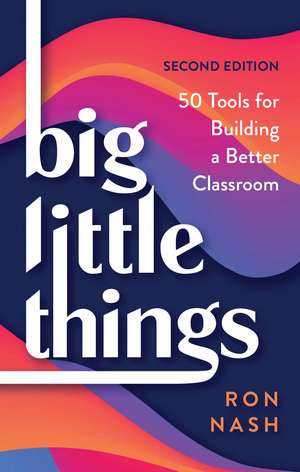
Big Little Things: 50 Tools for Building a Better Classroom
Autor Ron Nashen Limba Engleză Hardback – 17 sep 2024
| Toate formatele și edițiile | Preț | Express |
|---|---|---|
| Paperback (1) | 164.50 lei 22-36 zile | +15.97 lei 5-11 zile |
| Bloomsbury Publishing – 2 sep 2024 | 164.50 lei 22-36 zile | +15.97 lei 5-11 zile |
| Hardback (1) | 467.60 lei 43-57 zile | |
| Bloomsbury Publishing – 17 sep 2024 | 467.60 lei 43-57 zile |
Preț: 467.60 lei
Preț vechi: 649.66 lei
-28%
Puncte Express: 701
Preț estimativ în valută:
82.78€ • 96.39$ • 71.91£
82.78€ • 96.39$ • 71.91£
Carte tipărită la comandă
Livrare economică 23 februarie-09 martie
Preluare comenzi: 021 569.72.76
Specificații
ISBN-13: 9781475874655
ISBN-10: 1475874650
Pagini: 244
Ilustrații: 16 BW Illustrations
Dimensiuni: 158 x 235 x 19 mm
Greutate: 0.53 kg
Ediția:2nd Edition
Editura: Bloomsbury Publishing
Colecția Rowman & Littlefield Publishers
Locul publicării:New York, United States
ISBN-10: 1475874650
Pagini: 244
Ilustrații: 16 BW Illustrations
Dimensiuni: 158 x 235 x 19 mm
Greutate: 0.53 kg
Ediția:2nd Edition
Editura: Bloomsbury Publishing
Colecția Rowman & Littlefield Publishers
Locul publicării:New York, United States
Cuprins
Acknowledgements
Introduction
Chapter 1: Easy Doesn't Do It
Chapter 2: Providing Choice
Chapter 3: "But I told them!"
Chapter 4: Congruence
Chapter 5: The Fear Factor
Chapter 6: Reassuring Redundancies
Chapter 7: Everyone in the [Learning] Pool
Chapter 8: The Lighter Side
Chapter 9: "You in the yellow shirt!"
Chapter 10: Trigger the Calm
Chapter 11: Model and Teach Effective Listening Skills
Chapter 12: The Best is [Often] Silence
Chapter 13: Press and Release
Chapter 14: Kids Gotta Move
Chapter 15: Perma Pairs
Chapter 16: Choosing Partners
Chapter 17: Priming
Chapter 18: Whole-Class Discussions
Chapter 19: Have at It!
Chapter 20: Process-Related Dipstick Checks
Chapter 21: Reflective Learners
Chapter 22: Purposeful and Thoughtful Praise
Chapter 23: The Smooth Shifting of Transitional Gears
Chapter 24: Avoid Unnecessary Decisions
Chapter 25: Transfer Skills to the Collaborative Setting
Chapter 26: Provide Easy Access to Complex Tasks
Chapter 27: The First Few Minutes
Chapter 28: Last Impressions
Chapter 29: That's the Plan
Chapter 30: If the Font Fits, Share It
Chapter 31: Visuals Always Win (Make that work for you!)
Chapter 32: Attention to Voice
Chapter 33: Arms Control
Chapter 34: Hitting the Right Notes
Chapter 35: As You Were
Chapter 36: Bringing Them Back
Chapter 37: One-at-a-Time Directions
Chapter 38: Avoid Competing with the Lawnmower
Chapter 39: Teach Students to Paraphrase for Understanding
Chapter 40: Two-Minute Drill
Chapter 41: Connecting with Stories
Chapter 42: Getting Better at Getting Better
Chapter 43: Tolerate Ambiguity and Encourage Questions
Chapter 44: Harness the Power of Novelty
Chapter 45: Physical and Mental State Changes
Chapter 46: Avoid the Blame Game
Chapter 47: Those Too Busy to Complain
Chapter 48: The Extra Mile
Chapter 49: The Power of Collaboration
Chapter 50: Looking Back at People Who Are Always Looking Forward
Afterword
References
Index
Introduction
Chapter 1: Easy Doesn't Do It
Chapter 2: Providing Choice
Chapter 3: "But I told them!"
Chapter 4: Congruence
Chapter 5: The Fear Factor
Chapter 6: Reassuring Redundancies
Chapter 7: Everyone in the [Learning] Pool
Chapter 8: The Lighter Side
Chapter 9: "You in the yellow shirt!"
Chapter 10: Trigger the Calm
Chapter 11: Model and Teach Effective Listening Skills
Chapter 12: The Best is [Often] Silence
Chapter 13: Press and Release
Chapter 14: Kids Gotta Move
Chapter 15: Perma Pairs
Chapter 16: Choosing Partners
Chapter 17: Priming
Chapter 18: Whole-Class Discussions
Chapter 19: Have at It!
Chapter 20: Process-Related Dipstick Checks
Chapter 21: Reflective Learners
Chapter 22: Purposeful and Thoughtful Praise
Chapter 23: The Smooth Shifting of Transitional Gears
Chapter 24: Avoid Unnecessary Decisions
Chapter 25: Transfer Skills to the Collaborative Setting
Chapter 26: Provide Easy Access to Complex Tasks
Chapter 27: The First Few Minutes
Chapter 28: Last Impressions
Chapter 29: That's the Plan
Chapter 30: If the Font Fits, Share It
Chapter 31: Visuals Always Win (Make that work for you!)
Chapter 32: Attention to Voice
Chapter 33: Arms Control
Chapter 34: Hitting the Right Notes
Chapter 35: As You Were
Chapter 36: Bringing Them Back
Chapter 37: One-at-a-Time Directions
Chapter 38: Avoid Competing with the Lawnmower
Chapter 39: Teach Students to Paraphrase for Understanding
Chapter 40: Two-Minute Drill
Chapter 41: Connecting with Stories
Chapter 42: Getting Better at Getting Better
Chapter 43: Tolerate Ambiguity and Encourage Questions
Chapter 44: Harness the Power of Novelty
Chapter 45: Physical and Mental State Changes
Chapter 46: Avoid the Blame Game
Chapter 47: Those Too Busy to Complain
Chapter 48: The Extra Mile
Chapter 49: The Power of Collaboration
Chapter 50: Looking Back at People Who Are Always Looking Forward
Afterword
References
Index
Recenzii
In "Big Little Things: 50 Tools for Building Better Classrooms," Ron Nash delves into a transformative approach to education that empowers students as active participants in their own learning journey. Through insightful analysis and practical strategies, this book advocates for a paradigm shift in teaching where students take center stage and teachers serve as facilitators of knowledge and growth.
One of the book's key tenets is the importance of providing students with the necessary tools to support their learning. This involves more than just disseminating information; it's about equipping students with the skills and resources they need to thrive academically and beyond. From shifting the physical layout of the classroom to providing clear success criteria for tasks, every detail is meticulously crafted to enhance student engagement and understanding.
Central to the student-led classroom model is the cultivation of effective communication skills among students. By fostering an environment where collaboration and dialogue are encouraged, students not only deepen their understanding of the material but also develop essential interpersonal skills crucial for success in the real world.
However, the book also acknowledges the diverse needs of teachers, recognizing that some may be more inclined to take risks while others require additional support and guidance. It emphasizes the importance of providing teachers with the resources and professional development necessary to navigate the challenges of implementing a student-led approach effectively.
Moreover, "Big Little Things" underscores the significance of building strong relationships within the classroom community. Teachers are encouraged to foster connections with their students and promote peer-to-peer relationships, creating a supportive environment where students feel valued and empowered. This includes granting students autonomy to choose their working partners and allowing flexibility for movement within the classroom as needed.
Crucially, the book prompts educators to consider the reflective nature of their students. Are they actively engaged in assessing their own learning progress? By encouraging reflection and self-assessment, teachers can help students develop metacognitive skills that are essential for lifelong learning and success.
In essence, "Big Little Things" challenges traditional notions of education and offers a compelling vision for a more inclusive, engaging, and effective approach to teaching and learning. It's a must-read for educators committed to unlocking the full potential of every student while recognizing and supporting the diverse needs of both teachers and learners.
Big Little Things was an incredible resource book for our novice teachers! The first edition helped strengthen our instruction and our belief that all students thrive in a positive learning environment. It will continue to be an integral part of our new teacher program. I can't wait to see how their experience will be enhanced with ten more tools added in this new edition!
Big Little Things: 50 Tools for Building a Better Classroom, 2nd Edition by Ron Nash is a must-have companion for educators at any stage of their professional journey. With its engaging stories, practical tips and actionable advice, this book highlights the transformative potential of small actions. It reminds us that paying attention to the "little things" can truly make a "big" difference. By focusing on the "little things", educators lay the groundwork for building meaningful relationships and creating engaging classroom environments that spark curiosity. In the end, it's all about fostering a sense of community where students are empowered to face challenges as a team and embrace collaborative learning opportunities and teachers can feel like they are making a difference one "little thing" at a time.
One of the book's key tenets is the importance of providing students with the necessary tools to support their learning. This involves more than just disseminating information; it's about equipping students with the skills and resources they need to thrive academically and beyond. From shifting the physical layout of the classroom to providing clear success criteria for tasks, every detail is meticulously crafted to enhance student engagement and understanding.
Central to the student-led classroom model is the cultivation of effective communication skills among students. By fostering an environment where collaboration and dialogue are encouraged, students not only deepen their understanding of the material but also develop essential interpersonal skills crucial for success in the real world.
However, the book also acknowledges the diverse needs of teachers, recognizing that some may be more inclined to take risks while others require additional support and guidance. It emphasizes the importance of providing teachers with the resources and professional development necessary to navigate the challenges of implementing a student-led approach effectively.
Moreover, "Big Little Things" underscores the significance of building strong relationships within the classroom community. Teachers are encouraged to foster connections with their students and promote peer-to-peer relationships, creating a supportive environment where students feel valued and empowered. This includes granting students autonomy to choose their working partners and allowing flexibility for movement within the classroom as needed.
Crucially, the book prompts educators to consider the reflective nature of their students. Are they actively engaged in assessing their own learning progress? By encouraging reflection and self-assessment, teachers can help students develop metacognitive skills that are essential for lifelong learning and success.
In essence, "Big Little Things" challenges traditional notions of education and offers a compelling vision for a more inclusive, engaging, and effective approach to teaching and learning. It's a must-read for educators committed to unlocking the full potential of every student while recognizing and supporting the diverse needs of both teachers and learners.
Big Little Things was an incredible resource book for our novice teachers! The first edition helped strengthen our instruction and our belief that all students thrive in a positive learning environment. It will continue to be an integral part of our new teacher program. I can't wait to see how their experience will be enhanced with ten more tools added in this new edition!
Big Little Things: 50 Tools for Building a Better Classroom, 2nd Edition by Ron Nash is a must-have companion for educators at any stage of their professional journey. With its engaging stories, practical tips and actionable advice, this book highlights the transformative potential of small actions. It reminds us that paying attention to the "little things" can truly make a "big" difference. By focusing on the "little things", educators lay the groundwork for building meaningful relationships and creating engaging classroom environments that spark curiosity. In the end, it's all about fostering a sense of community where students are empowered to face challenges as a team and embrace collaborative learning opportunities and teachers can feel like they are making a difference one "little thing" at a time.