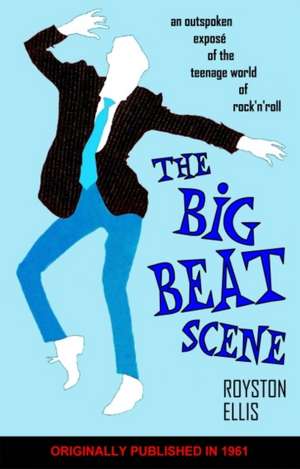
Big Beat Scene: An Outspoken Exposé of the Teenage World of Rock'n'roll
Autor Royston Ellisen Limba Engleză Paperback – 8 iun 2010
Preț: 109.18 lei
Preț vechi: 131.22 lei
-17%
Puncte Express: 164
Carte disponibilă
Livrare economică 02-16 noiembrie
Livrare prin curier în România Termenul estimat este afișat lângă disponibilitate.
Transport gratuit de la 400.00 lei Plată online sau ramburs, în funcție de opțiunile comenzii.
Retur gratuit în 14 zile Comandă securizată și suport în română.
Specificații
ISBN-13: 9780956267917
ISBN-10: 0956267912
Pagini: 184
Ilustrații: b/w photos
Dimensiuni: 235 x 155 x 13 mm
Greutate: 0.36 kg
Editura: Music Mentor Books
Colecția Music Mentor Books
Locul publicării:York, United Kingdom
ISBN-10: 0956267912
Pagini: 184
Ilustrații: b/w photos
Dimensiuni: 235 x 155 x 13 mm
Greutate: 0.36 kg
Editura: Music Mentor Books
Colecția Music Mentor Books
Locul publicării:York, United Kingdom
V-ar putea interesa
-
 The Rock MusicianTony SchermanPreț: 130.80 lei
 -
 U2Bill FlanaganPreț: 178.27 lei
 -
 Hotel CaliforniaBarney HoskynsPreț: 218.77 lei
 -
 Preț: 135.28 lei
 -
 -27%Preț: 691.46 lei947.21 lei
 -
 Preț: 225.29 lei
 -
 Dylan Redeemed: From Highway 61 to SavedStephen H. Webb-42%Preț: 129.05 lei221.69 lei
 -
 Grateful Dead GearBlair Jackson-18%Preț: 233.90 lei285.46 lei
 -
 Why Don't We Do It In The Road?John AstleyPreț: 101.25 lei
 -
 Cliff Richard & the Shadows: A Rock & Roll MemoirRoyston Ellis-15%Preț: 99.54 lei117.24 lei
 -
 Preț: 281.63 lei
 -
 The Don McLean StoryAlan HowardPreț: 176.76 lei
 -
 Lyrics 1964-2011Paul SimonPreț: 229.33 lei
 -
 A Little Bit Me, a Little Bit YouFred VelezPreț: 134.63 lei
 -
 Bon Jovi: America's Ultimate BandMargaret Olson-20%Preț: 222.94 lei277.42 lei
 -
 Preț: 100.30 lei
 -
 Beatles: The Press Reports 1961-1970W Fraser SandercombePreț: 135.96 lei
Recenzii
Returning to 1961 from 2010 is not everybody's idea of a magical mystery tour. If you want to return to those teenage years, you would not do better than to get a copy of this blatant dose of nostalgia, written before The Beatling about that overtook everything in a world rapidly changing – and many say not for the better.
No hindsight here, just the way it was when the post-war teenagers found their own brand of rock and roll music and dance. The current computer instant age leaves nothing to the imagination. Swear words are commonplace: you can live with who you like and you can do it without worrying too much about paying the rent and rates, or for the baby born out of wedlock.
In his introduction, Royston Ellis wrote, in 1961: 'This is not a fan magazine, glorifying the stars to win them new admirers. I have sworn no acts of secrecy obliging me to gloss over the sordid side of the Big Beat story.'
Remember the original rather crude coffee bars, the local hops and local bands with strange names, the Gossip, the Coke and the Kup Cakes, the Teds with pointed toe shoes and velvet-collared long coats – the intimidation of the National Service, teenagers far from home and ready for anything after a pint or seven.
This was the mid-1950s when rock and roll was taking its grip on the country, the world and Britain had still not come to terms with the results of a devastating second world war and a period of austerity and hardship that cannot be described and cannot begin to be compared with modern-day 'hardships'.
Big names included Bill Haley, Elvis Presley and Tommy Steele. Some names came and went and proved to have no lasting talent but anyone with the confidence could – and did – get up and perform as amateurs and then go on to form professional pop groups.
The book is not all doom and gloom: in fact, it is an enlightening and humorous insight with plenty of names and behind-the-scenes glimpses of what the teenagers did to get where they did. From skiffle, makeshift venues and bare necessities to amplified music, expensive instruments, stage lighting and effects, never a word is wasted. The book is written as if the reader is joining in a conversation about, and with, the artists.
David Parker, The Beat (July 2010)
By 1961 it was easy to read about rock'n'roll and popular music... biographical information and critical opinons were around, but no one had written about the music until THE BIG BEAT SCENE by Royston Ellis in 1961. The 124-page book was only a cheap, slim paperback, but it told the story of rock'n'roll – and British rock'n'roll at that. I like the fact that the book contains more about Terry Dene than it does Gene Vincent... The new edition looks much better and much fuller than the original, having both a Foreword and Afterword from the author... It's great to have it around again.
Now Dig This (August 2010)
First published in 1961, The Big Beat Scene is a fascinating overview of the years 1956-60, the birth of the British teenager. Written before the emergence of The Beatles, this is a rare first-hand insight into the evolution of the British music scene through skiffle, jazz and rock & roll and gives a flavour of the social climate of that time. The scene is set with the impact of Americans James Dean, Bill Haley, Elvis Presley, Buddy Holly, Eddie Cochran, etc. and even instrumentalists like The Champs, Johnny & The Hurricanes and Duane Eddy are given their due. As rock & roll and skiffle start to sweep Britain then local acts such as The Vipers and Lonnie Donegan get a mention as well as an intriguing description of the emergence of Tommy Steele.
The TV shows of the day, Six-Five Special, Oh Boy!, Wham! and Boy Meets Girl, are covered and there is plenty on the making of both Cliff Richard and The Drifters/Shadows who the author had used to provide live music to accompany his "rocketry" (rock & roll poetry). The bigger stars such as Adam Faith and Billy Fury are included but the lesser lights from the Larry Parnes stable and many others are also referenced. The author clearly had a healthy mistrust of the information spread around by publicists and is not afraid to print his own character assessment of the artists he encountered. This is one of the most absorbing aspects of the book, but it would be unfair to print only one example here so I'll keep it impersonal and just quote what he had to say about instrumentals: 'Instrumentals have more lasting power than vocals: words are easily remembered sung in a certain way and can soon get tedious. Instrumental numbers lack the visual image which lyrics provide, and are therefore harder to remember. This way, each time an instrumental record is played, it still has a fresh appeal.' That's quite some appreciation from a writer and poet.
There aren't that many books covering this era and this one is unique as it was written without the benefit of hindsight. The author has added a foreword, an addendum and reinstated some censored text plus twelve pages of photos, but otherwise it's all as it was presented in 1961. What a great idea, and here's another: how about re‑publishing two of his other early works – Driftin' With Cliff Richard and The Shadows By Themselves, It could even be done in one combined edition. The timing is right because their fans have little else to spend their money on now that the Final Reunion Tour is over.
Alan Taylor, Pipeline (Autumn 2010)
They always say that youth is wasted on the young. Not always, as this timely re-issue of a teenage memoir shows.
This paperback tells the story of the birth of beat music and the first flowering of British pop that led to the golden age of The Beatles.
At the age of eighteen, author Royston Ellis, apprentice poet and performance artist, headed for Soho and met up with the young movers and shakers that were busy revolutionising music and culture. This long out-of-print memoir tells the story of the author's adventures in London's bohemian subculture.
Ellis rubs shoulders with Cliff Richard, Lonnie Donegan and the under-rated Billy Fury, who were all just starting out on the road to fame. On a trip to Liverpool, he met up with pre-fame George Harrison John Lennon and Paul McCartney. Royston Ellis performed two gigs with them. He provided the poetry and they provided the music. At that time they were called The Beetles, but during dinner one day he suggested substitutng an 'a' for an 'e' and the rest as they say is history.
Whilst suggesting that their name should reflect the neat style of music the boys were playing, he had burnt the chicken pie they were about to eat and months later, when asked how they got their name, John Lennon mysteriously referred to 'a man appeared on a flaming pie and said to them from this day on you are Beatles with an "a".' Paul McCartney recently called an album of his 'Flaming Pie', so the beat goes on. The book also contains some archive photographs of many of the artists of the era.
This is a charming and warm book full of the youthful days of promise.
Seamus Doran, euVue (September 2010)
Fascinating reading on several levels, not least of which was the cultural side of the times.
Davy Peckett, New Gandy Dancer (November 2010)
No hindsight here, just the way it was when the post-war teenagers found their own brand of rock and roll music and dance. The current computer instant age leaves nothing to the imagination. Swear words are commonplace: you can live with who you like and you can do it without worrying too much about paying the rent and rates, or for the baby born out of wedlock.
In his introduction, Royston Ellis wrote, in 1961: 'This is not a fan magazine, glorifying the stars to win them new admirers. I have sworn no acts of secrecy obliging me to gloss over the sordid side of the Big Beat story.'
Remember the original rather crude coffee bars, the local hops and local bands with strange names, the Gossip, the Coke and the Kup Cakes, the Teds with pointed toe shoes and velvet-collared long coats – the intimidation of the National Service, teenagers far from home and ready for anything after a pint or seven.
This was the mid-1950s when rock and roll was taking its grip on the country, the world and Britain had still not come to terms with the results of a devastating second world war and a period of austerity and hardship that cannot be described and cannot begin to be compared with modern-day 'hardships'.
Big names included Bill Haley, Elvis Presley and Tommy Steele. Some names came and went and proved to have no lasting talent but anyone with the confidence could – and did – get up and perform as amateurs and then go on to form professional pop groups.
The book is not all doom and gloom: in fact, it is an enlightening and humorous insight with plenty of names and behind-the-scenes glimpses of what the teenagers did to get where they did. From skiffle, makeshift venues and bare necessities to amplified music, expensive instruments, stage lighting and effects, never a word is wasted. The book is written as if the reader is joining in a conversation about, and with, the artists.
David Parker, The Beat (July 2010)
By 1961 it was easy to read about rock'n'roll and popular music... biographical information and critical opinons were around, but no one had written about the music until THE BIG BEAT SCENE by Royston Ellis in 1961. The 124-page book was only a cheap, slim paperback, but it told the story of rock'n'roll – and British rock'n'roll at that. I like the fact that the book contains more about Terry Dene than it does Gene Vincent... The new edition looks much better and much fuller than the original, having both a Foreword and Afterword from the author... It's great to have it around again.
Now Dig This (August 2010)
First published in 1961, The Big Beat Scene is a fascinating overview of the years 1956-60, the birth of the British teenager. Written before the emergence of The Beatles, this is a rare first-hand insight into the evolution of the British music scene through skiffle, jazz and rock & roll and gives a flavour of the social climate of that time. The scene is set with the impact of Americans James Dean, Bill Haley, Elvis Presley, Buddy Holly, Eddie Cochran, etc. and even instrumentalists like The Champs, Johnny & The Hurricanes and Duane Eddy are given their due. As rock & roll and skiffle start to sweep Britain then local acts such as The Vipers and Lonnie Donegan get a mention as well as an intriguing description of the emergence of Tommy Steele.
The TV shows of the day, Six-Five Special, Oh Boy!, Wham! and Boy Meets Girl, are covered and there is plenty on the making of both Cliff Richard and The Drifters/Shadows who the author had used to provide live music to accompany his "rocketry" (rock & roll poetry). The bigger stars such as Adam Faith and Billy Fury are included but the lesser lights from the Larry Parnes stable and many others are also referenced. The author clearly had a healthy mistrust of the information spread around by publicists and is not afraid to print his own character assessment of the artists he encountered. This is one of the most absorbing aspects of the book, but it would be unfair to print only one example here so I'll keep it impersonal and just quote what he had to say about instrumentals: 'Instrumentals have more lasting power than vocals: words are easily remembered sung in a certain way and can soon get tedious. Instrumental numbers lack the visual image which lyrics provide, and are therefore harder to remember. This way, each time an instrumental record is played, it still has a fresh appeal.' That's quite some appreciation from a writer and poet.
There aren't that many books covering this era and this one is unique as it was written without the benefit of hindsight. The author has added a foreword, an addendum and reinstated some censored text plus twelve pages of photos, but otherwise it's all as it was presented in 1961. What a great idea, and here's another: how about re‑publishing two of his other early works – Driftin' With Cliff Richard and The Shadows By Themselves, It could even be done in one combined edition. The timing is right because their fans have little else to spend their money on now that the Final Reunion Tour is over.
Alan Taylor, Pipeline (Autumn 2010)
They always say that youth is wasted on the young. Not always, as this timely re-issue of a teenage memoir shows.
This paperback tells the story of the birth of beat music and the first flowering of British pop that led to the golden age of The Beatles.
At the age of eighteen, author Royston Ellis, apprentice poet and performance artist, headed for Soho and met up with the young movers and shakers that were busy revolutionising music and culture. This long out-of-print memoir tells the story of the author's adventures in London's bohemian subculture.
Ellis rubs shoulders with Cliff Richard, Lonnie Donegan and the under-rated Billy Fury, who were all just starting out on the road to fame. On a trip to Liverpool, he met up with pre-fame George Harrison John Lennon and Paul McCartney. Royston Ellis performed two gigs with them. He provided the poetry and they provided the music. At that time they were called The Beetles, but during dinner one day he suggested substitutng an 'a' for an 'e' and the rest as they say is history.
Whilst suggesting that their name should reflect the neat style of music the boys were playing, he had burnt the chicken pie they were about to eat and months later, when asked how they got their name, John Lennon mysteriously referred to 'a man appeared on a flaming pie and said to them from this day on you are Beatles with an "a".' Paul McCartney recently called an album of his 'Flaming Pie', so the beat goes on. The book also contains some archive photographs of many of the artists of the era.
This is a charming and warm book full of the youthful days of promise.
Seamus Doran, euVue (September 2010)
Fascinating reading on several levels, not least of which was the cultural side of the times.
Davy Peckett, New Gandy Dancer (November 2010)