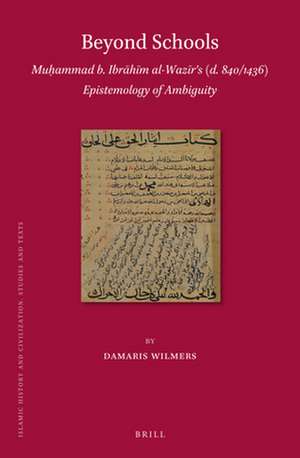
Beyond Schools: Beyond Schools, cartea 154
Autor Damaris Wilmersen Limba Engleză Hardback – 20 sep 2018
Preț: 997.46 lei
Preț vechi: 1295.39 lei
-23%
Puncte Express: 1496
Carte tipărită la comandă
Livrare economică 12-26 noiembrie
Livrare prin curier în România Termenul estimat este afișat lângă disponibilitate.
Transport gratuit pentru acest produs Plată online sau ramburs, în funcție de opțiunile comenzii.
Retur gratuit în 14 zile Comandă securizată și suport în română.
Specificații
ISBN-13: 9789004378353
ISBN-10: 9004378359
Pagini: 408
Dimensiuni: 155 x 234 x 24 mm
Greutate: 0.74 kg
Ediția:Approx. 350 Pp., 3 FC Illus. edition
Editura: Koninklijke Brill Bv
Colecția Beyond Schools
Seriile Beyond Schools, Brill
ISBN-10: 9004378359
Pagini: 408
Dimensiuni: 155 x 234 x 24 mm
Greutate: 0.74 kg
Ediția:Approx. 350 Pp., 3 FC Illus. edition
Editura: Koninklijke Brill Bv
Colecția Beyond Schools
Seriile Beyond Schools, Brill
V-ar putea interesa
-
 The Ancient Near East: A Very Short IntroductionAmanda H. PodanyPreț: 69.55 lei
 -
 The Military Balance in the Middle EastAnthony H. Cordesman-29%Preț: 383.62 lei537.70 lei
 -
 The Struggle for Jerusalem's Holy PlacesWendy Pullan-15%Preț: 468.59 lei551.28 lei
 -
 -18%Preț: 1261.45 lei1538.35 lei
 -
 The Life of Muhammad: Al-Waqidi's Kitab al-MaghaziRizwi Faizer-15%Preț: 470.21 lei553.18 lei
 -
 On TimeOn BarakPreț: 242.19 lei
 -
 CairoMax RodenbeckPreț: 108.95 lei
 -
 The Making of the Tunisian RevolutionNouri Gana-16%Preț: 210.06 lei249.92 lei
 -
 Preț: 440.68 lei
 -
 Our Harsh LogicBreaking The SilencePreț: 147.46 lei
 -
 Jews, Antisemitism, and the Middle EastMichael Curtis-18%Preț: 1115.65 lei1360.55 lei
 -
 Between Two WorldsZainab SalbiPreț: 151.49 lei
 -
 Beyond the Two RiversAida KouyoumjianPreț: 87.53 lei
 -
 -18%Preț: 106.65 lei129.69 lei
 -
 Warfare and Poetry in the Middle EastHugh Kennedy-33%Preț: 837.59 lei1248.51 lei
 -
 -22%Preț: 192.78 lei247.63 lei
 -
 The Armenian GenocideWolfgang Gust-23%Preț: 1023.49 lei1329.20 lei
 -
 Putin's New Order in the Middle EastTalal Nizameddin-18%Preț: 357.06 lei433.95 lei
Notă biografică
Damaris Wilmers, Ph.D. (2015), Georg-August-Universität Göttingen, works at the National Records and Archives Authority in Muscat. Her research and publication has focused on theological and legal diversity in Yemen. She has recently developed an interest in Oman´s intellectual history.
Cuprins
Acknowledgements
Introduction
1 Life and Intellectual Environment of Ibn al-Wazīr and Ibn al-Murtaḍā1Muḥammad b. Ibrāhīm b. al-Wazīr’s (d. 840/1436) Biography2Aḥmad b. Yaḥyā b. al-Murtaḍā (d. 840/1436) as a Scholar3Conclusion
2 Ibn al-Wazīr’s Works1Al-Amr bi-l-ʿuzla2Al-ʿAwāṣim wa-l-awāṣim3Al-Āyāt al-mubīnāt4Āyāt al-aḥkām al-sharʿiyya5Al-Burhān al-qāṭiʿ fī ithbāt al-ṣāniʿ6Al-Ḥusām al-mashhūr7Al-Istiẓhār bi-l-dalīl al-samʿī fī ʿadam wuqūʿ al-ṭalāq al-bidʿī8Īthār al-ḥaqq ʿalā l-khalq9Kitāb al-Qawāʿid10Kitāb fī l-tafsīr11Majmaʿ al-ḥaqāʾiq wa-l-raqāʾiq fī mamādiḥ rabb al-khalāʾiq12Manẓūma shiʿriyya fī uṣūl al-fiqh13Masāʾil arbaʿa tataʿallaq bi-l-muqallad wa-l-mustaftī14Masʾalat ikhtilāf al-Muʿtazila wa-l-Ashʿariyya fī ḥamd Allāh ʿalā l-īmān15Masāʾil mustakhrajāt16Masāʾil shāfiyāt17Masāʾil sharīfa18Mukhtaṣar mufīd fī ʿulūm al-ḥadīth19Muthīr al-aḥzān fī wadāʿ shahr Ramaḍān20Nuṣrat al-aʿyān21Qubūl al-bushrā bi-l-taysīr lil-yusrā22Al-Rawḍ al-bāsim23Al-Taʾdīb al-malakūtī24Taḥrīr al-kalām fī masʾalat al-ruʾya25Takhṣīṣ āyāt al-jumʿa26Tanqīḥ al-anẓār fī maʿrifat ʿulūm al-āthār27Tarjīḥ asālīb al-Qurʾān ʿalā asālīb al-Yūnān28Additional Works Ascribed to Ibn al-Wazīr
3 Central Concepts of Ibn al-Wazīr’s Epistemological Thought1Definitions of Knowledge2Definitions of the Means to Possess Knowledge3The Proof of God’s Existence (ithbāt al-ṣāniʿ)4The Argument from the Absence of Evidence (al-istidlāl bi-l-ʿadam)5Conclusion
4 Central Concepts of Ibn al-Wazīr’s Theological Thought1God’s Wisdom (ḥikma) as the Key to Harmonization2Harmonized Doctrine: God’s Names (asmāʾ) and Attributes (ṣifāt)3Harmonized Doctrine: God’s Will (irāda)4Harmonized Doctrine: Human Actions (afʿāl al-ʿibād) and Free Will (ikhtiyār)5Conclusion
5 The Structure of Legal Authority in Ibn al-Wazīr’s Thought1The Theory of Infallibilism and the Probability of Ijtihād2The Possibility of Ijtihād and the Existence of Mujtahids3Taqlīd and Concepts of Following4The Requirements (shurūṭ) for Ijtihād5Divisibility (tajazzuʾ) of Ijtihād and the Discerning Student (al-ṭālib al-mumayyiz)6Extrapolation of Principles (takhrīj)7The Muqallid’s Commitment to a Legal School (iltizām)8Conclusion
6 Conclusion
BibliographyIndex of Pre-Modern AuthorsIndex of Geographical NamesIndex of Pre-Modern BooksIndex of Quran CitationsIndex of Arabic Terms
Introduction
1 Life and Intellectual Environment of Ibn al-Wazīr and Ibn al-Murtaḍā1Muḥammad b. Ibrāhīm b. al-Wazīr’s (d. 840/1436) Biography2Aḥmad b. Yaḥyā b. al-Murtaḍā (d. 840/1436) as a Scholar3Conclusion
2 Ibn al-Wazīr’s Works1Al-Amr bi-l-ʿuzla2Al-ʿAwāṣim wa-l-awāṣim3Al-Āyāt al-mubīnāt4Āyāt al-aḥkām al-sharʿiyya5Al-Burhān al-qāṭiʿ fī ithbāt al-ṣāniʿ6Al-Ḥusām al-mashhūr7Al-Istiẓhār bi-l-dalīl al-samʿī fī ʿadam wuqūʿ al-ṭalāq al-bidʿī8Īthār al-ḥaqq ʿalā l-khalq9Kitāb al-Qawāʿid10Kitāb fī l-tafsīr11Majmaʿ al-ḥaqāʾiq wa-l-raqāʾiq fī mamādiḥ rabb al-khalāʾiq12Manẓūma shiʿriyya fī uṣūl al-fiqh13Masāʾil arbaʿa tataʿallaq bi-l-muqallad wa-l-mustaftī14Masʾalat ikhtilāf al-Muʿtazila wa-l-Ashʿariyya fī ḥamd Allāh ʿalā l-īmān15Masāʾil mustakhrajāt16Masāʾil shāfiyāt17Masāʾil sharīfa18Mukhtaṣar mufīd fī ʿulūm al-ḥadīth19Muthīr al-aḥzān fī wadāʿ shahr Ramaḍān20Nuṣrat al-aʿyān21Qubūl al-bushrā bi-l-taysīr lil-yusrā22Al-Rawḍ al-bāsim23Al-Taʾdīb al-malakūtī24Taḥrīr al-kalām fī masʾalat al-ruʾya25Takhṣīṣ āyāt al-jumʿa26Tanqīḥ al-anẓār fī maʿrifat ʿulūm al-āthār27Tarjīḥ asālīb al-Qurʾān ʿalā asālīb al-Yūnān28Additional Works Ascribed to Ibn al-Wazīr
3 Central Concepts of Ibn al-Wazīr’s Epistemological Thought1Definitions of Knowledge2Definitions of the Means to Possess Knowledge3The Proof of God’s Existence (ithbāt al-ṣāniʿ)4The Argument from the Absence of Evidence (al-istidlāl bi-l-ʿadam)5Conclusion
4 Central Concepts of Ibn al-Wazīr’s Theological Thought1God’s Wisdom (ḥikma) as the Key to Harmonization2Harmonized Doctrine: God’s Names (asmāʾ) and Attributes (ṣifāt)3Harmonized Doctrine: God’s Will (irāda)4Harmonized Doctrine: Human Actions (afʿāl al-ʿibād) and Free Will (ikhtiyār)5Conclusion
5 The Structure of Legal Authority in Ibn al-Wazīr’s Thought1The Theory of Infallibilism and the Probability of Ijtihād2The Possibility of Ijtihād and the Existence of Mujtahids3Taqlīd and Concepts of Following4The Requirements (shurūṭ) for Ijtihād5Divisibility (tajazzuʾ) of Ijtihād and the Discerning Student (al-ṭālib al-mumayyiz)6Extrapolation of Principles (takhrīj)7The Muqallid’s Commitment to a Legal School (iltizām)8Conclusion
6 Conclusion
BibliographyIndex of Pre-Modern AuthorsIndex of Geographical NamesIndex of Pre-Modern BooksIndex of Quran CitationsIndex of Arabic Terms