Cantitate/Preț
Produs

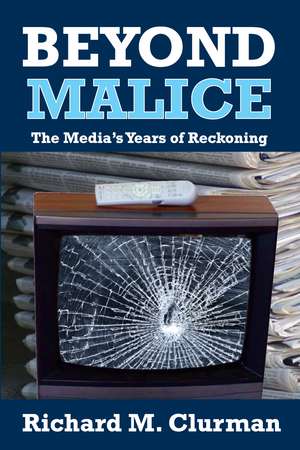
Beyond Malice: The Media's Years of Reckoning

Editat de Richard M. Clurman
en Limba Engleză Paperback – 15 aug 2011

Considerăm că Beyond Malice reprezintă o resursă fundamentală pentru studenții la jurnalism, cercetătorii în științe politice și practicienii din media care doresc să înțeleagă rădăcinile crizei de încredere în instituțiile de presă contemporane. Richard M. Clurman, din postura de editor cu experiență, semnalează momentul critic al anilor '80, când puterea mass-media a început să fie contestată nu doar de guvern, ci și de publicul larg prin prisma conceptului de „fair play”.

Lucrarea este structurată riguros în două volume interne. Prima parte, intitulată „The News Media on Trial”, utilizează procesele de calomnie Westmoreland v. CBS și Sharon v. Time ca studii de caz pentru a ilustra derapajele editoriale și consecințele lor juridice. A doua parte analizează tranziția structurală de la conceptul tradițional de presă la cel modern de „news media”, abordând teme sensibile precum prejudecățile ideologice, goana după profit și granița fragilă dintre viața privată și interesul public.

Acoperă aceeași arie tematică precum The Press and the Modern Presidency de Louis W. Liebovich, dar cu o abordare mult mai axată pe etica profesională și pe mecanismele interne de decizie ale redacțiilor, spre deosebire de accentul pus de Liebovich pe relația strict politică cu executivul. În timp ce Assault on the Media de William Earl Porter se concentrează pe atacurile administrației Nixon asupra jurnaliștilor, Clurman oferă o perspectivă critică din interior, analizând cum propria aroganță a instituțiilor media a contribuit la erodarea prestigiului lor. Apreciem în mod deosebit modul în care autorul anticipează problemele actuale legate de dezinformare și partizanat, oferind lecții grafice despre conduita jurnalistică responsabilă.

Citește tot Restrânge

Preț: 44290 lei

Puncte Express: 664

Carte disponibilă

Livrare economică 21 septembrie-05 octombrie
Livrare express 04-10 septembrie pentru 4221 lei

Livrare prin curier în România Termenul estimat este afișat lângă disponibilitate.
Transport gratuit pentru acest produs Plată online sau ramburs, în funcție de opțiunile comenzii.
Retur gratuit în 14 zile Comandă securizată și suport în română.

Specificații

ISBN-13: 9781412842372
ISBN-10: 1412842379
Pagini: 334
Dimensiuni: 152 x 229 x 18 mm
Greutate: 0.62 kg
Ediția:1
Editura: Taylor & Francis
Colecția Routledge
Locul publicării:Oxford, United Kingdom

De ce să citești această carte

Recomandăm această carte oricărui viitor jurnalist care dorește să înțeleagă responsabilitatea imensă a cuvântului tipărit sau difuzat. Cititorul câștigă o perspectivă istorică asupra modului în care s-au format standardele actuale de „fair play” și învață să identifice mecanismele prin care media poate influența, corect sau eronat, percepția publică asupra unor evenimente de siguranță națională sau politică externă.


Descriere scurtă

The national news media, as now practiced, were born in the 1950s, revealed their strength in the 1960s (Vietnam), asserted it in the 1970s (Watergate), and were hammered for it in the 1980s. By the mid- and late 1980s, after historic libel suits, with the press knocking off presidential candidates and Supreme Court nominees, unraveling the Reagan presidency, and in a position to overwhelm any individual or institution, a new era in press-public tension had arisen from the depths of America's civic religion: fair play.In this account of the media mandarins' rise to uneasy domination, Richard M. Clurman gives an intimate critical report of the media in the 1980s, the stormiest years in press history until the present time, and a harbinger of the present day. Beginning with the invasion of Grenada, he takes his readers - event by event - through the biggest uproars in history, raising questions from both the media's and the public's perspective on the key troubling press issues of our time. Why is the press accused of being so negative, so biased, so left-wing, so anti-establishment? Whenever people read or see something they know about, why is it so often wrong, naive, unfair, or all of the above? Why do the media arrogantly try to tell people what to think? Is there no line between privacy and the people's "right to know"? How can the public and government answer back after the media have spoken?Using the Westmoreland v. CBS and the Sharon v. Time trials as emblematic of how things go wrong, the author draws graphic lessons for improved press conduct and wiser public perception. This is an insider's look at what is right and what is wrong with the media's attitudes toward their work played against public and government expectations.

Cuprins

Forethoughts: Why “I”?; Prelude; 1: A Very Cold Winter; 2: Battleground; 1: Book One: The News Media on Trial; 3: The General; 4: The Interview; 5: The Counterattack; 6: A Very Different General; 7: Briefly Brilliant; 8: A “State of Mind”; 9: Judgments; 10: Winners and Losers; 11: Verdicts; 2: Book One: The News Media on Trial; 12: From Press to News Media; 13: Adultery and Other Sins; 14: Some Raps. . .; 15: . . . And Bum Raps; 16: Dollars and Angst; 17: Prophets and Losses; 18: Tko Reforms