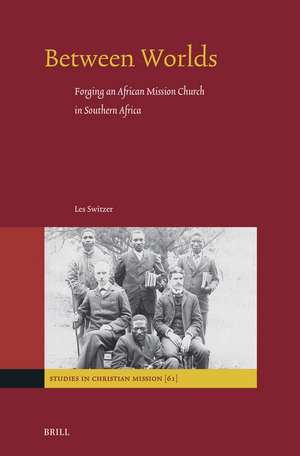
Between Worlds: Forging an African Mission Church in Southern Africa: Studies in Christian Mission
Autor Les Switzeren Limba Engleză Hardback – 21 aug 2025


Preț: 606.58 lei
Preț vechi: 739.74 lei
-18%
Puncte Express: 910
Carte disponibilă
Livrare economică 06-11 noiembrie
Livrare prin curier în România Termenul estimat este afișat lângă disponibilitate.
Transport gratuit pentru acest produs Plată online sau ramburs, în funcție de opțiunile comenzii.
Retur gratuit în 14 zile Comandă securizată și suport în română.
Specificații
ISBN-13: 9789004733695
ISBN-10: 9004733698
Pagini: 300
Dimensiuni: 155 x 235 x 18 mm
Greutate: 0.63 kg
Editura: Brill
Colecția Brill
Seria Studies in Christian Mission
ISBN-10: 9004733698
Pagini: 300
Dimensiuni: 155 x 235 x 18 mm
Greutate: 0.63 kg
Editura: Brill
Colecția Brill
Seria Studies in Christian Mission
Cuprins
Acknowledgements
List of Illustrations
Note on Sources
Maps
Introduction: the Contexts of Study
1 The American Board in the Gilded Age
1 Capital and Labor
2 The Progressive Movement
2.1 Congregationalists and the Social Gospel Movement
3 The American Board in the Post-Civil War Era
3.1 Protestant America’s Place in World Missions
3.2 The New Foreign Secretary
3.3 The Creation of Women’s Boards
4 American Board Foreign Missions after the Civil War
4.1 More Deputations and Changes in Mission Policy
5 A New Mission to a “Primitive Culture”: Angola
2 Post-Civil War Religious and Educational Narratives in Protestant America
1 Liberal Theology and the Modalities of Modernity
1.1 Transforming Religious Education
1.2 The Andover Controversy
2 Evangelism, World Missions and Empire
2.1 Rejecting Non-Western Indigenous Voices in the Early History of the Ecumenical Movement
3 Christian Organizations in Post-Civil War America
3.1 Youth and Young Adults
4 Holiness Churches, Faith-Based Missions and Naturalized Christianity
4.1 The Holiness Movement and Faith-Based Mission Groups
4.2 A Premillennial Alternative to Postmillennialism
4.3 The Fundamentalist Manifesto
5 The Education of Missionaries Destined for the American Zulu Mission
5.1 Colleges and Seminaries of Choice for Men and Women
6 Living a Christian Life at Oberlin College
6.1 Theology Training and the Religious Life
6.2 Oberlin Towards the End of the Gilded Age
3 Mission, Church and the State in the Late Colonial Era
1 From the Anglo-Zulu War to the Anglo-Boer War
2 The 1906 Poll Tax Revolt and Its Legacy
2.1 African Christians in the Rebellion
3 Missionaries, Africans, Settlers and the Mission Reserves in Natal
3.1 The 1903 Mission Reserve Act
4 Settler Powerbrokers and the Mission Reserves in the Waning Years of British Rule
4 Educating Black Christian Leaders in a Society Governed by Whites
1 Colonial Politicization of African Education
1.1 “Industrial” Education
1.2 Credentialing African Primary Schoolteachers
1.3 A Toothless Missionary Role in African Educational Policy
2 Amanzimtoti Seminary in the Colonial Era
2.1 Phase 1: the First Decade
2.2 Phase 2: a Government-Aided African Boarding School
2.3 Theological Training
2.4 Phase 3: Academic and Industrial Training in the 1880s and early 1890s
2.5 Phase 4: Struggling to Survive
2.6 Phase 5: a New Model for Post-Primary Boarding Schools
3 Amanzimtoti Seminary and the Reform of African Education in Natal
3.1 Teacher Training
4 Crisis and Renewal in Theological Training
4.1 A Temporary Rebirth 1903–1917
5 The Founding and Early History of Inanda Seminary
5.1 A Life of Service to African Education
5.2 Self-Sacrifice, Self-Reliance and Freedom of Choice
5.3 Evangelism and Teaching among the Amabhinca
6 The 1903 Reforms: a New Beginning
6.1 Umzumbe Home
5 African Christians in Search of a World of Their Own
1 Manifestations of Missionary-Sponsored African Socio-Economic and Political Aspirations
1.1 William Wilcox, Cetywayo Goba and Communities of Self-Supporting African Christians
1.2 The Zulu Industrial Improvement Company after 1910
2 Manifestations of African-Sponsored Political Aspirations
2.1 The Ascendancy of John Dube
3 Manifestations of African-Sponsored Religious Aspirations: before the Great Revivals
3.1 Towards a Genuine Dialogue between Mission and Church
4 Manifestations of African-Sponsored Religious Aspirations II: the Great Revivals
4.1 The Holiness Gospel
4.2 Zulu Christian Interpreters
5 Forging a New Life as Zulu Christians in a Church Independent of the Missionaries
5.1 Separatist Church Flashpoint: Table Mountain
5.2 Separatist Church Flashpoint: Johannesburg
5.3 The Creation of the Zulu Congregational Church
5.4 The Future of the ZCC under Shibe
6 A New Identity for African Christians in a Mission-Sanctioned Independent Church
6.1 Natal’s Political Leaders Force the Mission to Exercise Control Over the Church
6.2 A Government-Sanctioned Name for the Church
7 Unintended Consequences: Another Church Schism
7.1 The Future of Churches Remaining Loyal to the American Board
6 A New Mission-Church Outreach Project: The East Central Africa Mission
1 The Ndebele Kingdom
2 The Gaza Kingdom
2.1 European Protestant Missionaries
2.2 The Portuguese
3 Plotting New Ministries outside South Africa
3.1 An Attempt to Rekindle an Ndebele Ministry
3.2 Portuguese East Africa
4 The East Central Africa Mission at Inhambane: the Missionaries
4.1 Black and White American Missionaries
4.2 Zulu Missionary “Volunteers”
5 The East Central Africa Mission at Inhambane: the Indigenous African Communities
5.1 The Creation of a Christian Community at Kambini
5.2 The Creation of a Christian Community at Mongwe
5.3 Crossing Sexual Boundaries
6 The East Central Africa Mission in Rhodesia
6.1 Racial Attitudes in the Rhodesia Mission
6.2 The Beginnings of an Indigenous Ndau Ministry
6.3 An African-Initiated Church on Delagoa Bay
7 Changing Power Dynamics in the ECAM’s Rhodesia Mission
7.1 A New Alliance with the Beira Ministry
8 Forging an Indigenous Congregational Ministry in the Old Gaza Kingdom
8.1 Congregationalists Among the Tsonga Christians in Southern Mozambique
8.2 Congregationalists among the Ndau Christians in Southern Mozambique
7 Towards a Secularized, Urban Ecumenical Ministry in South Africa
1 Defining the Boundaries of Mission and Church in Durban
1.1 Mission-Church Collaboration
1.2 Mission Welfare Initiatives for African Women in a Segregated Environment
1.3 A Decidedly Different Kind of Urban Ministry
2 Modern Medicine in a Traditional Society: the Medical Mission in Durban
2.1 The Era of Burt Bridgman and John Nembula
2.2 The Era of James and Margaret McCord
2.3 Training the First African Nurses
3 An Urban Ecumenical Ministry for Mission and Church in White-Ruled South Africa
3.1 Translation Wars in Revising the Zulu Bible
3.2 Mission and Church from Segregation to Apartheid
Index
List of Illustrations
Note on Sources
Maps
Introduction: the Contexts of Study
1 The American Board in the Gilded Age
1 Capital and Labor
2 The Progressive Movement
2.1 Congregationalists and the Social Gospel Movement
3 The American Board in the Post-Civil War Era
3.1 Protestant America’s Place in World Missions
3.2 The New Foreign Secretary
3.3 The Creation of Women’s Boards
4 American Board Foreign Missions after the Civil War
4.1 More Deputations and Changes in Mission Policy
5 A New Mission to a “Primitive Culture”: Angola
2 Post-Civil War Religious and Educational Narratives in Protestant America
1 Liberal Theology and the Modalities of Modernity
1.1 Transforming Religious Education
1.2 The Andover Controversy
2 Evangelism, World Missions and Empire
2.1 Rejecting Non-Western Indigenous Voices in the Early History of the Ecumenical Movement
3 Christian Organizations in Post-Civil War America
3.1 Youth and Young Adults
4 Holiness Churches, Faith-Based Missions and Naturalized Christianity
4.1 The Holiness Movement and Faith-Based Mission Groups
4.2 A Premillennial Alternative to Postmillennialism
4.3 The Fundamentalist Manifesto
5 The Education of Missionaries Destined for the American Zulu Mission
5.1 Colleges and Seminaries of Choice for Men and Women
6 Living a Christian Life at Oberlin College
6.1 Theology Training and the Religious Life
6.2 Oberlin Towards the End of the Gilded Age
3 Mission, Church and the State in the Late Colonial Era
1 From the Anglo-Zulu War to the Anglo-Boer War
2 The 1906 Poll Tax Revolt and Its Legacy
2.1 African Christians in the Rebellion
3 Missionaries, Africans, Settlers and the Mission Reserves in Natal
3.1 The 1903 Mission Reserve Act
4 Settler Powerbrokers and the Mission Reserves in the Waning Years of British Rule
4 Educating Black Christian Leaders in a Society Governed by Whites
1 Colonial Politicization of African Education
1.1 “Industrial” Education
1.2 Credentialing African Primary Schoolteachers
1.3 A Toothless Missionary Role in African Educational Policy
2 Amanzimtoti Seminary in the Colonial Era
2.1 Phase 1: the First Decade
2.2 Phase 2: a Government-Aided African Boarding School
2.3 Theological Training
2.4 Phase 3: Academic and Industrial Training in the 1880s and early 1890s
2.5 Phase 4: Struggling to Survive
2.6 Phase 5: a New Model for Post-Primary Boarding Schools
3 Amanzimtoti Seminary and the Reform of African Education in Natal
3.1 Teacher Training
4 Crisis and Renewal in Theological Training
4.1 A Temporary Rebirth 1903–1917
5 The Founding and Early History of Inanda Seminary
5.1 A Life of Service to African Education
5.2 Self-Sacrifice, Self-Reliance and Freedom of Choice
5.3 Evangelism and Teaching among the Amabhinca
6 The 1903 Reforms: a New Beginning
6.1 Umzumbe Home
5 African Christians in Search of a World of Their Own
1 Manifestations of Missionary-Sponsored African Socio-Economic and Political Aspirations
1.1 William Wilcox, Cetywayo Goba and Communities of Self-Supporting African Christians
1.2 The Zulu Industrial Improvement Company after 1910
2 Manifestations of African-Sponsored Political Aspirations
2.1 The Ascendancy of John Dube
3 Manifestations of African-Sponsored Religious Aspirations: before the Great Revivals
3.1 Towards a Genuine Dialogue between Mission and Church
4 Manifestations of African-Sponsored Religious Aspirations II: the Great Revivals
4.1 The Holiness Gospel
4.2 Zulu Christian Interpreters
5 Forging a New Life as Zulu Christians in a Church Independent of the Missionaries
5.1 Separatist Church Flashpoint: Table Mountain
5.2 Separatist Church Flashpoint: Johannesburg
5.3 The Creation of the Zulu Congregational Church
5.4 The Future of the ZCC under Shibe
6 A New Identity for African Christians in a Mission-Sanctioned Independent Church
6.1 Natal’s Political Leaders Force the Mission to Exercise Control Over the Church
6.2 A Government-Sanctioned Name for the Church
7 Unintended Consequences: Another Church Schism
7.1 The Future of Churches Remaining Loyal to the American Board
6 A New Mission-Church Outreach Project: The East Central Africa Mission
1 The Ndebele Kingdom
2 The Gaza Kingdom
2.1 European Protestant Missionaries
2.2 The Portuguese
3 Plotting New Ministries outside South Africa
3.1 An Attempt to Rekindle an Ndebele Ministry
3.2 Portuguese East Africa
4 The East Central Africa Mission at Inhambane: the Missionaries
4.1 Black and White American Missionaries
4.2 Zulu Missionary “Volunteers”
5 The East Central Africa Mission at Inhambane: the Indigenous African Communities
5.1 The Creation of a Christian Community at Kambini
5.2 The Creation of a Christian Community at Mongwe
5.3 Crossing Sexual Boundaries
6 The East Central Africa Mission in Rhodesia
6.1 Racial Attitudes in the Rhodesia Mission
6.2 The Beginnings of an Indigenous Ndau Ministry
6.3 An African-Initiated Church on Delagoa Bay
7 Changing Power Dynamics in the ECAM’s Rhodesia Mission
7.1 A New Alliance with the Beira Ministry
8 Forging an Indigenous Congregational Ministry in the Old Gaza Kingdom
8.1 Congregationalists Among the Tsonga Christians in Southern Mozambique
8.2 Congregationalists among the Ndau Christians in Southern Mozambique
7 Towards a Secularized, Urban Ecumenical Ministry in South Africa
1 Defining the Boundaries of Mission and Church in Durban
1.1 Mission-Church Collaboration
1.2 Mission Welfare Initiatives for African Women in a Segregated Environment
1.3 A Decidedly Different Kind of Urban Ministry
2 Modern Medicine in a Traditional Society: the Medical Mission in Durban
2.1 The Era of Burt Bridgman and John Nembula
2.2 The Era of James and Margaret McCord
2.3 Training the First African Nurses
3 An Urban Ecumenical Ministry for Mission and Church in White-Ruled South Africa
3.1 Translation Wars in Revising the Zulu Bible
3.2 Mission and Church from Segregation to Apartheid
Index