Cantitate/Preț
Produs

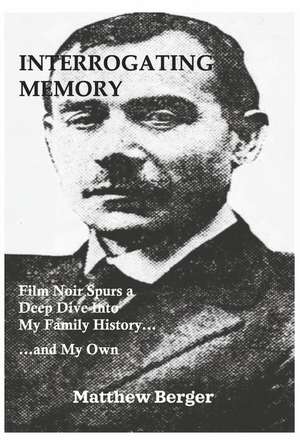
Berger, M: INTERROGATING MEMORY


en Limba Engleză Hardback – 23 mai 2022

Dr. M. Berger, a cărui expertiză îmbină rigoarea cercetării cu o perspectivă analitică asupra istoriei culturale, semnează în Berger, M: INTERROGATING MEMORY o lucrare hibridă, de o complexitate rar întâlnită în bibliografia actuală. Cartea nu este doar un exercițiu de genealogie, ci o investigație academică asupra modului în care memoria personală se intersectează cu marile narațiuni ale secolului XX, de la imigrația evreiască din Europa de Est până la estetica întunecată a cinematografiei americane.

Apreciem în mod deosebit structura inovatoare: prima parte reconstituie istoria familiilor Berger și Cohen prin prisma „orașului evreiesc” din West Philadelphia, incluzând detalii inedite despre influența masoneriei locale. Această explorare factuală este urmată de o analiză riguroasă a genului film noir, bazată pe o bază de date extinsă care propune o nouă paradigmă de clasificare. Comparabil cu Film Noir de Andrew Spicer în ceea ce privește acuratețea istorică, volumul de față este actualizat pentru contextul interdisciplinar modern, integrând studiul de film cu psihologia și istoria regională a Americii.

Tonul este unul precis, evitând sentimentalismul în favoarea unei „interogări” oneste a trecutului. Autorul documentează teme dificile — precum depresia nediagnosticată, dependența și alienarea — fără a sacrifica momentele de umor sau explorarea bucuriei de a învăța. Recomandăm acest titlu publicat de BOOKBABY pentru modul în care reușește să demonstreze că memoria interogată critic este întotdeauna superioară amintirii brute, oferind o resursă valoroasă atât pentru istorici, cât și pentru pasionații de studii cinematografice.

Citește tot Restrânge

Preț: 26124 lei

Puncte Express: 392

Carte disponibilă

Livrare economică 22 iunie-06 iulie

Livrare prin curier în România Termenul estimat este afișat lângă disponibilitate.
Transport gratuit de la 40000 lei Plată online sau ramburs, în funcție de opțiunile comenzii.
Retur gratuit în 14 zile Comandă securizată și suport în română.

Specificații

ISBN-13: 9798985521702
Pagini: 456
Dimensiuni: 95 x 234 x 158 mm
Greutate: 0.9 kg
Editura: BOOKBABY

De ce să citești această carte

Recomandăm această carte cititorilor care caută mai mult decât o simplă biografie. Veți descoperi o analiză fascinantă a identității evreiești din Philadelphia și o nouă perspectivă asupra filmului noir, fundamentată pe date concrete. Este o lectură esențială pentru cei interesați de istoria socială a Americii și de modul în care cercetarea academică poate ilumina cele mai obscure colțuri ale memoriei personale.


Descriere scurtă

Everybody has great stories to tell once they "interrogate memory." Those Dr. Berger tells in this timely, innovative and entertaining book began with "Why do you love film noir?" The answer begins in the Pale of Settlement and leads to Philadelphia, particularly the Jewish "city within a city" of West Philadelphia. The first three chapters trace the early history, immigration and lives in Philadelphia of four key families - Berger, Zisser/Caesar, Cohen/Kohn, Gurmankin/Goldman - through the marriage and subsequent move across the city line of David Louis "Lou" Berger and Elaine Kohn. Next comes the history of the Freemasons, focusing on Philadelphia's La Fayette Lodge No. 71, which links the author's father, his uncle Jules Berger and Herman Modell, the attorney who arranged the author's adoption. This is followed by the story of Modell - state representative, Assistant City Solicitor, Metropolitan Hospital lead counsel - himself. The complex and often-frustrating story of how the author learned the names of his genetic parents concludes the first part of the book - which ends with his birth in September 1966. A one-chapter Intermission bridges the two halves. Analyses of a massive film noir database reveal a new and better way to think about what films are "noir" and introduce a discussion of the idea of film noir as well as two versions of how it originated: inevitable artistic movement and reaction to economic necessity. The latter introduces the Charlie Chan films, which arguably provided a template for early film noir. The second part of the book opens with the histories of the western Philadelphia suburbs called "The Main Line" and Harriton High School. Two chapters begin to detail the author's film noir journey, tracing his life from birth through his parents' separation in March 1977. Key events include a Jewish upbringing, finding a permanent home for severely intellectually impaired older sister Mindy, learning to read at a very young age, a dangerous house fire, the start of a lifelong love of detective fiction, the author's father's gambling addiction, the John Rhoads Company fire, summers in Atlantic City and the "transition year" of 1976: black-and-white Universal horror films, radio dramas and a key double feature. The year ends with the dissolution of the author's parents' marriage. The final three chapters chart the end of the author's "film noir journey." Undiagnosed depression is presented through a lack of critical thinking skills, erratic behavior, alcohol consumption and suicide attempts. This is lightened by a checkered romantic history and some unusual nation-building. Lou Berger's tumultuous final years are catalogued, as are his ex-wife's successes. Bar Mitzvahs, est, new friendships and television lure the author into the dark city. As high school begins, the author watches inappropriate movies. Learning to drive provides freedom and helps to spur critical thinking. He enrolls at Yale University, taking full opportunity of six film societies. A chance visit to a Somerville, MA bookstore completes the circle. Sprinkled throughout the narrative are tales - often funny, sometimes heartbreaking, always true - Dr. Berger learned while writing this book. They include tragic and untimely deaths, a brazen kidnapping, fires of suspicious origin...and that time wife caught husband in the hotel room with her cousin. Dr. Berger's own life story foregrounds themes of alienation, mental illness, critical thinking and control (or lack thereof) - as well as those of love, acceptance and joyous exploration. Uniting these stories is the idea of "interrogating memory": carefully assessing all available information with the humility to be proven incorrect. Dr. Berger had let go of a few cherished stories, but what he learned along the way more than made up for it. Because just as truth is often stranger than fiction, the interrogated memory is even more often superior to the original.