Cantitate/Preț
Produs

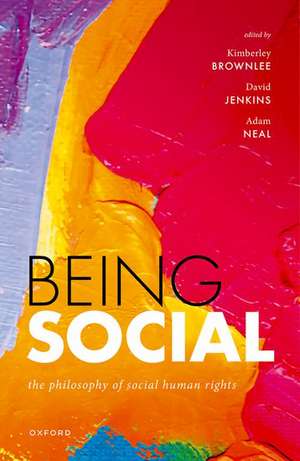
Being Social: The Philosophy of Social Human Rights

Editat de Kimberley Brownlee, David Jenkins, Adam Neal
en Limba Engleză Hardback – 6 oct 2022

Considerăm că Being Social reprezintă un punct de cotitură în literatura de specialitate, fiind prima examinare filosofică de amploare care tratează dimensiunea socială a existenței ca pe un drept fundamental al omului. Adresându-se în primul rând cercetătorilor din domeniul filosofiei politice, teoreticienilor dreptului internațional și practicienilor din sfera politicilor sociale, acest volum colectiv extinde definiția „minimului decent” de viață dincolo de securitatea fizică sau subzistență. Merită menționat că textul investighează nevoi umane profunde — precum contactul interpersonal, apartenența și recunoașterea — care au fost istoric neglijate în favoarea drepturilor individuale clasice.

Eseurile incluse analizează nu doar dreptul de a fi parte dintr-o societate, ci și dreptul activ de a participa la structurile acesteia. Putem afirma că rigoarea analitică aplicată aici completează perspectiva oferită de Social Rights and Human Welfare de Hartley Dean; în timp ce Dean se concentrează pe politici sociale și bunăstare în statele dezvoltate, Being Social plonjează în fundamentele ontologice ale socialității umane. În contextul operei editorului principal, Kimberley Brownlee, lucrarea continuă temele explorate în Disability and Disadvantage, rafinând conceptele de dezavantaj social și incluziune. Structura volumului este una densă, academică, însă claritatea argumentelor oferă o bază solidă pentru regândirea individualismului în dreptul internațional contemporan.

Citește tot Restrânge

Preț: 57843 lei

Preț vechi: 86592 lei
-33%

Puncte Express: 868

Carte disponibilă

Livrare economică 12-17 iunie


Specificații

ISBN-13: 9780198871194
ISBN-10: 0198871198
Pagini: 320
Dimensiuni: 165 x 240 x 200 mm
Greutate: 0.61 kg
Editura: OUP OXFORD
Colecția OUP Oxford
Locul publicării:Oxford, United Kingdom

De ce să citești această carte

Pentru studenții la drept și filosofie, precum și pentru activiștii pentru drepturile omului, această carte oferă fundamentul teoretic necesar pentru a susține că izolarea socială și lipsa contactului uman nu sunt doar probleme de bunăstare, ci încălcări ale drepturilor fundamentale. Veți câștiga o înțelegere profundă a modului în care nevoia de interacțiune este la fel de vitală precum hrana sau adăpostul.


Despre autor

Kimberley Brownlee este un filosof recunoscut pentru contribuțiile sale în etica aplicată și filosofia politică, fiind editor și autor al unor lucrări de referință precum A Companion to Applied Philosophy. Cercetările sale se concentrează frecvent pe vulnerabilitate și obligațiile sociale, teme prezente și în volumul Disability and Disadvantage. Alături de David Jenkins și Adam Neal, ea coordonează acest volum publicat de OUP OXFORD, consolidând o direcție de cercetare care integrează nevoile sociale în nucleul teoriei drepturilor omului.


Descriere

Human rights capture what people need to live minimally decent lives. Recognised dimensions of this minimum include physical security, due process, political participation, and freedom of movement, speech, and belief, as well as - more controversially for some - subsistence, shelter, health, education, culture, and community. Far less attention has been paid to the interpersonal, social dimensions of a minimally decent life, including our basic needs for decent human contact and acknowledgement, for interaction and adequate social inclusion, and for relationship, intimacy, and shared ways of living, as well as our competing interests in solitude and associative freedom. This pioneering collection of original essays aims to remedy the neglect of social needs and rights in human rights theory and practice by exploring the social dimensions of the human-rights minimum. The essays subject enumerated social human rights and proposed social human rights to philosophical scrutiny, and probe the conceptual, normative, and practical implications of taking social human rights seriously. The contributors to this volume demonstrate powerfully how important this undertaking is, despite the thorny theoretical and practical challenges that social rights present.Being Social is the first in-depth and polyphonic philosophical treatment of social rights qua human rights in the English language. It explains how social rights are rights to participate and not only to being in society, but also, even more importantly, it uncovers the social and interactional dimension of all human rights. A must-read for international human rights lawyers concerned about the critique of human rights' individualism.' - Professor Samantha Besson, International Law of Institutions Chair, Collège de France, Paris & Professor of Public International Law and European Law, University of Fribourg, Switzerland'Every human being has deep needs for sociality: for contact, connection, intimacy, inclusion, recognition, and community. In this pioneering volume, leading experts explore how social human rights can help fulfil these needs in our homes, workplaces, cities, nations, and virtual worlds. Since a human life is a life with others, human rights must include social rights too.'- Leif Wenar, Olive H. Palmer Professor in Humanities, Stanford University

Notă biografică

Kimberley Brownlee holds the Canada Research Chair in Ethics and Political & Social Philosophy at the University of British Columbia. Her current work focuses on loneliness, belonging, social rights, and freedom of association. She is the author of Being Sure of Each Other (OUP, 2020) and Conscience and Conviction: The Case for Civil Disobedience (OUP, 2012).David Jenkins is a lecturer in political theory at the University of Otago. He has published work on unconditional basic income, the politics of public space in India, homelessness, James Baldwin and recognition, homelessness, structural injustice, and work.Adam Neal is a Leverhulme Trust-funded doctoral student in Philosophy at the University of Warwick. His research concerns the social and interpersonal implications of poverty, the philosophy of work and the ethics of relationships.